
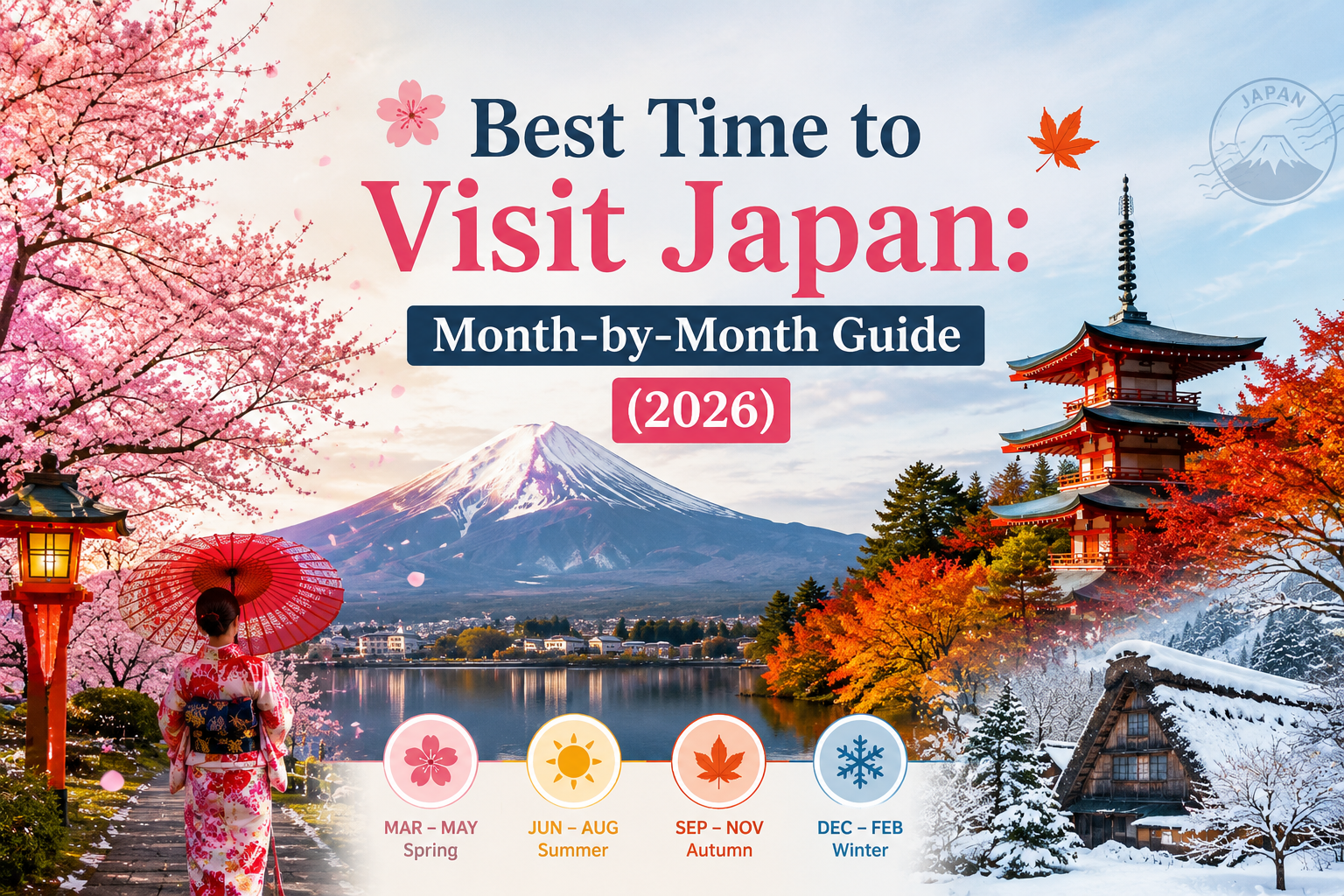
| Quick facts | |
|---|---|
| Cherry blossom (Tokyo/Kyoto) | Roughly late March – early April; earlier in Kyushu, later in the north |
| Autumn leaves (koyo) | Mid-October in the north; November in Kyoto/Tokyo |
| Ski season | Late December – early March (Hokkaido & Nagano) |
| Best value months | Late January–February, and June (excluding holidays) |
| Busiest / priciest | Cherry-blossom peak, Golden Week, Obon, New Year |
| Rainy season (tsuyu) | Roughly early June – mid-July (not Hokkaido) |
| Typhoon risk | August – September, mainly the south and Pacific coast |
Japan runs almost the length of Europe from north to south, so “when to go” really means “where, and for what.” Sapporo can be under snow while Okinawa is beach weather. The guide below breaks the year down by season and by month so you can match your trip to the experience you actually want — blossoms, autumn colour, snow, festivals or simply fewer crowds and better prices.
Spring (March–May): cherry blossom and mild days
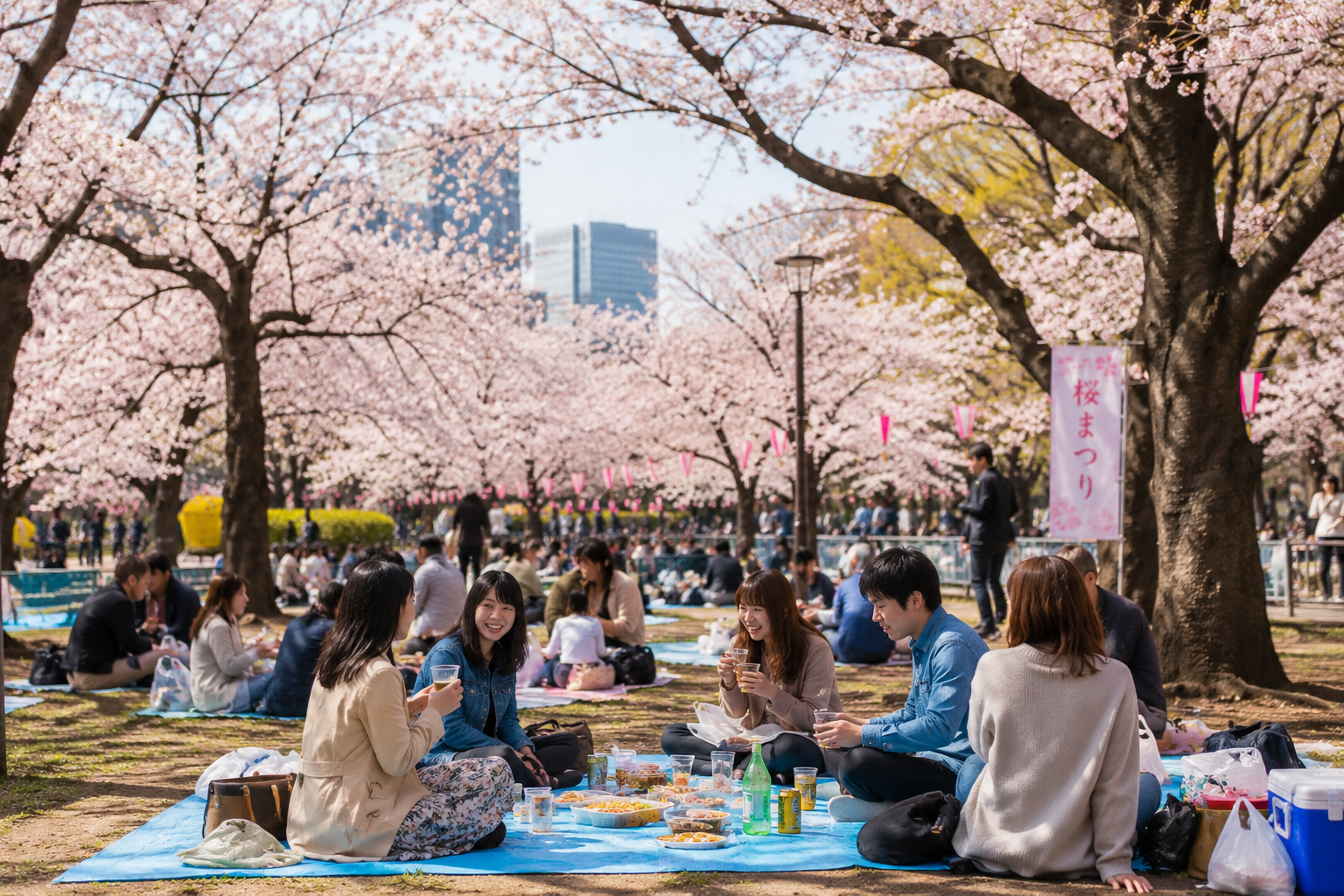
Spring is the most in-demand season, and for good reason. The cherry blossom (sakura) sweeps north across the country, usually reaching Tokyo and Kyoto between late March and early April. Blooms last only about a week at each spot, so the exact dates shift every year — check the annual forecast a few weeks ahead rather than booking blind. Warm afternoons, blooming gardens and hanami (blossom-viewing) picnics make this a magical, if busy, time to travel.
The catch is Golden Week (roughly 29 April to 5 May), a cluster of national holidays when the whole country travels at once. Trains, hotels and flights fill and prices rise sharply. If your dates are flexible, visit before it starts or after it ends.
Summer (June–August): festivals, humidity and the mountains
Early June brings tsuyu, the rainy season, which lingers into mid-July across most of the country (Hokkaido largely escapes it). July and August are hot and humid, but this is also festival season — fireworks (hanabi), lantern-lit matsuri and vibrant local celebrations light up towns and cities. The mountains and Hokkaido offer cool relief, and Hokkaido’s lavender fields peak in July. Watch for typhoons, most likely from August into September, mainly affecting the south and Pacific coast.
Autumn (September–November): the traveller’s sweet spot
For many, autumn is the best all-round time to visit Japan. The heat fades, skies clear, and from mid-October the autumn leaves (koyo) turn hillsides and temple gardens crimson and gold — starting in the north and reaching Kyoto and Tokyo through November. Late September and October also bring pleasant walking weather and fewer crowds than spring. It is arguably the strongest balance of scenery, comfort and value in the calendar.
Winter (December–February): powder snow and quiet cities
Winter splits in two. In the north — Hokkaido and Nagano — it is world-class ski and snowboard season, with famously dry powder from late December to early March, plus the spectacular Sapporo Snow Festival in early February. Meanwhile Tokyo, Kyoto and much of the main island stay crisp and mostly dry, with the year’s thinnest crowds and lowest prices (outside New Year). If you don’t mind the cold, late January and February are a savvy time to see the big sights without the queues.
Month-by-month at a glance
| Month | Weather & highlights | Crowds / value |
|---|---|---|
| Jan–Feb | Cold, dry; ski season; snow festivals | Quiet & good value (avoid New Year) |
| Mar–Apr | Warming; cherry blossom peak | Very busy; book early |
| May | Warm, pleasant; lush greenery | Great — outside Golden Week |
| Jun–Jul | Rainy season, then hot; festivals begin | Lower crowds early; humid |
| Aug | Hot, humid; fireworks; Obon | Busy around Obon |
| Sep–Oct | Cooling, clear; early autumn colour | Excellent balance |
| Nov | Crisp; peak autumn leaves in Kyoto/Tokyo | Popular but rewarding |
| Dec | Cold; illuminations; ski begins | Quiet until New Year |
When to go for the cheapest trip
If budget is your priority, the cheapest windows are late January to February and June (excluding public holidays). Flights and hotels ease off, big-ticket sights are calm, and the weak yen of recent years has made Japan unusually good value for many foreign visitors. Simply avoiding the three domestic travel peaks — cherry-blossom season, Golden Week and New Year — will save you money whenever you go.
Frequently asked questions
What is the best month to visit Japan?
October and November offer the best all-round mix of comfortable weather, autumn scenery and fewer crowds than spring. For blossoms, aim for late March to early April; for skiing, January to February.
When is cherry blossom season in Japan in 2026?
In Tokyo and Kyoto, cherry blossom typically peaks between late March and early April, though exact dates vary each year and by region — it arrives earlier in the south (Kyushu) and later in the north. Check the annual forecast a few weeks before you travel and build in a little flexibility.
What is the cheapest time to visit Japan?
Late January to February and the month of June (outside public holidays) tend to be the cheapest, with lower flight and hotel prices and thinner crowds at major sights.
What months should I avoid in Japan?
Not “avoid” exactly, but be aware that Golden Week (late April–early May), Obon (mid-August) and New Year are the most expensive and crowded times to travel domestically.
Does it rain a lot in Japan?
There is a distinct rainy season (tsuyu) from about early June to mid-July across most of the country, and a typhoon risk in late summer. Hokkaido largely avoids the rainy season, making it a good summer choice.