
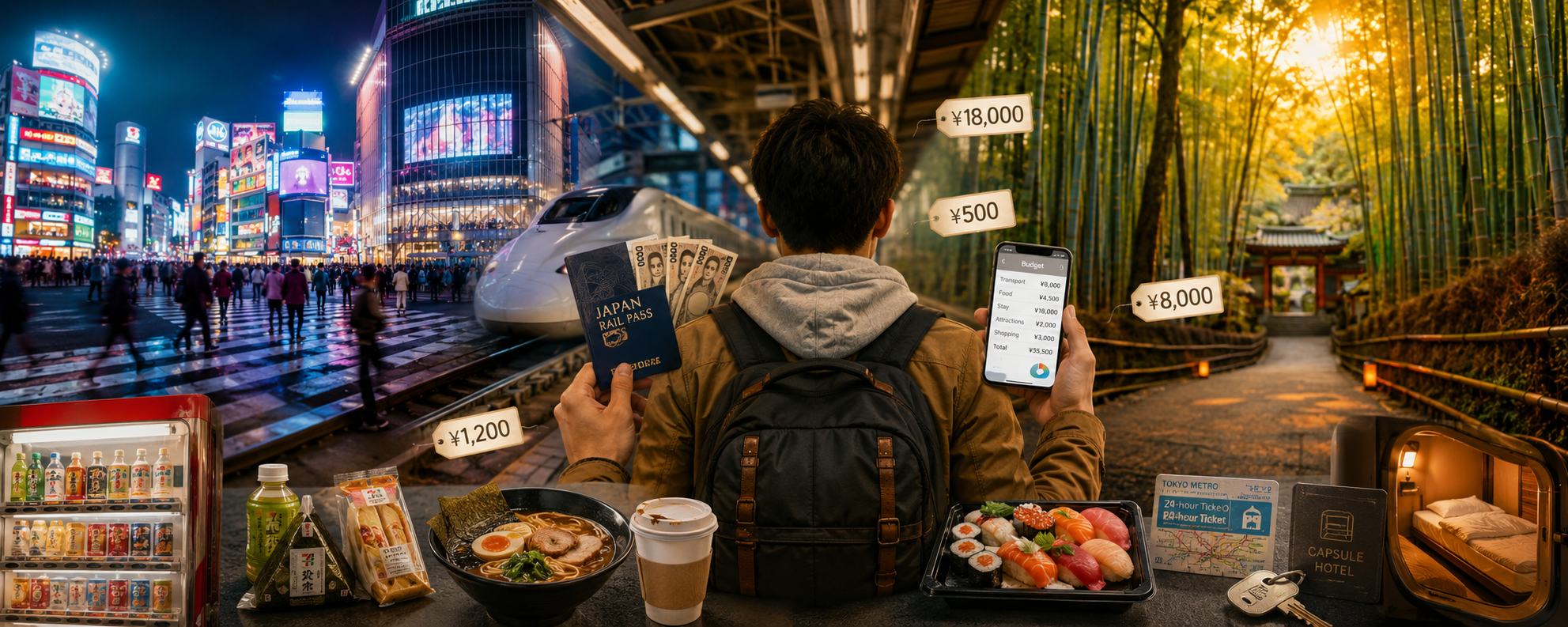
| Quick facts | |
|---|---|
| Currency | Japanese yen (JPY / ¥) |
| Budget day (excl. flights) | ~$70–90 |
| Mid-range day | ~$150–250 |
| Luxury day | $400+ |
| Cheap meal | ¥800–1,200 (about $5–8) |
| Cash vs card | Cards widely accepted; carry some cash for small shops & shrines |
| Biggest costs | International flights, shinkansen, city hotels |
“Is Japan expensive?” is one of the most searched questions about the country — and the honest answer is: it can be, but it doesn’t have to be. Day-to-day spending is very reasonable, and with a few smart choices you can eat brilliantly and travel comfortably without blowing your budget. Here is what things actually cost in 2026.
Why Japan is cheaper than you think
The yen has been weak against major currencies for the past few years, which stretches foreign money further — one reason Japan keeps breaking visitor records. On top of that, everyday essentials are excellent value: a filling bowl of ramen or a rice set can cost around ¥900, a convenience-store lunch under ¥600, and city subway rides just a few hundred yen. Tap water is safe and free, tipping isn’t expected, and the quality-to-price ratio on food is famously high.
Daily budget breakdown (2026)
The figures below are per person, per day, and exclude international flights. Treat them as realistic averages — you can flex up or down.
| Item | Budget | Mid-range | Luxury |
|---|---|---|---|
| Accommodation | $25–45 (hostel/capsule) | $90–180 (3–4★ hotel) | $300+ (ryokan/luxury) |
| Food (3 meals) | $20–30 | $40–70 | $120+ |
| Local transport | $5–10 | $10–20 | $40+ (taxis) |
| Sightseeing | $10–20 | $20–40 | $60+ |
| Typical daily total | $70–90 | $150–250 | $400+ |
What food really costs
- Ramen, udon, curry rice, gyudon: ¥700–1,200 ($5–8) — fast, filling and everywhere.
- Convenience-store meal (onigiri, sandwich, drink): ¥400–700 ($3–5) and surprisingly good.
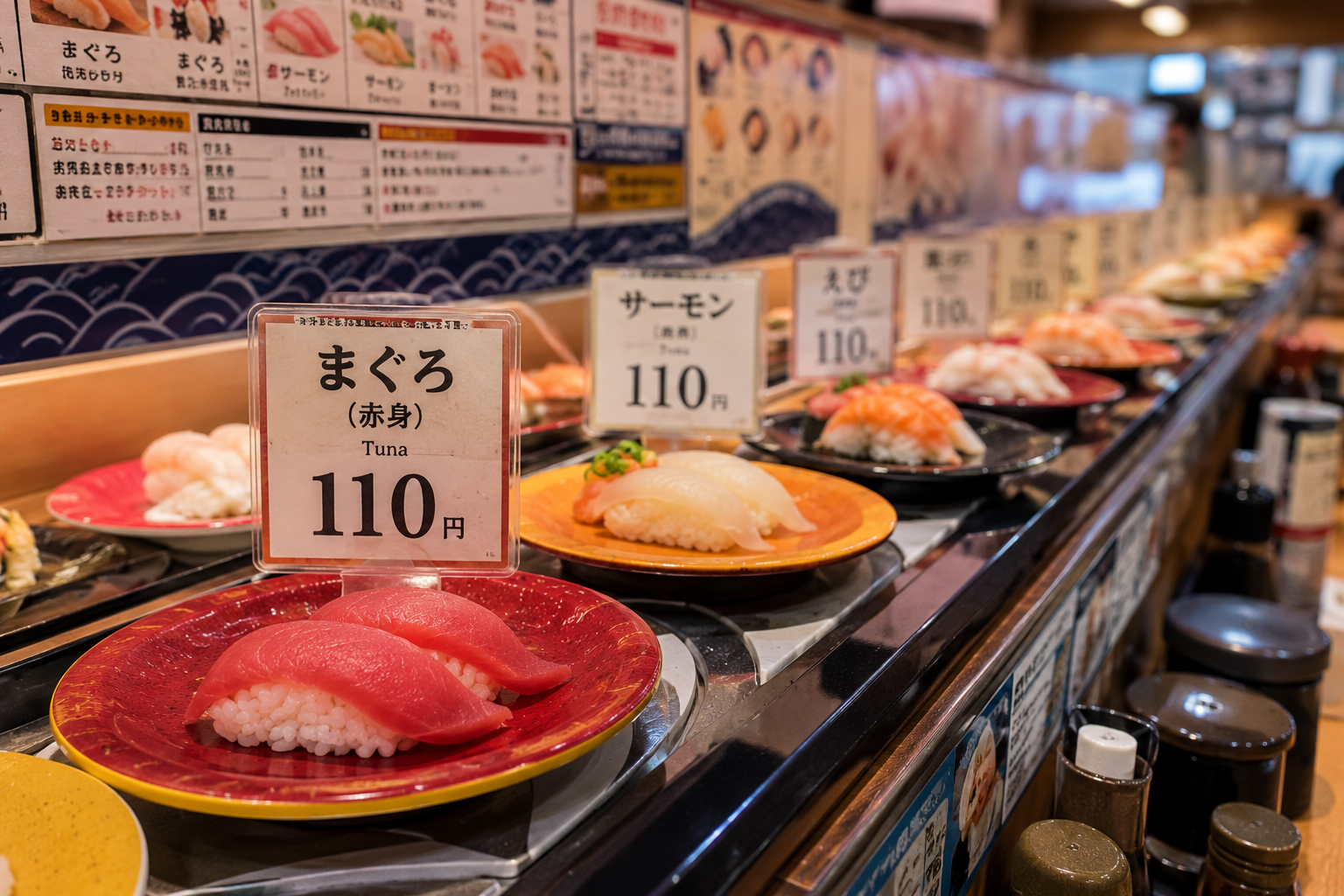
- Conveyor-belt sushi: ¥100–300 per plate; a full meal often under ¥2,000 ($13).
- Casual izakaya dinner with a drink: ¥2,500–4,000 ($17–27).
- High-end sushi or kaiseki: ¥10,000–30,000+ ($70–200+) — a splurge, not a necessity.
Transport: the biggest variable
Local transport is cheap and superb — grab an IC card (Suica, PASMO or ICOCA) and tap on and off subways, buses and JR lines. The bigger question is long-distance travel. A one-way Tokyo–Kyoto bullet train is roughly ¥13,000–14,000 ($90–100).
Where to stay for every budget
- Budget ($25–45): hostels, capsule hotels and business hotels — clean, compact and reliable.
- Mid-range ($90–180): comfortable 3–4-star city hotels; book early for cherry-blossom and autumn dates.
- Splurge ($300+): a traditional ryokan with an onsen and multi-course kaiseki dinner — worth doing once.
Sample daily budgets
| Backpacker | Comfortable | Treat-yourself |
|---|---|---|
| Capsule hotel + convenience-store & ramen meals + subway + free temples ≈ $75/day | Business hotel + izakaya dinners + IC card + a couple of paid sights ≈ $180/day | Ryokan/4★ hotel + kaiseki + taxis + guided experiences ≈ $450/day |
Simple ways to save money in Japan
- Eat where locals eat — ramen bars, teishoku set-meal shops and standing noodle counters.
- Use convenience stores and supermarket bento (often discounted in the evening).
- Buy an IC card and skip taxis; the metro and JR network reach almost everywhere.
- Do the maths on the JR Pass — and consider regional passes if you’re staying in one area.
- Prioritise free sights: most shrines, many temples, parks, markets and neighbourhoods cost nothing.
- Travel outside cherry-blossom season, Golden Week and New Year for cheaper flights and hotels.
Frequently asked questions
Is Japan expensive to travel in 2026?
Less than most people expect. Everyday food and local transport are good value, especially with a weak yen. The main costs are international flights, long-distance bullet trains and city hotels, all of which you can scale to your budget.
How much money do I need per day in Japan?
Roughly $70–90 a day for budget travel, $150–250 mid-range, and $400+ for luxury, excluding international flights.
Is the Japan Rail Pass worth it now?
Only for the right itinerary. Since the 2023 price rise, the 7-day pass (¥50,000) pays off mainly on multi-city routes such as Tokyo–Kyoto–Osaka–Hiroshima. For one-region or slower trips, individual tickets or a regional pass are often cheaper — add up your journeys first.
Is Japan cheaper than Europe?
Day-to-day, often yes — meals, drinks and public transport tend to be cheaper than in Western Europe, particularly with recent exchange rates. Long-distance rail and top-end hotels can be comparable.
Do you tip in Japan?
No. Tipping is not customary and can even cause confusion. Great service is standard and already included.