
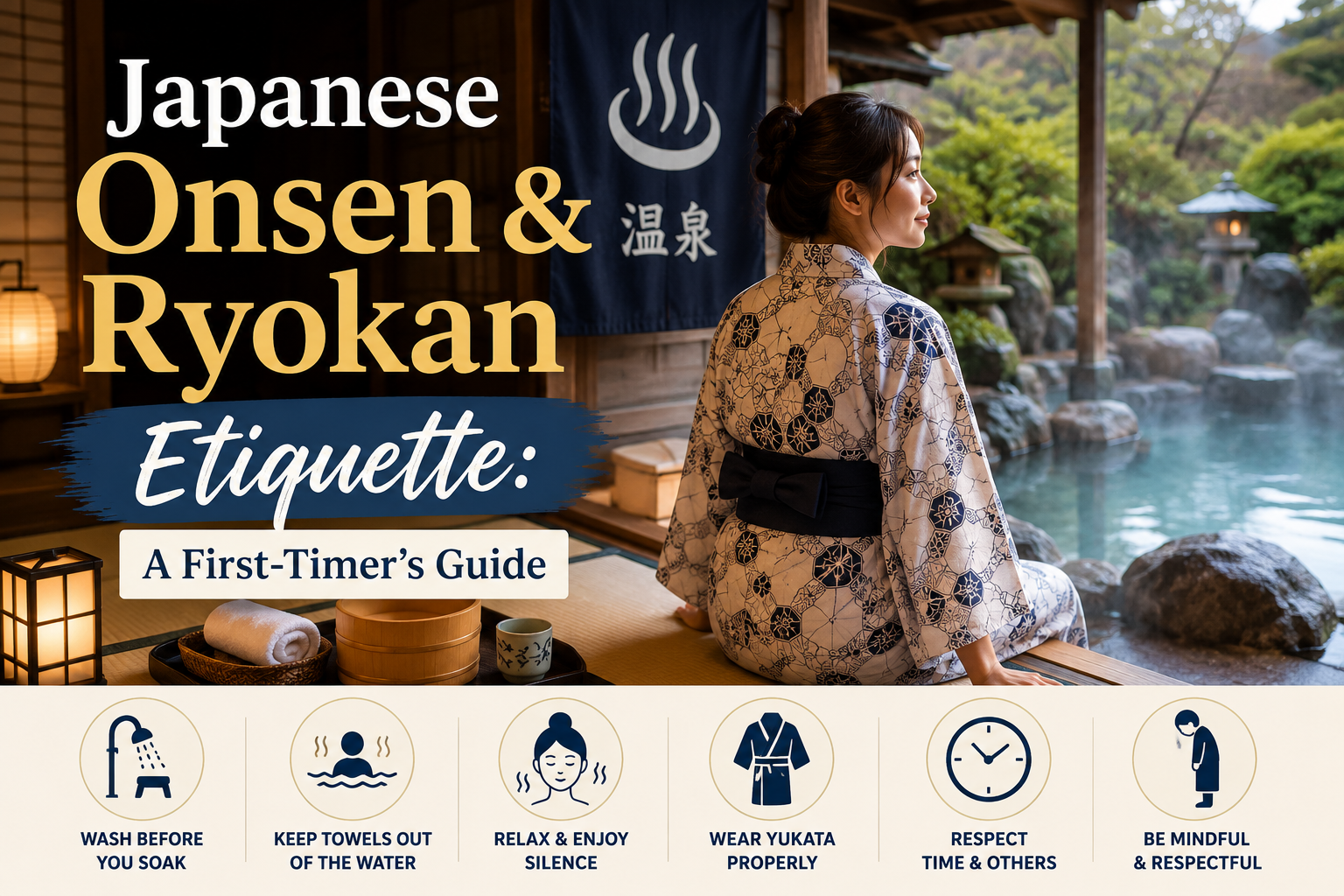
| Quick facts | |
|---|---|
| What is an onsen? | A bath fed by natural geothermal hot-spring water |
| Swimsuits? | No — public onsen are bathed in nude |
| Layout | Almost always separated by sex (look for 男 men / 女 women) |
| Wash first? | Always — shower and rinse fully before entering the bath |
| Tattoos | Sometimes restricted; cover-ups, tattoo-friendly baths or private baths help |
| Ryokan | Traditional inn: tatami rooms, yukata, onsen, kaiseki dinner & futon |
Bathing in an onsen can feel daunting the first time — the nudity, the unfamiliar rituals, the fear of getting it wrong. In practice the rules are simple, logical and all about keeping the shared water clean and calm. Follow the steps below and you’ll relax like a local.
What is an onsen (and how it differs from a sento)?
An onsen is a bath filled with mineral-rich water from a natural geothermal hot spring — Japan sits on volcanic terrain, so they are everywhere. A sento is a public bathhouse using ordinary heated water; the etiquette is the same. Baths may be indoor or a rotenburo (outdoor bath), which many consider the highlight, especially amid snow or forest.
How to use an onsen: step by step
| Step | What to do |
|---|---|
| 1 | Remove your shoes where indicated, then enter the correct changing room — 男 (blue) for men, 女 (red) for women. |
| 2 | Undress completely in the changing room and store clothes in a basket or locker. No swimsuits. |
| 3 | Take only your small towel into the bathing area. Leave the large towel behind. |
| 4 | Sit at a shower station and wash and rinse your whole body thoroughly — this is essential before entering. |
| 5 | Enter the bath slowly and quietly. Keep your small towel out of the water (fold it on your head or set it at the edge). |
| 6 | Soak, relax, and keep noise low. Don’t swim, splash or put your head under. |
| 7 | When you’re done, gently pat dry with your small towel before re-entering the changing room. |
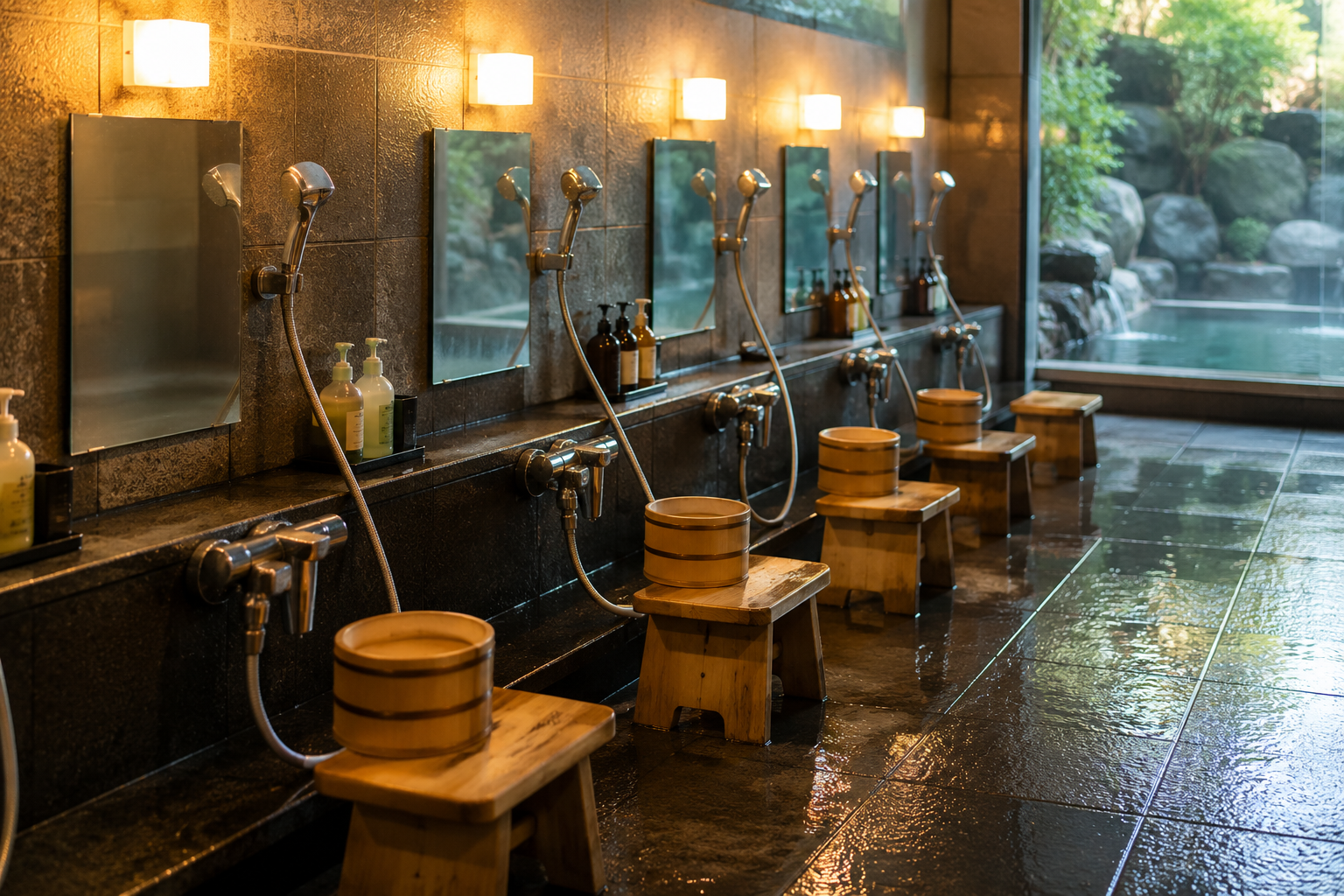
The golden rules (and the mistakes to avoid)
- Always wash before you get in. The bath is for soaking, not cleaning.
- No swimwear. Public onsen are bathed in the nude — everyone is, and no one is looking.
- Keep the small towel out of the water. Fold it and rest it on your head.
- Tie up long hair so it doesn’t touch the water.
- No photos, no phones in the bathing area — privacy is paramount.
- Keep it quiet. Onsen are for calm; save loud conversation for later.
- Rinse off any sweat if you’ve been in a sauna before re-entering the bath.
Onsen with tattoos: what to know
Many traditional onsen still restrict tattoos, a legacy of their association with organised crime in Japan. Attitudes are slowly relaxing, especially in tourist areas, but don’t assume. Your options: look for tattoo-friendly onsen (increasingly common and often listed online), use a waterproof cover patch for a small tattoo, or book a private bath (kashikiri-buro) or a room with its own onsen — the easiest, stress-free choice. When unsure, ask politely at reception before undressing.
Staying in a ryokan: what to expect
A ryokan is a traditional Japanese inn and one of the most memorable ways to spend a night in Japan. Rooms have tatami-mat floors, low tables and futon bedding laid out on the floor (often while you’re at dinner). Most ryokan provide a yukata — a light cotton robe you can wear around the inn and to the baths. Many have their own onsen, sometimes bookable privately.
The meals are a highlight. Dinner is usually kaiseki: a beautifully presented, multi-course seasonal feast served in your room or a dining room. Breakfast is typically a traditional spread of rice, fish, miso soup and small dishes. Rates often include both dinner and breakfast, which is why ryokan can look pricey at first glance but represent good value overall.
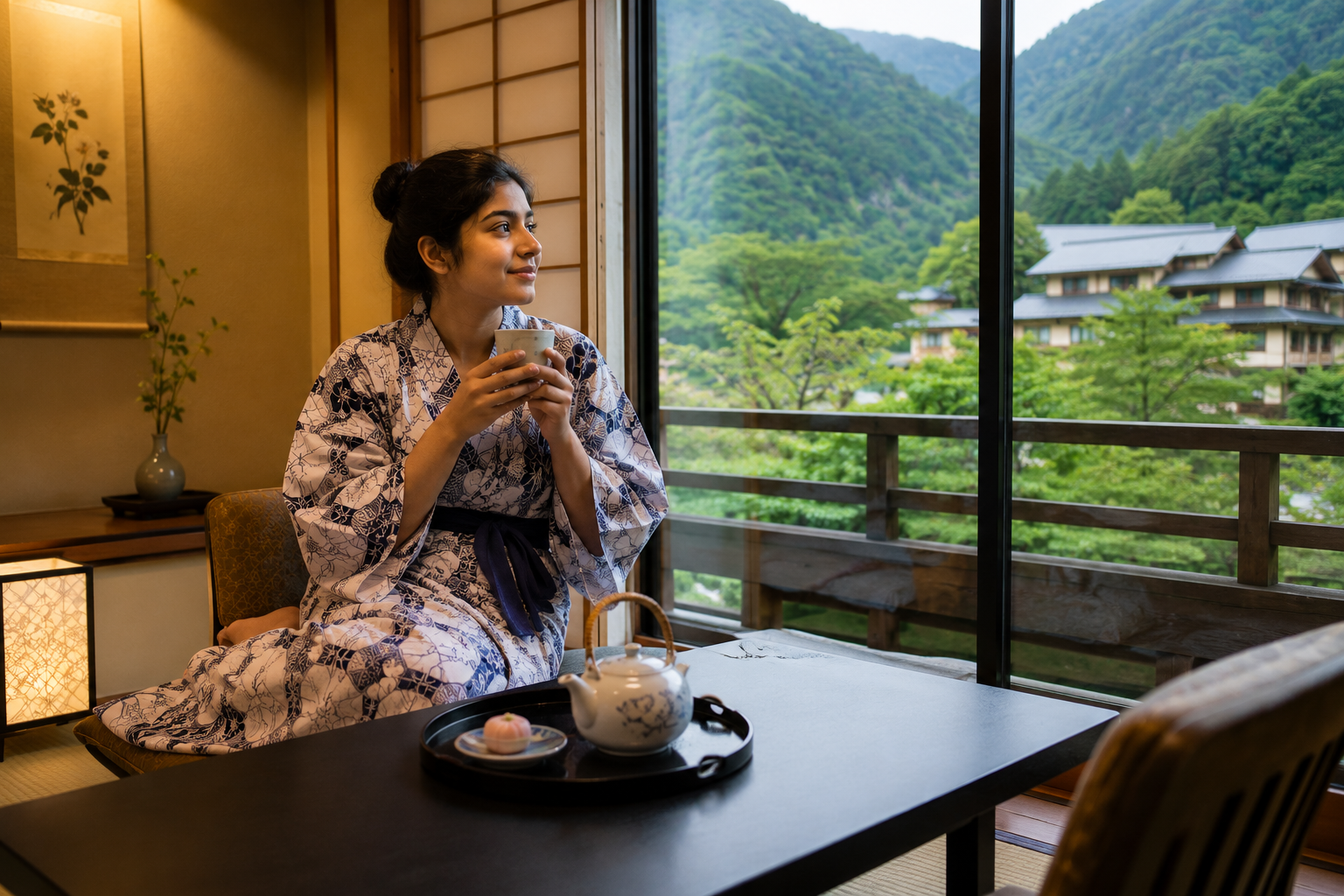
Ryokan etiquette in brief
- Remove your shoes at the entrance and wear the slippers provided (and separate toilet slippers in the bathroom).
- Wear the yukata left-side-over-right — right-over-left is used only for the deceased.
- Be punctual for kaiseki dinner; times are usually fixed.
- Don’t move the futon or rearrange the room yourself — staff handle it.
- Keep noise down in the evening; ryokan are peaceful by design.
Frequently asked questions
Do you have to be naked in a Japanese onsen?
Yes, public onsen are bathed in the nude and swimsuits are not allowed. Baths are almost always separated by sex, and it’s completely normal — no one pays attention. If you’d prefer privacy, book a private bath or a room with its own onsen.
Can you go in an onsen with tattoos?
Sometimes. Many traditional onsen still restrict tattoos, but tattoo-friendly baths are increasingly common. Small tattoos can be covered with a waterproof patch, or you can book a private bath to avoid the issue entirely. Ask at reception if unsure.
Do you wash before or after an onsen?
Before, always. Sit at a shower station and wash and rinse your whole body thoroughly before entering the bath. The soak is for relaxing, not cleaning.
What is a ryokan?
A traditional Japanese inn with tatami-mat rooms, futon bedding, yukata robes and often its own onsen. Stays usually include a multi-course kaiseki dinner and a traditional breakfast.
What do you wear in a ryokan?
A yukata (light cotton robe) provided by the inn, worn around the property and to the baths. Wrap it left-side over right.