
|
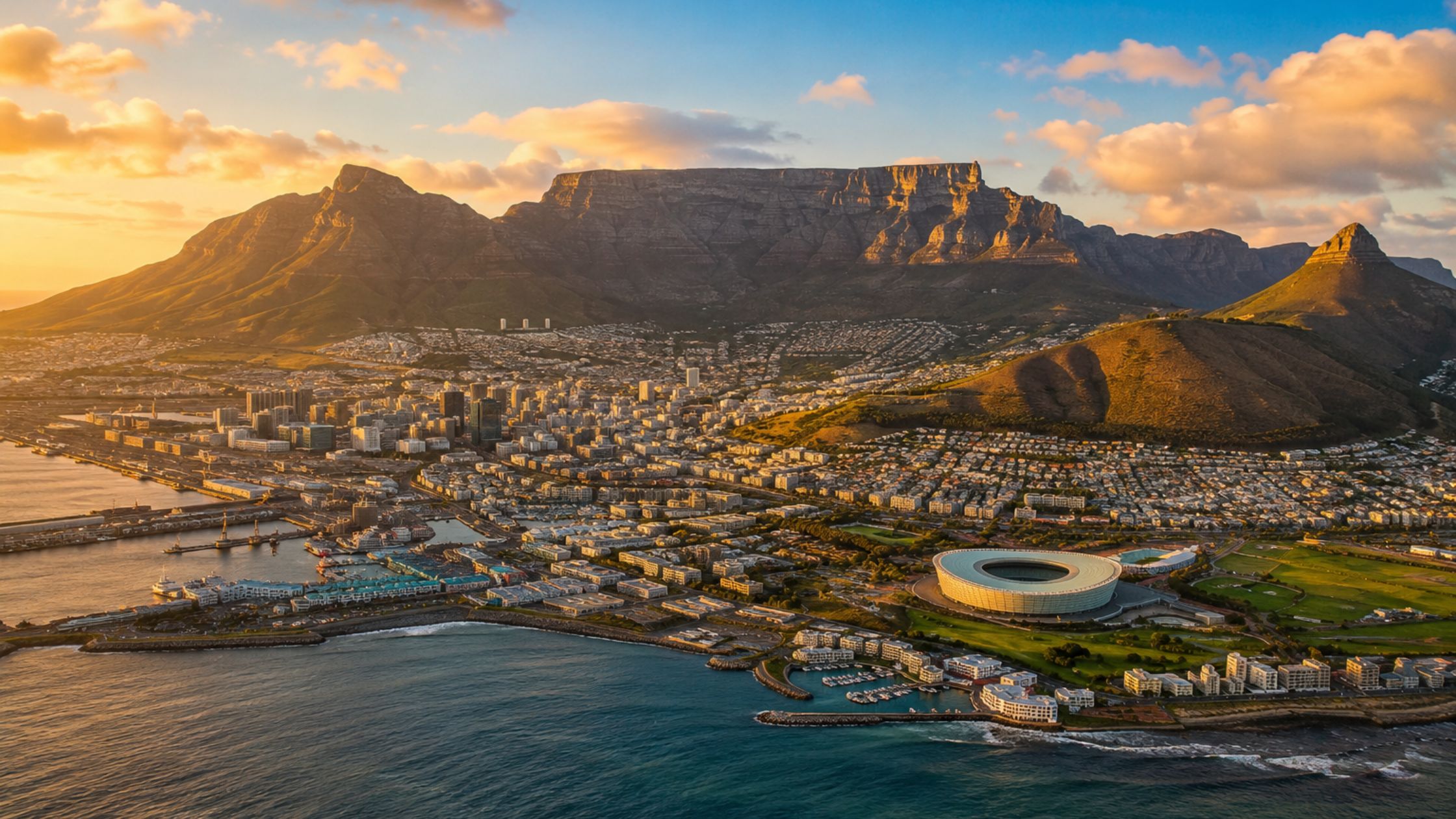
In short South Africa is one of the
world's great all-in-one trips: world-class safari, a stunning coastline, top wine country and a vibrant food scene, all at famously good value thanks to a
favourable exchange rate. Most Western travellers (US, UK, EU, Canada, Australia)
enter visa-free for 90 days. The best months are the dry winter (May–October)
for safari and the warm summer (November–March) for Cape Town and the coast.
A first trip of 10–14 days comfortably covers Cape Town, the Garden Route and
a Kruger safari. |
|
Quick facts |
|
|
Best time to visit |
May–Oct for safari (dry
winter); Nov–Mar for Cape Town & beaches |
|
Visa (most Western
passports) |
Visa-free up to 90 days;
India/China/Indonesia/Mexico need a free online ETA |
|
Currency |
South African Rand (ZAR);
roughly R18–19 = US$1 |
|
Daily budget (excl.
flights) |
Budget ~$60–70 · Mid-range
~$120–150 · Luxury $300+ |
|
Ideal trip length |
10–14 days for a first
visit |
|
Getting around |
Domestic flights +
self-drive (Garden Route); Uber/Bolt in cities |
|
Languages |
11 official; English very
widely spoken |
|
Driving |
On the LEFT |
|
Safety |
High urban crime — take
city precautions; safari & tourist areas generally fine |
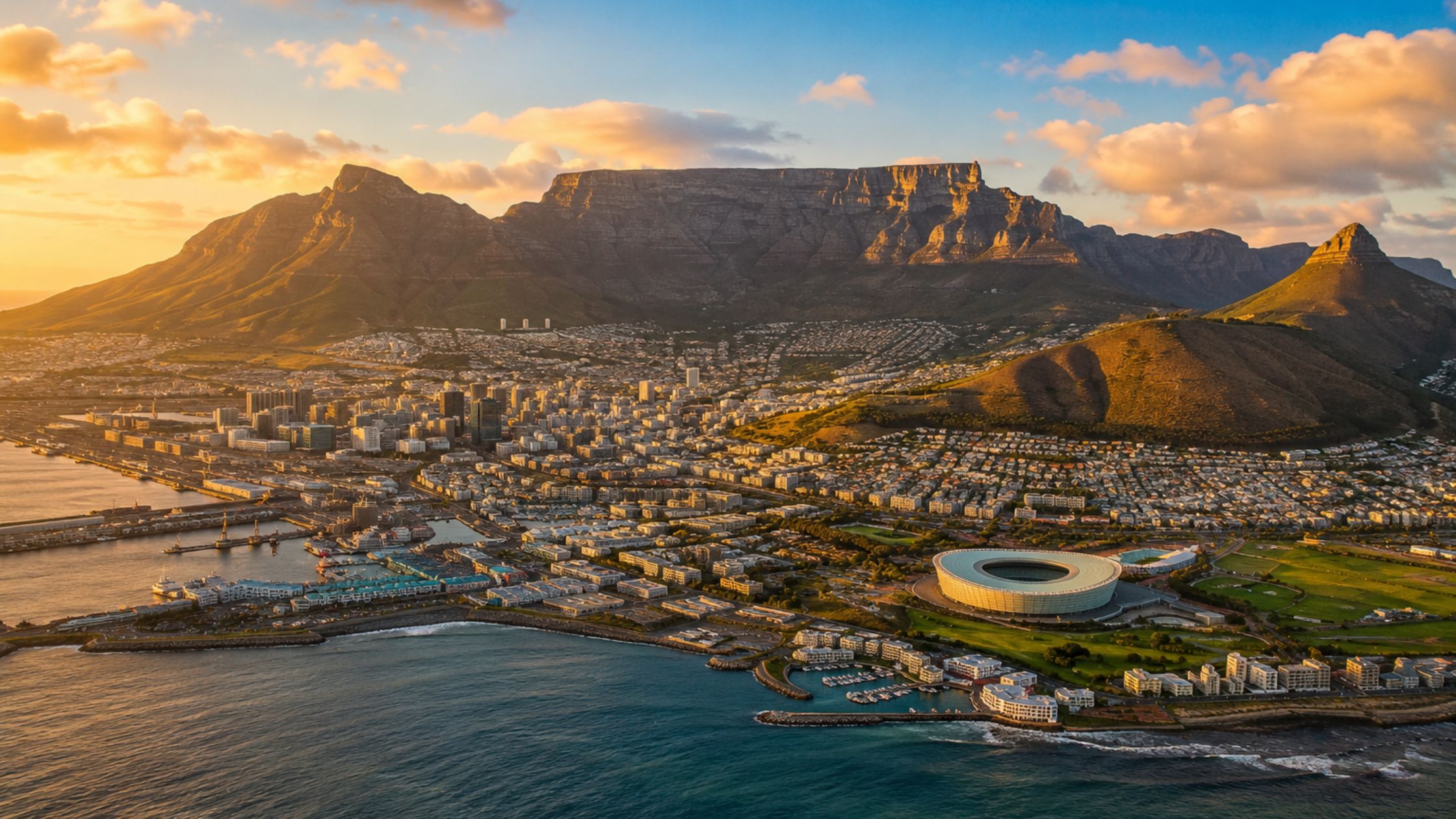
There are few
countries on earth that pack as much into one trip as South Africa. In a single
fortnight you can track lions at dawn in the bush, stand on top of a
flat-topped mountain looking down over two oceans, swirl a glass of
award-winning wine in a 300-year-old Cape Dutch estate, and end the day with a
beachside braai as the sky turns orange. It is wild and cosmopolitan, raw and
refined — and because of a strong exchange rate for most visitors, it delivers
all of this at a fraction of what a comparable trip costs in Europe, North
America or Australia.
This guide
walks you through everything you need to plan a brilliant, safe and well-paced
first trip: when to go, how to get around, where to base yourself, a
ready-to-use itinerary, what it really costs in 2026, and the honest safety and
cultural know-how that makes the difference between a stressful visit and a
seamless one.
|
Make it yours Before publishing, add 2–3 of
your own first-hand details and original photos — a specific lodge you stayed
at, a dish you loved, a viewpoint you reached at golden hour. Google now
strongly rewards genuine, lived experience over generic write-ups, so your
personal touches are what will set this guide apart. |
Why visit South Africa?
South Africa
earns its place near the top of most bucket lists because it offers so many
completely different experiences within easy reach of each other:
•
Big Five safari, made accessible. Kruger
National Park and its private reserves offer some of the most reliable lion,
leopard, elephant, rhino and buffalo sightings in Africa — and you can
self-drive or fly in.
•
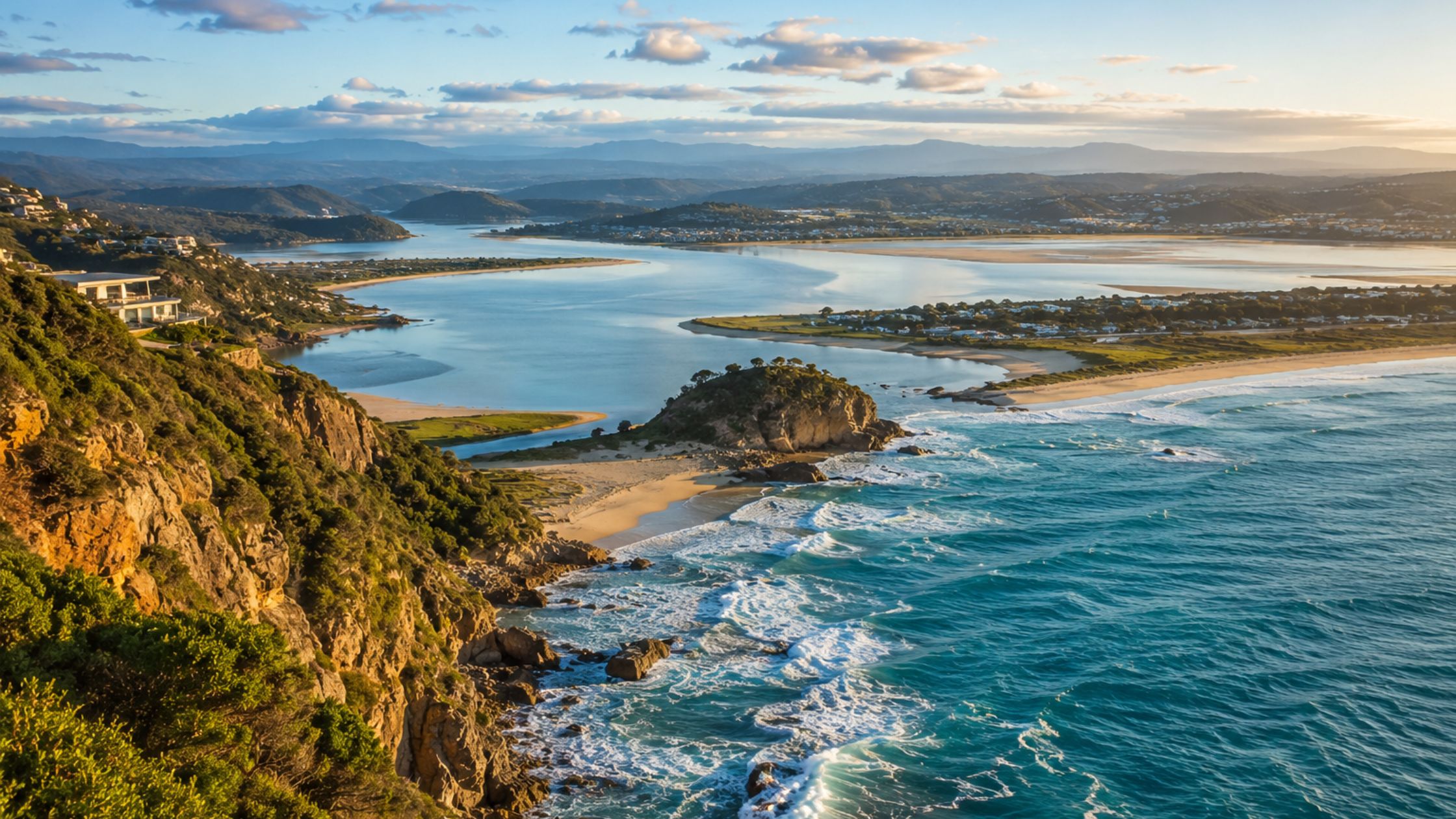
A jaw-dropping coastline. The Garden Route, the
Cape Peninsula and the warm-water beaches of KwaZulu-Natal rival anywhere in
the world.
•
World-class wine and food. The Cape Winelands
produce superb wines at gentle prices, and the country's food scene blends
African, Cape Malay, Indian and European influences.
•
Deep, moving history. From Robben Island to the
Apartheid Museum and Soweto, South Africa's recent history is powerful and
important to understand.
•
Outstanding value. Mid-range comfort here costs
what budget travel costs elsewhere.
It suits almost
everyone — families (many reserves are malaria-free and child-friendly),
couples (winelands and luxury lodges), adventurers (bungee, diving, hiking) and
first-time Africa travellers who want a soft landing with excellent
infrastructure.
Best time to visit South Africa
South Africa is
a year-round destination, but the ideal month depends on what you want most.
Because it's in the southern hemisphere, the seasons are reversed: winter runs
roughly May–August and summer December–February.
•
For safari (May–October): The dry winter is
prime wildlife season. Vegetation thins out and animals gather at shrinking
waterholes, so they're far easier to spot. It's also low-risk for malaria.
July–September is peak.
•
For Cape Town & the coast (November–March): Warm,
dry summer days are best for Table Mountain, beaches, the Garden Route and the
winelands (harvest season is Feb–March).
•
For whales (roughly June–November): Southern
right whales gather off Hermanus and the Cape coast — one of the world's best
land-based whale watching spots.
•
For value (April–May and September–October): These
shoulder months bring good weather, fewer crowds and lower prices, while still
offering strong game viewing.
|
Season |
What to
expect |
|
Dec–Feb (summer) |
Hot; peak for Cape Town
& beaches; busiest & priciest over the festive period |
|
Mar–May (autumn) |
Wine harvest, mild weather,
great value — a sweet spot |
|
Jun–Aug (winter) |
Cool/dry; best safari
conditions; whale season begins; Cape can be rainy |
|
Sep–Nov (spring) |
Wildflowers in the Western
Cape, warming up, excellent all-round value |
Visa & entry requirements
Good news for
most travellers: South Africa is visa-free for short tourist visits for a long
list of nationalities. Always confirm the rules for your specific passport
before booking, as they change.
•
Visa-free for 90 days: Citizens of the US, UK,
Canada, Australia, New Zealand, Ireland, most EU countries, Japan, South Korea,
Singapore, Brazil and Argentina, among others, get a free entry stamp on
arrival.
•
New ETA required for some: From late 2025 South
Africa rolled out an Electronic Travel Authorisation. Travellers from mainland
China, India, Indonesia and Mexico now apply online before flying (it's
typically free and granted within 72 hours) and must enter via designated
airports.
•
Visa needed for others: Many African and Asian
nationalities must apply in advance through VFS Global or a South African
embassy.
|
Passport rules — don't get
caught out Your passport must be valid at
least 30 days beyond your departure date (airlines often insist on 6 months —
play it safe). You need at least two consecutive completely blank pages
marked “Visa” for entry stamps, or you can be denied boarding. If you're arriving
from a yellow-fever risk country, you must carry a valid yellow fever
vaccination certificate. There are also special documentation rules for
travelling with children under 18 — check the latest before you fly. |
Getting there & getting around
Most long-haul
visitors arrive at OR Tambo International (Johannesburg) or Cape Town
International. Once you're in the country, getting around is easy by African
standards:
•
Domestic flights: Cheap, frequent and the smart
way to cover big distances (e.g. Johannesburg to Cape Town, or flying into a
Kruger airstrip). Book a few weeks ahead for the best fares.
•
Self-drive: South Africa has excellent roads and
is one of the best self-drive countries in Africa. The Garden Route and Cape
Peninsula are made for road trips. Remember: drive on the LEFT, and avoid
driving rural roads after dark.
•
Ride-hailing: Uber and Bolt work well and
cheaply in Cape Town, Johannesburg, Durban and Pretoria — the easiest way to
move around cities safely.
•
Gautrain: A fast, modern train linking OR Tambo
airport, Johannesburg and Pretoria.
•
Skip: Long-distance passenger trains are
limited, and minibus taxis, while cheap, are confusing and not recommended for
first-time visitors.
Where to stay: the key regions
Rather than a
single base, most itineraries string together a few regions. Here's how to
think about them:
•
Cape Town: The headline city — Table Mountain,
beaches, the V&A Waterfront, Camps Bay and the historic Bo-Kaap. Base in
the City Bowl, Sea Point or the Atlantic Seaboard. The most hotel-rich (and
priciest) area.
•
Cape Winelands (Stellenbosch & Franschhoek): Under
an hour from Cape Town; gorgeous wine estates, farm stays and superb
restaurants. Easy as a day trip or an overnight.
•
Garden Route (Knysna, Plettenberg Bay, Wilderness): A
scenic coastal drive of forests, lagoons and beaches — ideal for 2–4 nights of
road-tripping.
•
Kruger & Greater Kruger (Sabi Sands): Self-drive
the national park for value, or splurge on an all-inclusive private reserve for
off-road tracking and guided drives.
•
Johannesburg: The cultural and historical heart
— Apartheid Museum, Constitution Hill and Soweto. Often a gateway rather than a
long stay.
|
🖼 IMAGE: Map graphic showing a
Cape Town → Garden Route → Kruger route across South Africa. alt text: Map of a 12-day South Africa itinerary
from Cape Town to Kruger |
The perfect 10–12 day South Africa itinerary
This classic
loop combines the three things first-timers most want — a great city, a scenic
coastal drive and a Big Five safari. Fly between the long legs to save time.
Days 1–4 — Cape Town
•
Day 1: Arrive, settle in around the V&A Waterfront
or City Bowl, sunset at Signal Hill.
•
Day 2: Table Mountain (go early — it closes in high
wind), then explore the Bo-Kaap and city centre.
•
Day 3: Cape Peninsula drive — Boulders Beach penguins,
Cape of Good Hope, Chapman's Peak.
•
Day 4: Day trip to Stellenbosch or Franschhoek for wine
tasting (the Franschhoek Wine Tram is a fun, low-effort way to do it).
Days 5–8 — The Garden Route
•
Pick up a hire car and drive east. Overnight in
Wilderness or Knysna.
•
Knysna lagoon and the Heads; optional Featherbed Nature
Reserve.
•
Plettenberg Bay beaches; Tsitsikamma National Park
suspension bridge and forest walks.
•
Thrill-seekers: the Bloukrans Bridge bungee (one of the
world's highest) is right on the route.
Days 9–12 — Safari (Kruger or a private reserve)
•
Fly from George or Cape Town to a Kruger-area airstrip
(or to Johannesburg and on).
•
Self-drive Kruger for value, or check into a Greater
Kruger private lodge for guided dawn and dusk game drives.
•
Two to three nights is the sweet spot for reliably
seeing the Big Five.
•
Fly home from Johannesburg.
|
Short on time? If you only have a week, do Cape
Town (3 nights) plus a malaria-free reserve near the city or in the Eastern
Cape (Addo Elephant National Park is a great, family-friendly option) and
skip the long Garden Route drive. |
Top things to do in South Africa
•
Summit Table Mountain — hike up, or take the
rotating cableway (around R420 / $23 return). Unmissable, weather permitting.
•
Go on a Big Five game drive — the single
experience most people travel here for.
•
Meet the penguins at Boulders Beach — a colony
of African penguins you can see up close near Simon's Town.
•
Taste wine in the Cape Winelands — Stellenbosch
and Franschhoek offer world-class wine at very fair prices.
•
Take the ferry to Robben Island — tours are
often led by former political prisoners; book ahead.
•
Drive Chapman's Peak and the Cape Point loop —
one of the most beautiful coastal drives anywhere.
•
Understand the history in Johannesburg — the
Apartheid Museum and a guided Soweto tour are sobering and essential.
•
Watch whales from Hermanus (in season) — no boat
required.
Food & drink: what to try
South African
food is a delicious mash-up of cultures, built around the social ritual of the
braai (barbecue). Don't leave without trying:
•
Braai & boerewors — grilled meats and a
coiled farm sausage, the heart of South African social life.
•
Bobotie — spiced minced meat baked with an egg
topping, a Cape Malay classic.
•
Bunny chow — a hollowed loaf filled with curry,
born in Durban's Indian community.
•
Biltong & droëwors — air-dried, spiced meat
snacks; far better than they sound.
•
Cape Malay curry — fragrant, mildly sweet
curries best eaten in the Bo-Kaap.
•
Malva pudding & koeksisters — sweet, sticky
desserts to finish.
•
Wine & Amarula — Cape wines are superb;
Amarula is a local cream liqueur.
How much does a trip to South Africa cost? (2026)
South Africa is
genuinely affordable day-to-day for most international visitors. Your two big
variables are international flights and how much safari you do — luxury private
lodges can run into four figures per night, while self-driving Kruger costs a
fraction of that. The per-day figures below are per person and exclude
international flights.
|
Item |
Budget |
Mid-range |
Luxury |
|
Accommodation/night |
$15–25 (hostel/guesthouse) |
$60–150 |
$300+ |
|
Meals/day |
$10–15 |
$25–45 |
$70+ |
|
Local transport/day |
$5–15 |
$20–40 (car hire) |
$100+ (private driver) |
|
Activities/day |
$10–25 |
$30–60 |
$100+ |
|
Typical daily total |
$60–70 |
$120–150 |
$300+ |
Useful real
prices: Kruger daily entry is about R486 ($27) per person; the Table
Mountain cableway around R420 ($23) return; a restaurant meal R100–180 ($6–10);
a hostel dorm R250–400 ($14–22). A safari ranges from roughly $150/day for
budget self-drive or group trips, to $250–600/day for mid-range all-inclusive
lodges, to $800–1,500+/day at premier private reserves. A typical 7-day
combined Cape Town + safari holiday lands around $3,000–6,000 per person.
Is South Africa safe? Safety, scams & etiquette
This is the
question every first-timer asks, and the honest answer is: yes, millions visit
safely every year — but South Africa does have high crime rates, so you travel
smart rather than scared. Most incidents are opportunistic and avoidable with
normal big-city precautions.
•
Stick to well-trafficked tourist areas; use Uber/Bolt
at night rather than walking.
•
Don't flash phones, jewellery or cash; keep bags closed
and close to you.
•
Avoid visiting townships independently — only go with a
reputable guided tour.
•
Don't drive rural roads after dark (wildlife,
broken-down vehicles, and crime risk).
•
At traffic lights, keep doors locked and valuables out
of sight to avoid “smash-and-grab” theft.
•
On safari, always follow your guide's instructions —
wild animals are dangerous.
|
Good to know Load shedding: South Africa has
at times had scheduled power cuts. They've eased recently, but download a
load-shedding schedule app so you're never caught out. Tap water is safe to
drink in cities. Tipping is customary — around 10–15% in restaurants, and a
little extra for safari guides and trackers. |
Common first-timer mistakes to avoid
•
Trying to see too much — South Africa is huge. Pick a
region or two and go deep rather than racing across the country.
•
Underestimating drive times and booking too little
safari time (give it at least two nights).
•
Climbing Table Mountain plans around a fixed day —
build in flexibility, as the cableway closes in high wind.
•
Ignoring passport blank-page and validity rules and
getting denied boarding.
•
Assuming it's either “cheap” or “expensive” — it's
both, depending on your safari and flight choices.
•
Only seeing wildlife and skipping the country's
powerful history and food culture.
Frequently asked questions
Do I need a visa to visit South Africa?
Most Western
passport holders (US, UK, EU, Canada, Australia, New Zealand and many more) do
not need a visa for tourist stays of up to 90 days. Travellers from China,
India, Indonesia and Mexico now need a free online ETA, and some other
nationalities must apply for a visa in advance. Always check the current rule
for your passport before booking.
Is South Africa safe for tourists?
Yes, the vast
majority of visitors travel safely, but the country has high crime rates so you
should take normal big-city precautions: use ride-hailing apps at night, don't
flash valuables, avoid townships without a guide, and don't drive rural roads
after dark. Safari areas and main tourist sites are generally very safe.
How many days do you need in South Africa?
Ten to fourteen
days is ideal for a first visit, enough to combine Cape Town, the Garden Route
and a Kruger safari. With only a week, focus on Cape Town plus a nearby
malaria-free reserve.
When is the best time to go on safari in South Africa?
The dry winter
months of May to October are best: animals gather at waterholes and are easier
to spot, and malaria risk is lower. July to September is peak safari season.
Is South Africa expensive?
Day-to-day it's
very good value for most international visitors thanks to a favourable exchange
rate — meals, local transport and many activities are inexpensive. The cost
adds up mainly through international flights and luxury safari lodges, both of
which you can scale to your budget.
Do I need malaria tablets?
It depends on
where you go. The Kruger area is a low-risk malaria zone, especially in the dry
winter, and many travellers take antimalarials there. Cape Town, the Garden
Route and the Eastern Cape (including Addo) are malaria-free. Always seek
personalised medical advice before you travel.
Final thoughts
South Africa
rewards travellers who slow down and go deep. Choose two or three regions, mix
the wild and the cultured, leave room in the budget for one standout safari
experience, and take the everyday safety precautions seriously — do that, and
you'll come home with one of the best trips of your life.
|
Keep planning Read next: our Cape Town
city guide, the perfect Garden Route road trip, where to go on your first
South African safari, and South Africa on a budget. |