
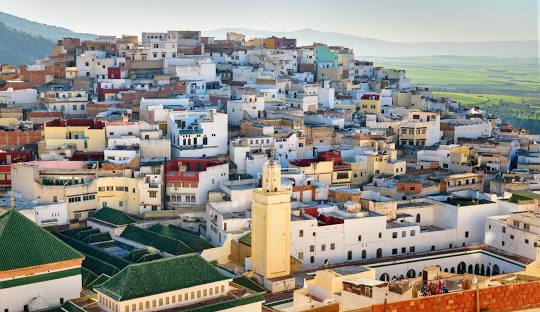
Few countries
pack as much into a single trip as Morocco. In the space of a week you can
haggle for lanterns in a thousand-year-old souk, watch the sun melt into the
Sahara from the back of a camel, sip sweet mint tea in a tiled courtyard, and
wake up to snow on the Atlas Mountains. It is loud, colourful, ancient, and
endlessly photogenic — and, happily for first-timers, it is also one of the
most affordable and accessible adventures on the planet.
This guide
walks you through everything you actually need to plan that trip: when to go,
whether you need a visa, how much it costs, where to go, how to get around,
what to eat, and how to travel respectfully and safely. Whether you are
dreaming of a long weekend in Marrakech or a two-week loop across the whole
country, start here.
Why Go to Morocco?
Morocco sits at
the crossroads of Africa, Europe, and the Arab world, and you feel that mixture
everywhere — in the architecture, the food, the languages, and the faces.
Here's what keeps travellers coming back:
•
Imperial cities —
Marrakech, Fes, Meknes, and Rabat brim with palaces, mosques, and labyrinthine
medinas that have barely changed in centuries.
•
The Sahara —
a night under the stars in a desert camp at Erg Chebbi is the kind of memory
that ruins you for ordinary holidays.
•
World-class food —
tagines, couscous, fresh bread, and that ever-present pot of mint tea make
Morocco a destination for your stomach as much as your camera.
•
Incredible value —
your money stretches remarkably far here compared with Europe or North America.
•
Easy to reach —
it's just a short hop from many European cities, and now has direct long-haul
links from North America.
|
✦ Why 2026 is a smart year to go Morocco is co-hosting the 2030
FIFA World Cup with Spain and Portugal. The country is investing heavily in
hotels, airports, and high-speed rail — but accommodation prices in hotspots
like Marrakech are already creeping up by roughly 10–15% a year. In other
words, Morocco is still a bargain, but it may not stay this affordable. Going
sooner rather than later means you catch the value before the crowds and the
price tags grow. |
The Best Time to Visit Morocco
The sweet
spots are spring (March to May) and autumn (September to November). In
these shoulder seasons the days are warm but not punishing, the nights are
cool, and conditions are pleasant whether you're wandering medinas, hiking the
Atlas, or camping in the desert. Summer can be brutally hot inland (Marrakech
and the Sahara routinely top 40°C), though the Atlantic coast around Essaouira
stays breezy. Winter is mild in the south but wet in the north, with real snow
— and skiing — in the High Atlas.
|
Season |
Months |
What to expect |
|
Spring
★ |
Mar–May |
The ideal window. Warm days,
wildflowers, comfortable everywhere — cities, desert, and mountains alike. |
|
Summer |
Jun–Aug |
Very hot inland; head for the
coast (Essaouira, Agadir). Fewer crowds in the cities but tough sightseeing
weather. |
|
Autumn
★ |
Sep–Nov |
The other ideal window. Cooling
temperatures, golden light, great for desert trips. |
|
Winter |
Dec–Feb |
Mild south, chilly and wet north,
snow in the Atlas. Quieter and cheaper; pack warm layers. |
A note on Ramadan: in 2026 Ramadan falls
roughly from 17 February to 18 March (dates depend on the moon sighting).
Travel is absolutely possible and the evening atmosphere is magical, but many
local restaurants close during daylight hours and the daytime pace slows down.
Plan for tourist-facing restaurants and a more relaxed schedule if your trip
overlaps.
Do You Need a Visa?
For most
Western travellers, Morocco is refreshingly simple: you don't need a visa for a
holiday. Citizens of around 60+ countries — including the US, UK, all EU
nations, Canada, and Australia — can enter visa-free for up to 90 days,
receiving a stamp on arrival at the airport or border.
|
Traveller |
What you need |
|
US,
UK, EU, Canada, Australia |
No visa for stays up to 90 days.
Just a passport stamp on arrival. |
|
India
and various others |
Apply online in advance for the
Morocco e-Visa (single entry, ~30-day stay). |
|
Everyone |
A passport valid for the length
of your stay — most sources advise 3 to 6 months of validity, undamaged. |
One easy-to-miss tip: make sure the border
officer actually stamps your passport on entry. A handful of travellers have
run into trouble leaving the country because they had no entry stamp.
Visa rules can change. Always confirm the current
requirements for your specific nationality with an official government travel
advisory or a Moroccan consulate before you book.
How Much Does a Trip to Morocco Cost?
Here's the good
news that surprises almost everyone: Morocco is brilliant value. You can sleep
in a centuries-old medina palace, eat one of the world's great cuisines, and
ride a camel into the dunes — sometimes all in the same day — for a fraction of
what a comparable trip in Europe would cost. The figures below are rough 2026
per-day estimates and exclude international flights.
|
Travel style |
Per day (USD) |
What it buys you |
|
Budget |
$30–50 |
Hostel or simple riad, street
food and market meals, trains and shared taxis, free medina wandering. |
|
Mid-range |
$70–120 |
A private riad room, restaurant
meals, first-class trains, a guided day trip or two. |
|
Luxury |
$200+ |
Boutique and five-star riads,
private driver, fine dining, premium desert camps. |
Money basics: the currency is the Moroccan
dirham (MAD), and roughly 10 MAD equals 1 US dollar. The dirham is a 'closed'
currency, so you generally can't buy it before you arrive — withdraw cash from
an ATM at the airport or in town. Cards work at hotels, upscale restaurants,
and bigger shops, but you'll want cash for the medinas, taxis, street food, and
tipping. A rough 7-day trip runs around $350–550 for budget travellers,
$700–1,200 mid-range, and $1,800+ for luxury, before flights.
|
✦ Insider tip on flights From Europe, budget carriers
(Ryanair, easyJet, Transavia) fly to Marrakech, Fes, Tangier, and Agadir for
as little as €50–300 return — book 6–8 weeks ahead. From North America, Royal
Air Maroc flies direct to Casablanca from New York, Washington, and Miami,
with a new Los Angeles route launching in mid-2026. |
Getting There and Getting Around
Getting there
Morocco's main
gateways are Marrakech (RAK) and Casablanca (CMN), with Fes, Tangier, and
Agadir also taking international flights. If you're in southern Spain, you can
skip flying altogether and take the fast ferry from Tarifa to Tangier — it
crosses in around 35 minutes and is a spectacular way to arrive.
Getting around
Once you're in,
the country is easier to navigate than you might expect:
•
Trains —
the national operator ONCF runs comfortable, affordable services, including the
Al Boraq high-speed line linking Tangier, Rabat, and Casablanca. Book first
class for a few dollars more.
•
Buses —
CTM and Supratours coaches are reliable and cheap, reaching towns the trains
don't.
•
Grand taxis —
shared long-distance taxis run fixed routes between towns; agree the fare
before you set off.
•
Petit taxis —
metered city cabs for short hops; insist on the meter or settle the price
first.
•
Private driver —
hiring a driver-guide for a multi-day loop is hugely popular and takes the
stress out of mountain roads. Self-driving is also straightforward on Morocco's
well-paved roads if you want maximum flexibility.
Where to Go: Morocco's Best Cities and Regions
You could spend
a month here and still not see it all. For a first trip, these are the headline
acts — mix a couple of cities with a desert or mountain escape for the perfect
balance.
Marrakech
The country's
beating heart for most visitors. Lose yourself in the souks, watch the chaos of
Jemaa el-Fnaa square come alive at dusk, escape to the cool blues of the
Majorelle Garden, and retreat to a courtyard riad when it all gets gloriously
overwhelming.
Fes
Morocco's
spiritual and cultural soul, home to the world's largest car-free urban area
and a medieval medina that feels like time travel. The famous tanneries and
centuries-old craft workshops are highlights — a local guide is well worth it
here to avoid getting hopelessly (if happily) lost.
Chefchaouen
The 'Blue City'
tucked into the Rif Mountains, where nearly every wall, door, and staircase is
painted a dreamy shade of blue. Smaller and more laid-back than the big cities,
it's made for slow strolls and even slower coffees.
The Sahara (Merzouga & Erg Chebbi)
The trip
everyone remembers. Most travellers reach the dunes via a multi-day tour from
Marrakech or Fes, riding a camel over the sand to a desert camp for sunset,
dinner under the stars, and a sky absolutely crammed with them.
Essaouira
A breezy,
walled port town on the Atlantic, beloved for its fresh seafood, relaxed
medina, art galleries, and wind-and-kite-surfing. The perfect antidote if the
inland cities leave you frazzled.
The Atlas Mountains
Just a couple
of hours from Marrakech, the High Atlas offers Berber (Amazigh) villages,
dramatic valleys, and trekking up to Mount Toubkal, North Africa's highest
peak. Don't miss the fortified mud-brick ksar of Aït Benhaddou, a film-set
favourite and UNESCO site.
Casablanca & Rabat
Casablanca is
Morocco's modern, cosmopolitan business hub, anchored by the breathtaking
seaside Hassan II Mosque. Many travellers use it as an arrival point, but it
rewards a day. Rabat, the relaxed capital, pairs imperial history with a tidy,
walkable medina.
How Long to Stay (and Sample Routes)
Morocco rewards
time, but you can taste it in a week. A loose rule of thumb:
•
7 days —
the highlights: Marrakech plus an overnight Sahara trip, with a day in the
Atlas on the way.
•
10 days —
add Fes and the blue lanes of Chefchaouen for a fuller northern-and-southern
mix.
•
14 days —
a proper grand loop: Marrakech, the desert, Fes, Chefchaouen, and a coastal
wind-down in Essaouira.
If your time is
tight, resist the urge to cram in every city — Morocco's distances are long,
and you'll enjoy three places properly far more than six in a blur.
Where to Stay: The Magic of Riads
Skip the chain
hotels if you can. The quintessential Moroccan stay is a riad — a traditional
house built around a peaceful inner courtyard, often with a fountain, intricate
tilework, and a rooftop terrace for breakfast and sunset. Riads put you right
inside the medina, steps from the action, yet hidden behind thick walls that
block out the noise. Budget guesthouses start around $15–30 a night, beautiful
boutique riads sit in the $40–120 range, and the country's most lavish
properties rival anywhere in the world for a fraction of the price.
What to Eat and Drink
Moroccan
cuisine is a genuine reason to visit. Centuries as a spice-trade crossroads
left their mark, and meals here are slow, generous, and deeply social. A few
things you can't leave without trying:
•
Tagine —
slow-cooked stews (lamb with prunes, chicken with preserved lemon and olives)
named after the conical clay pot they're cooked in.
•
Couscous —
traditionally the Friday feast, steamed fluffy and piled with vegetables and
meat.
•
Street food —
msemen (flaky pan-fried flatbread), sfenj (Moroccan doughnuts), and grilled
skewers from the night markets.
•
Mint tea —
the national drink and the ultimate gesture of hospitality; you'll be offered
it everywhere, poured theatrically from a height.
On alcohol: despite a common myth, it isn't
banned. Many modern riads, hotels, rooftop bars, and tourist restaurants serve
wine and beer, though it's far from everywhere and is heavily taxed. As for
water, stick to bottled or filtered, and pack a reusable bottle.
Culture, Etiquette, and What to Wear
Morocco is a
warm, welcoming, and predominantly Muslim country, and a little cultural
awareness goes a long way. The locals are famously hospitable — meeting that
openness with respect makes for a richer trip.
•
Dress modestly —
covering shoulders and knees is appreciated, especially away from resorts.
Women in particular tend to feel more comfortable in looser, more covering
clothing; a scarf is handy.
•
Ask before
photographing people — a smile and a quick request go a long way,
and some will expect a small tip.
•
Tip generously
but modestly — small tips (a few dirham) for porters, guides, café
staff, and helpers are customary and an important part of incomes. Carry coins
and small notes.
•
Haggle with a
smile — in the souks, the first price is never the real one. Start
around a third of the asking price, stay friendly, and be genuinely willing to
walk away. It's a game, not a fight.
•
Mind the calendar
— during Ramadan, avoid eating, drinking, or smoking openly in
public during daylight as a courtesy.
Is Morocco Safe?
Yes —
Morocco is generally safe for tourists. Violent crime against visitors is
rare, and major tourist areas are well-policed. The things to watch for are
petty annoyances rather than real danger: persistent touts, overpriced 'tours',
and the occasional scam. A bit of street smarts handles almost all of it.
Common hassles
and how to sidestep them:
•
Fake guides —
men who attach themselves to you in the medina, 'help', then demand payment.
Politely decline and book guides through your riad.
•
The 'this way is
closed' detour — a classic ploy to lead you somewhere you'll be
pressured to buy. Trust your map.
•
Souk pressure —
never feel rushed into buying, especially carpets. Take your time, compare, and
walk away freely.
•
Inflated taxi
fares — agree the price or insist on the meter before getting in.
Solo female travellers
Many women
travel Morocco solo and have a wonderful time, but it pays to be prepared.
Catcalling and unwanted attention do happen. Dressing modestly, projecting
confidence, avoiding quiet alleys after dark, and booking guides and transfers
in advance all help. Joining a small group tour for the desert leg is a
popular, comfortable option for first-timers.
What to Pack and Other Practical Tips
A quick
checklist to round things off:
•
Modest, breathable layers — and something warm
for cool desert nights and the mountains.
•
Comfortable, broken-in walking shoes for endless
cobbled medinas.
•
A scarf (shade, dust, mosques, modesty — it does
it all).
•
Sunscreen, sunglasses, and a refillable water
bottle.
•
A universal plug adapter (Morocco uses
European-style round-pin sockets).
•
Connectivity —
grab a local SIM from Maroc Telecom or Inwi (around $3–5) or an eSIM for cheap,
reliable data.
•
Language —
Arabic and Amazigh (Berber) are official; French is widely spoken, and English
is common in tourist areas. A few words of Arabic ('shukran' for thank you)
earns big smiles.
Frequently Asked Questions
Do I need a visa to visit Morocco?
Most likely
not. Citizens of the US, UK, EU, Canada, Australia, and 60+ other countries
enter visa-free for up to 90 days. Some nationalities need an e-Visa applied
for online. Always check your country's current rules before booking.
Is Morocco expensive?
No — it's one
of the best-value destinations around. Budget travellers manage on $30–50 a
day, mid-range on $70–120, and even luxury costs far less than the European
equivalent.
What's the best time to visit?
Spring
(March–May) and autumn (September–November) offer the most comfortable weather
across cities, desert, and mountains.
Is Morocco safe for solo female travellers?
Generally yes,
with sensible precautions. Dress modestly, stay confident, avoid empty areas at
night, and consider group tours for the desert. Unwanted attention can occur
but serious incidents are uncommon.
How many days do I need?
Seven days
covers the highlights; ten lets you add Fes and Chefchaouen; two weeks allows a
full, unhurried loop.
Can you drink alcohol in Morocco?
Yes, though it
isn't available everywhere. Many riads, hotels, and tourist restaurants serve
it, but it's taxed and less common outside those settings.
What currency is used, and can I use cards?
The Moroccan
dirham (MAD), roughly 10 to the US dollar. You can't buy it abroad, so withdraw
on arrival. Cards work in hotels and larger venues; carry cash for medinas,
taxis, and street food.
Final Thoughts
Morocco has a
way of overwhelming your senses and then completely winning you over. Go in
with an open mind, a flexible plan, and a healthy appetite, and it will hand
you the kind of stories you'll be telling for years. Sort your visa check, pick
your season, book a riad with a rooftop — and get ready for the mint tea. Your
adventure starts now.