
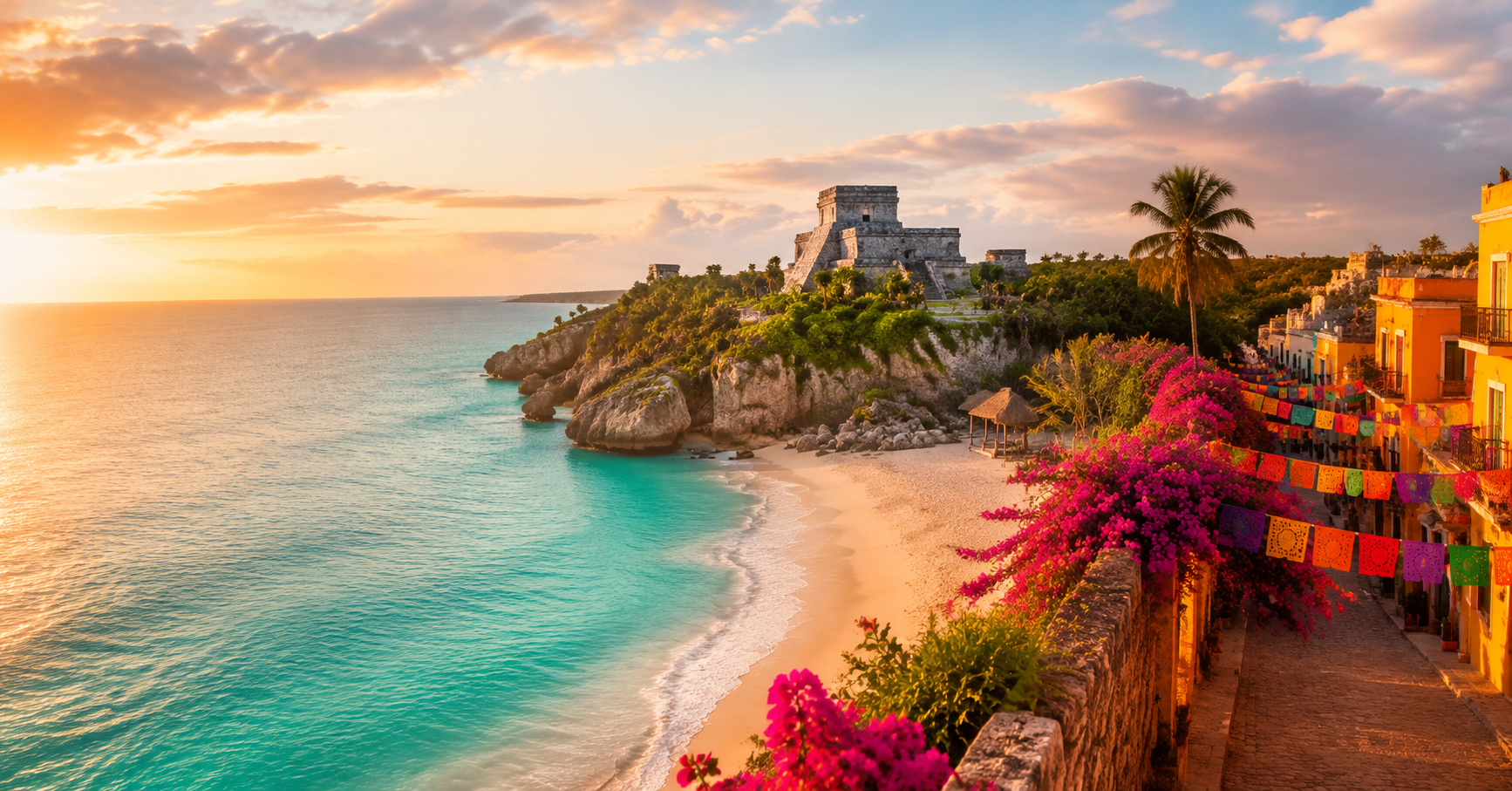
Mexico is far
bigger and more varied than the resort brochures suggest. Beyond the
all-inclusives of Cancún lies a country of ancient pyramids rising from the
jungle, colonial cities glowing in pastel, street stalls turning out some of
the planet's best food, and beaches on two very different coasts. It's a place
where you can snorkel a cenote in the morning, wander a UNESCO old town by
afternoon, and eat tacos al pastor under string lights at night.
This Mexico travel guide covers everything you need for a smooth 2026 trip: the entry rules and digital tourist card, the Quintana Roo Visitax, the best time to visit, a ready-made itinerary, real costs, the food you can't miss, how to get around, and honest, practical safety advice so you can travel confidently and well.
Why visit Mexico?
Mexico offers a rare mix of culture, nature, food and value that keeps travellers coming back for different trips entirely.
- Ancient civilisations. Chichén Itzá, Teotihuacán, Palenque and Tulum bring the Maya and Aztec worlds vividly to life.
- A world-class cuisine. Tacos, mole, tamales and regional specialities make Mexican food a UNESCO-listed treasure — and a reason to visit on its own.
- Two spectacular coasts. The turquoise Caribbean of the Riviera Maya and the wilder Pacific of Oaxaca, Puerto Escondido and Baja.
- Colourful colonial towns. Oaxaca, San Miguel de Allende, Guanajuato and Mérida overflow with charm, art and history.
- Incredible value. Your money goes far, from street food to boutique stays, especially away from the big resorts.
It suits beach-lovers, foodies, culture and history buffs, adventure travellers and families — and it's easy to combine relaxation with real exploration.
Best time to visit Mexico
Mexico can be visited year-round, but the dry season is the clear favourite for most trips, especially to the coasts.
- November–April (dry season): The prime window — warm, sunny days, low humidity and calm seas. December to February is peak (and priciest); the coasts are glorious.
- May (shoulder): Hot and still mostly dry, with fewer crowds before the rains — good value.
- June–October (wet & hurricane season): Afternoon rains, high humidity and a real (if usually brief) hurricane risk on the Caribbean and Gulf coasts. Prices drop and the landscapes turn lush.
- Festival timing: Day of the Dead (late October–early November) in Oaxaca and central Mexico is unforgettable, but book far ahead.
Visa & entry requirements
Entry to Mexico is straightforward for most travellers, but a couple of details have changed and are worth getting right.
- Visa-free for many: Citizens of the US, UK, EU, Canada, Australia and dozens of other countries don't need a visa for tourism and can stay up to 180 days. Holders of a valid US, UK, Canadian, Japanese or Schengen visa are also generally exempt.
- Digital tourist card (FMM): The old paper FMM has largely been replaced by a digital form. At major airports you're processed electronically and given a passport stamp showing your permitted stay — keep any receipt or QR code you're issued, as you may need it to leave.
- Check your stamp: Immigration officers set your length of stay and it isn't always the full 180 days — check the number written or stamped in your passport on arrival.
- Passport validity: Your passport should be valid for the duration of your stay (six months is a safe rule of thumb).
Getting there & getting around
Mexico is vast, so how you get around depends on how much ground you're covering. Cancún, Mexico City, Guadalajara and Los Cabos are the main international gateways.
- Domestic flights: The practical way to hop between distant regions (say, Cancún to Oaxaca or Mexico City) — cheap and frequent with Volaris, VivaAerobus and Aeroméxico.
- ADO buses: Comfortable, safe long-distance coaches connect towns across the country, especially in the Yucatán and south.
- Renting a car: Great for exploring the Yucatán's cenotes, ruins and small towns at your own pace; less appealing in big cities.
- The Maya Train: A newer rail line loops the Yucatán Peninsula, linking Cancún, Mérida, Palenque and more — handy for car-free travel.
- In cities: Use official taxis, Uber/DiDi apps and metros; avoid hailing unmarked cabs on the street.
Where to go: Mexico's top regions
- Yucatán & Riviera Maya: Chichén Itzá, cenotes, Tulum's clifftop ruins, Caribbean beaches, and colonial Mérida and Valladolid.
- Mexico City: A world-class capital — museums, murals, Frida Kahlo's house, incredible food, and the pyramids of Teotihuacán nearby.
- Oaxaca: The country's culinary and cultural heart — mole, mezcal, markets, ruins at Monte Albán and the best Day of the Dead.
- Central colonial cities: San Miguel de Allende, Guanajuato and Querétaro — pastel streets, plazas and art.
- Baja California: Los Cabos, whale watching, desert-meets-sea landscapes and the wine country of Valle de Guadalupe.
- Pacific coast: Puerto Escondido and Puerto Vallarta for surf, sunsets and a more laid-back beach scene.
- Chiapas: Jungle ruins at Palenque, waterfalls and highland indigenous culture around San Cristóbal.
The perfect 7–10 day Mexico itinerary
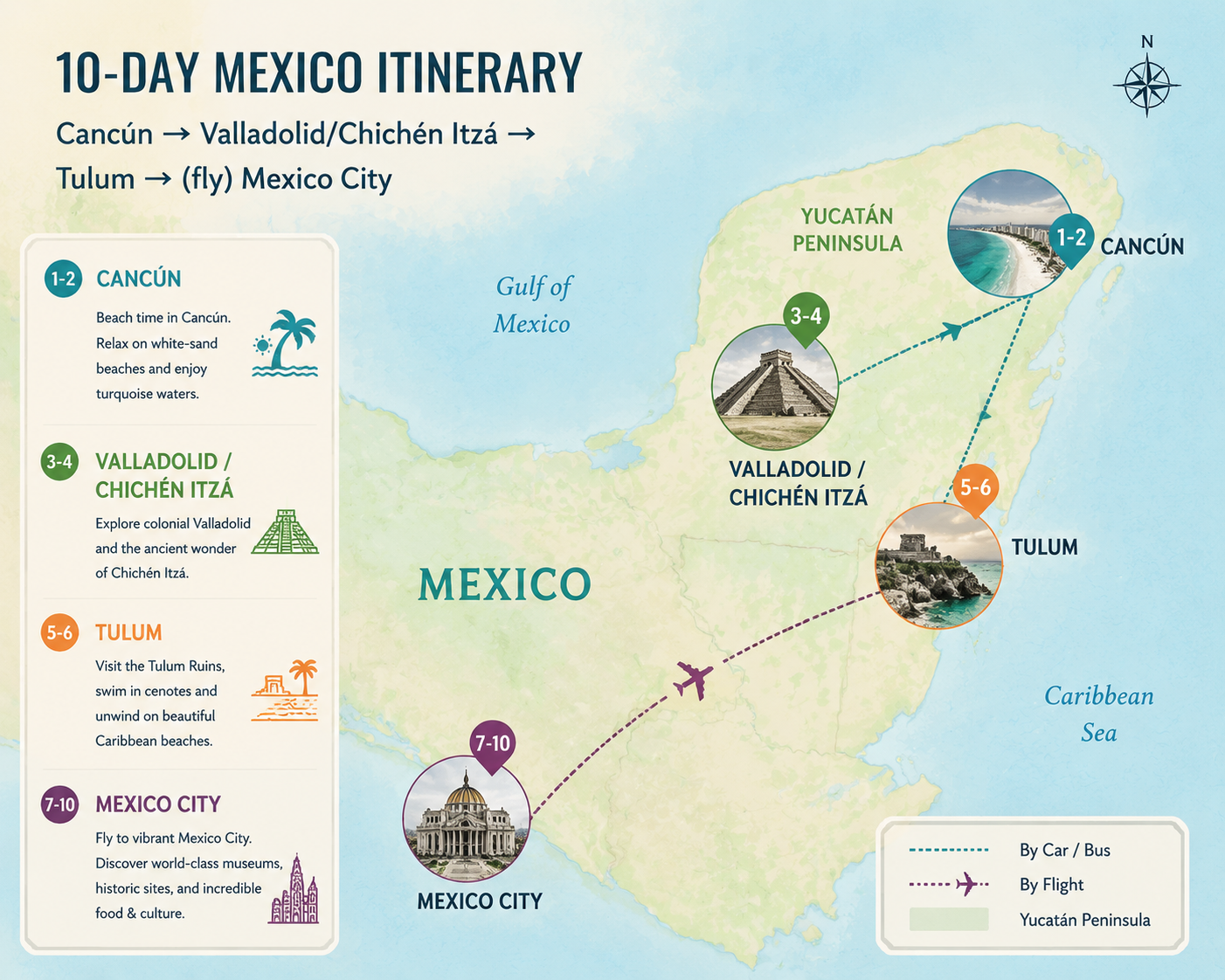
This route pairs the Yucatán's ruins, cenotes and beaches with the culture and food of Mexico City. It's an ideal, varied first trip.
Days 1–2 — Cancún or Playa del Carmen. Ease in on the Caribbean coast, then base yourself in Playa del Carmen or Tulum. Swim in a cenote and enjoy the beach (remember the Visitax).
Days 3–4 — Valladolid & Chichén Itzá. Head inland to the colonial town of Valladolid, visit the great pyramid of Chichén Itzá early to beat the heat and crowds, and cool off in nearby cenotes.
Days 5–6 — Tulum & the coast. Explore Tulum's clifftop Mayan ruins, more cenotes and beaches, and the Sian Ka'an biosphere. A relaxed, scenic stretch.
Days 7–10 — Mexico City. Fly to the capital to finish: the historic centre, Frida Kahlo's Casa Azul, world-class museums, the floating gardens of Xochimilco, and a day trip to the pyramids of Teotihuacán — plus the best eating of the trip.
How much does a Mexico trip cost? (2026)
Mexico offers excellent value, though the Riviera Maya resorts sit at the pricier end. The figures below are rough per-person daily costs, excluding international flights.
| Style | Per person / day | Where you stay | Best for |
|---|---|---|---|
| Budget | $40–70 | Hostels, guesthouses, street food | Backpackers, students |
| Mid-range | $80–180 | 3–4★ hotels, restaurants, tours | Most travellers |
| Comfort | $180–300 | Boutique hotels, private trips | Couples, families |
| Luxury | $300+ | Resorts, villas, private guides | Bucket-list splurge |
Food & drink
Mexican cuisine is one of the world's greatest and deeply regional. Skip the generic and seek out the real thing:
- Tacos, done properly. Al pastor, carnitas, birria and fish tacos — the best come from busy street stalls, not tourist restaurants.
- Mole & Oaxacan classics. Complex, chocolate-tinged sauces, tlayudas and stringy quesillo cheese in Oaxaca.
- Yucatecan specialities. Cochinita pibil (slow-roasted pork), sopa de lima and panuchos.
- Antojitos. Tamales, elotes, quesadillas and tostadas from markets and street carts.
- Drinks. Fresh aguas frescas, real Mexican coffee, tequila and smoky mezcal — sip mezcal slowly, the local way.
- Eat where it's busy. A packed local stall is both the tastiest and the safest bet.
Is Mexico safe? Safety & practical tips
Mexico is a huge country, and safety varies enormously by region. The main tourist areas — the Yucatán, Mexico City's central neighbourhoods, Oaxaca and the colonial towns — see millions of visitors safely each year. Travel sensibly and check current advice rather than painting the whole country with one brush.
- Check your government's travel advisory, which rates safety state by state; stick to well-travelled tourist regions and avoid specific areas flagged as higher risk.
- In cities, use Uber/DiDi or hotel taxis rather than street cabs, and take normal big-city precautions with valuables at night.
- Use ATMs inside banks or malls during the day, and let your bank know you're travelling.
- Drink bottled or filtered water, and ease into street food — busy, popular stalls are your friend.
- Protect against the sun and mosquitoes, and don't swim beyond your ability at Pacific beaches with strong currents.
What to pack & common mistakes
- Reef-safe sunscreen — required at cenotes and eco-parks to protect the water and marine life.
- Light, breathable clothing plus a layer for cool highland evenings (Mexico City and Oaxaca sit at altitude).
- Water shoes and a dry bag for cenotes, plus mosquito repellent for the jungle.
- Don't underestimate distances. Mexico is vast — fly between far-apart regions rather than enduring huge drives.
- Don't forget the Visitax if you're in Quintana Roo, and keep the QR code for departure.
- Don't skip the interior. The coast is only half the story — the colonial cities and Mexico City are unmissable.
Frequently asked questions
Do I need a visa to visit Mexico?
Most travellers — including US, UK, EU, Canadian and Australian citizens — don't need a visa for tourism and can stay up to 180 days. The old paper tourist card (FMM) is now largely digital, issued electronically with a passport stamp at the airport. Check the length of stay written in your passport, and keep any receipt or QR code you're given.
What is the Visitax and do I have to pay it?
Visitax is a state tourist tax for Quintana Roo, which covers Cancún, Tulum, Playa del Carmen, Cozumel, Isla Mujeres and Bacalar. Every international visitor pays a one-off fee of about MXN 283 (US$15) per person. Pay online through the official state portal, save the QR code, and be ready to show it when you depart.
When is the best time to visit Mexico?
November to April is the prime dry season — sunny, warm and ideal for the beaches. May is a hot, quieter shoulder month, while June to October brings rain and a hurricane risk on the coasts (but lower prices and lush landscapes).
Is Mexico safe for tourists?
The main tourist regions — the Yucatán, central Mexico City, Oaxaca and the colonial towns — welcome millions of visitors safely each year. Safety varies by state, so check your government's advisory, stick to well-travelled areas, use ride apps or hotel taxis, and take normal big-city precautions.
How much does a trip to Mexico cost?
Mexico is great value. Budget travellers manage on around $40–70 a day, mid-range trips run $80–180, and luxury coastal stays go well beyond. Street food and local towns are cheap; the Riviera Maya resorts and Tulum are the priciest.
Do I need to worry about seaweed on the beaches?
From about April to August, sargassum seaweed can wash up on Caribbean-facing beaches like Tulum and Playa del Carmen. It varies daily; cenotes, Isla Mujeres and the Pacific coast are unaffected. Check recent sargassum maps if unspoilt beaches are a priority.
Final thoughts
Mexico is a country that rewards curiosity — step past the resort and you'll find pyramids in the jungle, markets bursting with colour and flavour, and some of the warmest hospitality anywhere. Sort your digital entry and the Visitax if you're headed to the Caribbean coast, travel in the dry season if you can, mix beach time with at least one inland city, and eat where the locals do.
Do that, and Mexico will give you a trip that's equal parts relaxation and revelation — and a very good reason to come back for the regions you didn't reach.