
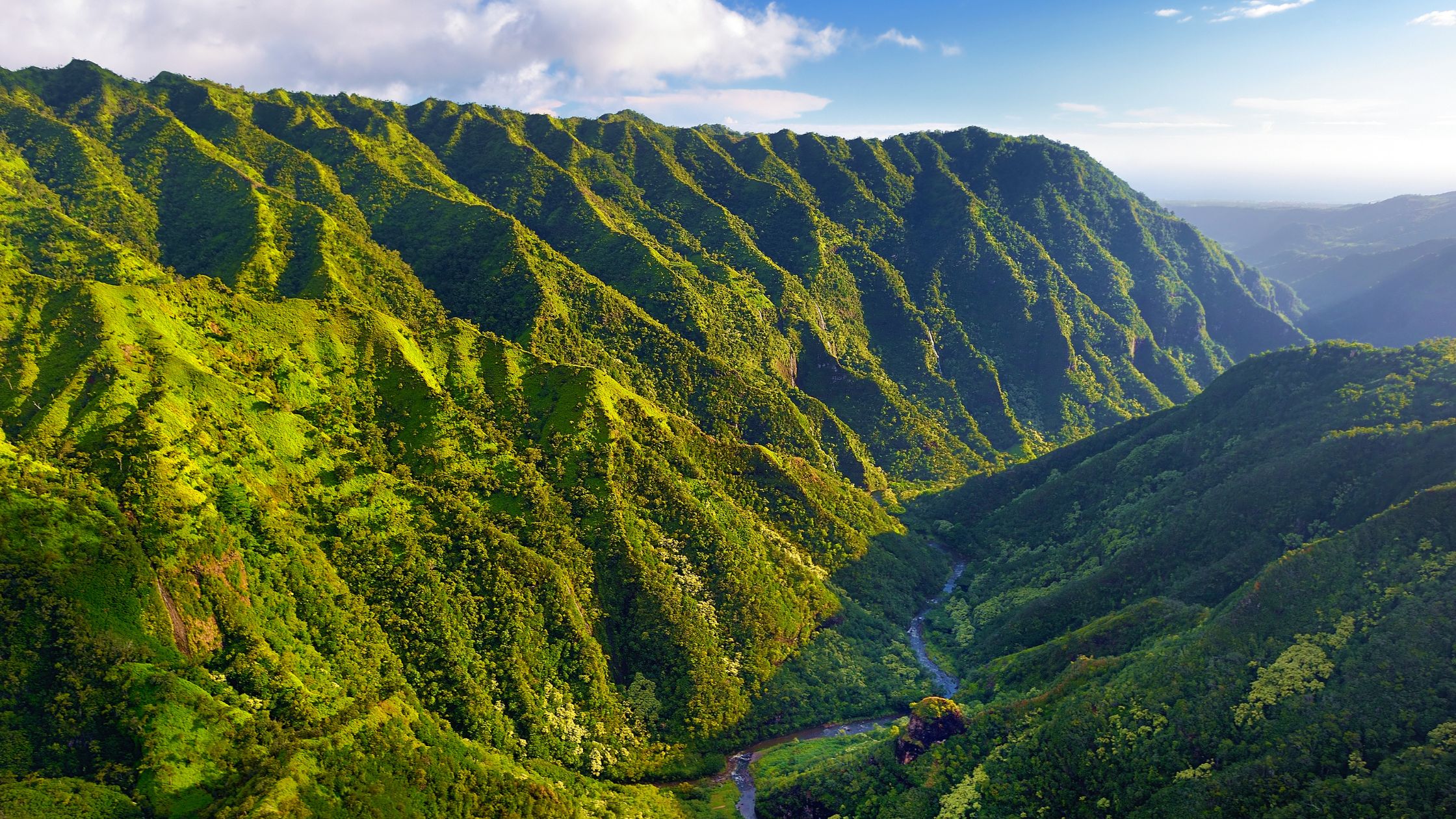
The Big News: Madeira Tops the World in 2026
In
early 2026, TripAdvisor released its annual Travellers’ Choice Awards — and the
result surprised millions of travellers. Topping the global Trending
Destinations ranking was not a sun-soaked Caribbean resort, not a buzzy Asian
metropolis, and not a European capital. It was Madeira: a small Portuguese
archipelago sitting in the Atlantic Ocean, roughly 400 miles off the coast of
Morocco.
The
award is based on a full 12 months of verified traveller reviews submitted
throughout 2025, covering hotels, attractions, restaurants, guided experiences,
and family-friendly activities. Madeira did not just edge ahead of its
competitors — it led the global field, outpacing destinations including Tbilisi
(Georgia), Chicago, Quy Nhon (Vietnam), Recife (Brazil), Puerto Escondido
(Mexico), Halifax (Canada), Menorca (Spain), Cali (Colombia), and Milan
(Italy).
The
recognition confirms what regular visitors have known for years: Madeira is not
a passing trend. It is a destination that delivers consistently — in landscape,
food, culture, adventure, and sheer variety of experience — and word has
finally spread worldwide.
What and Where Is Madeira?
Madeira is a
volcanic archipelago that includes the main island of Madeira, the smaller
island of Porto Santo (famous for its golden sandy beach), and a handful of
uninhabited islets known as the Desertas and Selvagens. The main island covers
740 square kilometres and has a population of around 260,000 people, with the
capital Funchal located on the southern coast.
The archipelago
belongs to Portugal and is an autonomous region of the country, meaning it has
its own regional government, flag, and a strong cultural identity distinct from
mainland Portugal. It sits on the same latitude as Morocco, giving it a subtropical
climate — warm and mild year-round — that has earned it the nickname “the
Island of Eternal Spring.”
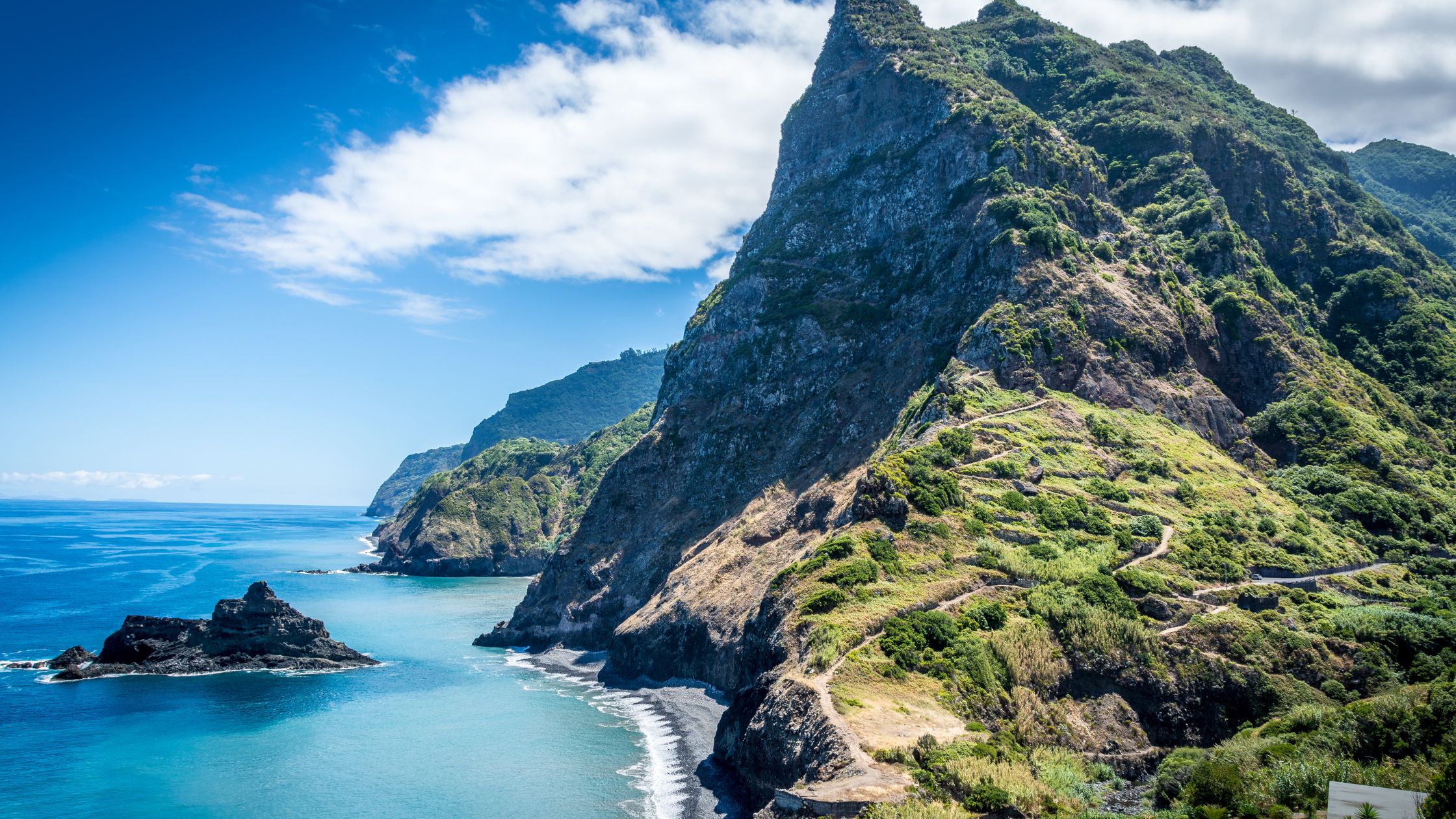
Geologically,
Madeira is the exposed peak of an ancient underwater volcanic mountain range.
That volcanic origin has produced extraordinary terrain: dramatic sea cliffs
that plunge hundreds of metres into the Atlantic, a mountain spine rising to
nearly 1,900 metres at Pico Ruivo (Madeira’s highest peak), lush green valleys
carved by centuries of rain, and the unique levada network — man-made
irrigation channels that crisscross the island and have become its most famous
hiking routes.
From the United
Kingdom, Madeira is just a three-and-a-half-hour flight away. From much of
mainland Europe, it is even closer to Lisbon than Porto Santo is to Funchal.
Accessibility improved significantly for the 2025–2026 period, with a 17%
increase in flight capacity between March 2025 and March 2026 for UK travellers
alone.
Why Is Madeira
Trending Now? The 10 Key Reasons
1. It Is the
“Hawaii of Europe” — at a Fraction of the Price
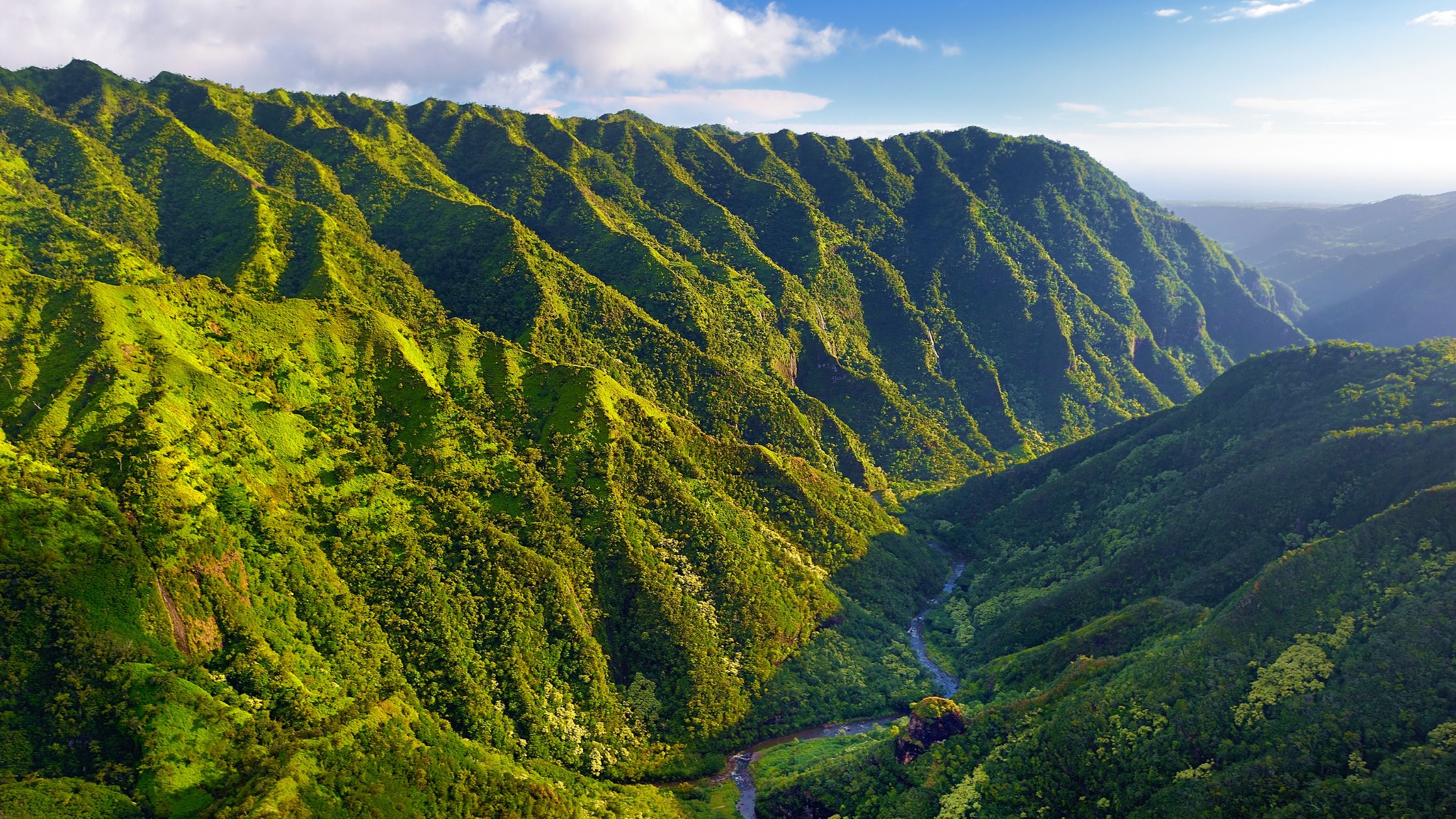
Madeira
is frequently compared to Hawaii, and the similarities are striking. Both
destinations are volcanic archipelagos with dramatic landscapes, lush tropical
vegetation, whale watching, giant waves, and a deeply rooted local culture tied
to the ocean. But Madeira delivers this experience on a European budget, with
strong infrastructure, easy EU travel, and no long-haul flights required from
most of Europe.
2. Year-Round Appeal
Madeira’s subtropical
climate means there is no bad season. Summer brings the island’s main events
calendar, crowded beaches at Porto Santo, and warm evenings in Funchal. Winter
brings fewer visitors, dramatic cloud formations over the mountains, and the
island’s legendary Christmas and New Year celebrations — including one of the
world’s largest New Year’s Eve fireworks displays, visible from every point
around Funchal Bay.
3. World-Class
Hiking — Newly Regulated for Quality
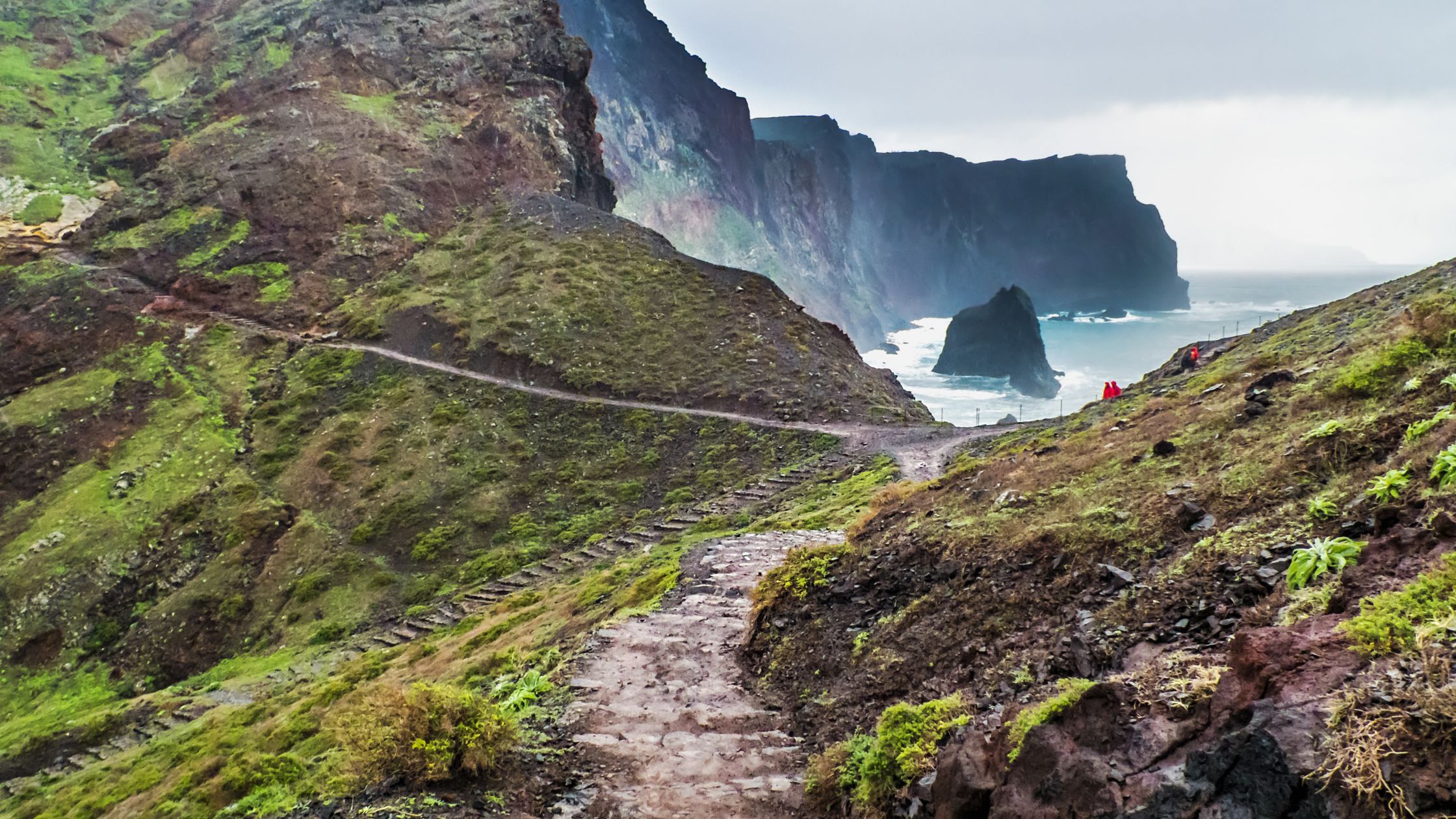
Madeira
has over 42 classified hiking trails (marked as PR routes), covering everything
from gentle waterside levada walks to serious mountain ridge routes. The
island’s commitment to sustainability is evident in its 2026 trail management
system — mandatory SIMplifica reservations and fee-based access — designed to
protect fragile ecosystems while improving the overall experience. This
approach mirrors global best practice seen in Hawaii, Iceland, and the Azores.
4. A Growing
Expat and Digital Nomad Community
Madeira
pioneered the world’s first purpose-built digital nomad village at Ponta do Sol
in 2021. Since then, it has become a favourite base for remote workers from
across Europe and North America. The island offers fast internet, a high
standard of living, reasonable property costs compared to major European
cities, and a growing community of international residents. This in-flow of new
arrivals has generated media coverage and social media content that has
introduced Madeira to entirely new audiences.
5. Exceptional Food and
Wine Culture
From
Poncha (the island’s potent traditional rum drink) to Espetada (grilled beef
skewers cooked over laurel wood) and Bolo do Caco (the iconic sweet potato
flatbread), Madeira’s food scene is deeply rooted in tradition and increasingly
celebrated internationally. Add in one of the world’s most distinctive
fortified wines — Madeira wine, aged in a process unique to the island — and a
growing festival calendar celebrating gastronomy, and you have a destination
that feeds every kind of traveller.
6. Fewer Crowds
Than Comparable Destinations
Despite
its surge in popularity, Madeira remains considerably less crowded than the
Canary Islands, the Algarve, or the Balearics in peak season. The island’s
winding roads, mountainous terrain, and limited carrying capacity on trails
naturally distribute visitors, and new booking systems are helping to manage
pressure on the most popular spots.
7. Eco-Tourism Leadership
The Laurisilva
Forest — a UNESCO World Heritage Site covering approximately 15,000 hectares in
the island’s north and northwest — is one of the last remaining subtropical
laurel forests in the world and one of Europe’s most important ecological
treasures. Madeira’s growing reputation as an eco-tourism destination attracts
travellers who want natural beauty with purpose. The island’s sustainable
travel credentials, reinforced by its trail management policies and protected
area network, resonate strongly with today’s conscientious traveller.
8. Whale and Dolphin Watching
Madeira is one
of Europe’s premier whale and dolphin watching destinations, with resident and
migratory cetaceans visible year-round. Over 20 different species have been
recorded in Madeiran waters, including sperm whales, pilot whales, bottlenose
dolphins, and common dolphins. Operators depart from Funchal’s marina daily,
and June is widely considered one of the best months for sightings.
9. A Packed Events Calendar
From the
Atlantic Festival’s pyromusical fireworks every Saturday in June (now in its
landmark 20th edition), to the Madeira Gastronomic Festival SAL in July, the
Classics at Magnolia vintage car show, and the Madeira Wine Festival in late
August and September — the island’s cultural calendar offers something
remarkable at almost every point in the year.
10. Improved
Connectivity and Infrastructure
New
flight routes, expanded services from UK, German, Scandinavian, and Eastern
European airports, and improved road infrastructure (Madeira has an extensive
and impressive tunnel network) have made the island more accessible than ever.
Funchal’s Cristiano Ronaldo International Airport — famous for its runway built
on pillars over the ocean, which requires specially trained pilots — continues
to expand operations.
The 2026 Hiking
Revolution: SIMplifica, Permits & Fees Explained
One
of the most significant changes affecting visitors in 2026 is Madeira’s new
hiking permit and reservation system. Understanding how it works before you
arrive will save considerable time and stress.
What Changed from January
2026?
From 1
January 2026, all 42 classified PR (Pequena Rota) hiking trails in Madeira
require:
•
A mandatory advance reservation
through the SIMplifica portal (simplifica.madeira.gov.pt)
•
A selected 30-minute time entry
window
•
Payment of the applicable fee
(except for Madeiran residents, children under 12, and persons with a
disability rating of 60% or higher)
The system
was developed by the Instituto das Florestas e Conservação da Natureza (IFCN)
in partnership with the University of Madeira to determine carrying capacities
for all classified trails. The goal is to spread hikers across the day, reduce
congestion on narrow levada paths, and protect sensitive natural environments —
especially in the wake of the 2024 wildfires that damaged several trail
sections.
What Are the 2026 Fees?
|
Visitor Type |
Standard Trail
Fee |
PR1 Fee (from
May 2026) |
|
General public
(independent) |
€4.50 per person |
€10.50 per
person |
|
With IFCN
protocol operator |
€3.00 per person |
€7.00 per person |
|
Madeiran
residents |
Free (booking
still required) |
Free (booking
still required) |
|
Children under
12 |
Free (included
in booking) |
Free (included
in booking) |
Multi-day passes
are also available for consecutive days: a 1-day pass (€9.00) covers two or
more trails in a single day, a 3-day pass covers multiple trails over three
consecutive days, and a 7-day pass (€52.50) covers multiple trails over seven
consecutive days. Note: PR1 (Pico do Areeiro to Pico Ruivo) is never included
in any multi-day pass and must always be booked and paid for separately.
How to Book on SIMplifica
1.
Visit simplifica.madeira.gov.pt
and click “Registar” to create an account
2.
Fill in your name, email
address, and a password
3.
Activate your account via the
confirmation email
4.
Log in and search for “Payment
of Fees for Classified Pedestrian Routes — General”
5.
Select your desired trail from
the list
6.
Choose your preferred date and
30-minute entry window
7.
Specify the number of people in
your group
8.
Pay online by credit card, MB
WAY, or ATM reference
9.
Receive a QR code ticket by
email — screenshot or save it before your hike
Important
practical notes: Same-day bookings are possible if
slots remain available, but popular trails like PR1 and PR6 sell out days or
weeks in advance in peak season. You must begin your hike within approximately
15 minutes of your booked time slot. Rangers do check QR codes on some trails.
Booking is mandatory even for those who are fee-exempt (residents and children
must still register and select a slot for capacity management purposes).
If you are
hiking with a licensed guide from an operator who has a protocol agreement with
IFCN, the operator handles the booking and may include the fee in the tour
price.
The Special Case
of PR1: Pico do Areeiro to Pico Ruivo
PR1
— the island’s most iconic trail, connecting Madeira’s third-highest peak (Pico
do Areeiro, 1,818 metres) with its highest (Pico Ruivo, 1,862 metres) — was
closed for reconstruction following the 2024 wildfires. It fully reopened on 1
May 2026, but with significant changes:
•
The trail now operates on a
one-way basis from Pico do Areeiro to Pico Ruivo (except between Pico do
Areeiro and the Pedra Rija Viewpoint, which remains bidirectional)
•
The fee for independent
visitors is €10.50 per person — significantly higher than other classified
trails, reflecting the trail’s popularity, fragility, and high maintenance
costs
•
Hikers must enter from the Pico
do Areeiro end and exit at Pico Ruivo, returning via the PR1.2 route (Achada do
Teixeira) or waiting for a future reopening of PR1.3
•
IFCN does not guarantee
transport back to the start point — visitors should arrange their own logistics
(taxi, shuttle, or a second car)
Sunrise
visits to Pico do Areeiro before beginning the hike remain extremely popular.
The car park at Pico do Areeiro fills by 9 AM on weekends and costs
approximately €20 per day.
The Best Levada
Walks in Madeira: 2026 Edition
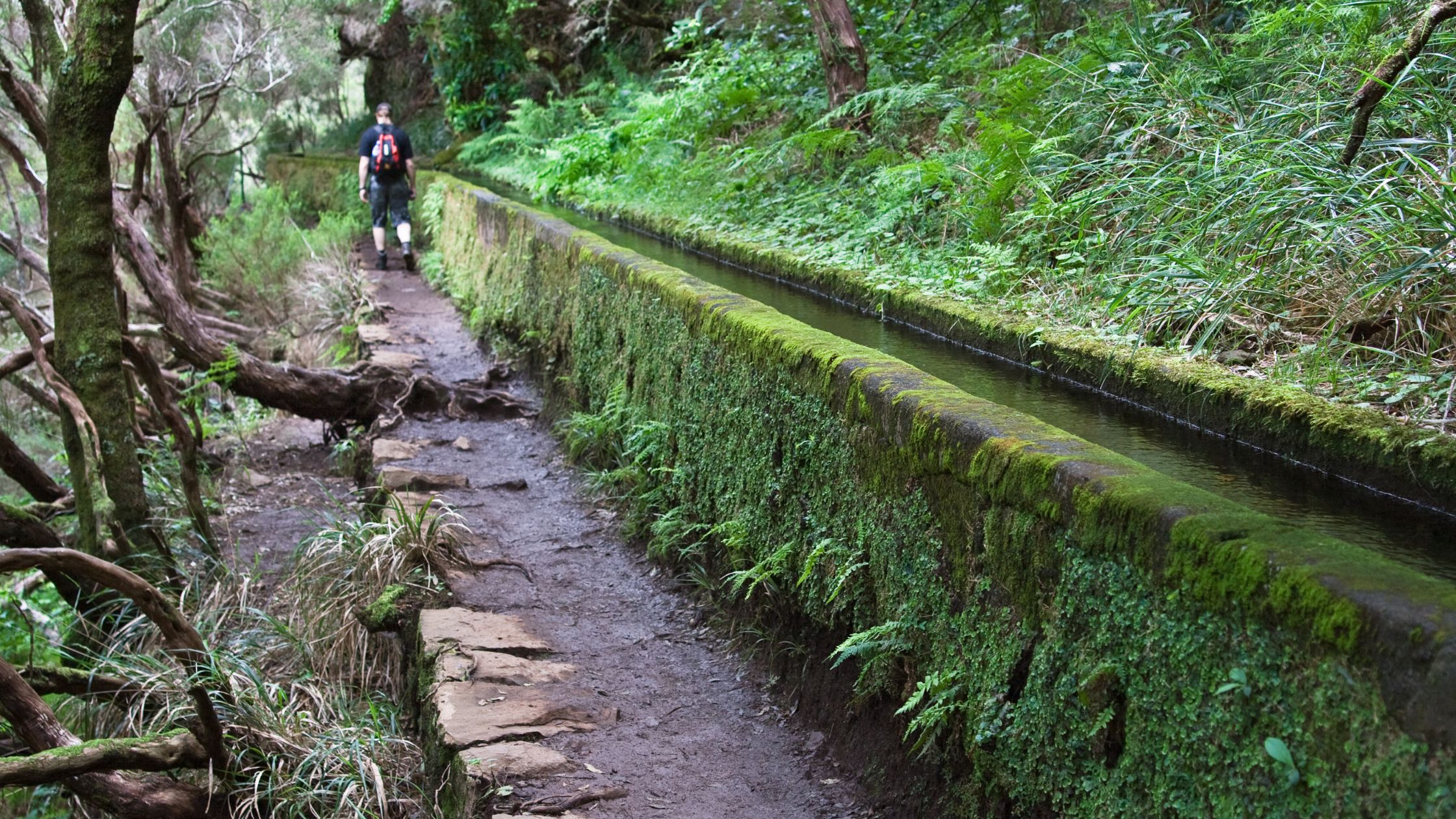
Levadas
are Madeira’s extraordinary network of man-made water channels, built from the
15th century onwards to distribute water from the wet north coast and mountains
to the drier south and the island’s agricultural terraces. Today they also
serve as the island’s primary hiking trail network, with narrow concrete paths
running alongside the channels through forests, around cliffsides, and through
mountain tunnels.
PR6 — Levada das 25 Fontes
Distance: 11 km | Duration: 3–4 hours | Difficulty: Moderate | Fee:
€4.50
One of Madeira’s
most popular trails, PR6 leads through deep Laurisilva forest to a breathtaking
basin where 25 natural springs converge to form a jade-green lagoon. The trail
departs from the Rabaçal area on the island’s plateau and descends through ancient
laurel forest. The payoff — standing in front of the 25 springs basin with the
Risco waterfall visible in the near distance — is one of the island’s most
photographed moments.
Tip: Combine with PR6.1 (Levada do Risco, 2 km, easy) for a
twin-waterfall day. A €4.50 multi-trail booking on the same day applies. Book
early: this trail sells out in summer.
PR9 — Levada do Caldeirão
Verde
Distance: 17.4 km return | Duration: 5–7 hours | Difficulty:
Easy-Moderate | Fee: €4.50
PR9 is the
island’s most immersive levada experience — a long, flat trail through dense
jungle-like forest that passes through four unlit tunnels (a headlamp is
essential) before arriving at the Caldeirão Verde waterfall, which plunges into
an emerald pool surrounded by towering vertical walls of rock covered in moss
and ferns. The trail begins at the Queimadas park house in Santana, one of
Madeira’s most photographed traditional thatched buildings.
Tip: Wear layers — the north coast forests are frequently misty and cool
even in summer. Bring a waterproof jacket for the tunnels.
PR8 — Vereda da Ponta
de São Lourenço
Distance: 7 km | Duration: 2.5–4 hours | Difficulty:
Easy-Moderate | Fee: €4.50
Completely
different in character to the forested levada walks, PR8 explores Madeira’s
dramatic eastern peninsula, where the land narrows to a rocky spine of volcanic
cliffs and ridges dropping into turquoise Atlantic waters. The trail passes
through arid, windswept scrubland with coastal panoramas in every direction. On
clear days, Porto Santo is visible on the horizon.
Tip: Avoid weekends — this trail gets extremely busy. Start early
morning for the best light and fewer crowds.
PR11 — Vereda dos Balcões
Distance: 3 km return | Duration: 45–90 minutes | Difficulty:
Easy | Fee: Free
One of the
island’s few remaining free classified trails, PR11 is ideal for beginners,
families with young children, or those who want a quick taste of Madeira’s
mountain scenery. The short, mostly flat trail leads through eucalyptus and
pine forest to the Balcões viewpoint, where on clear days the island’s highest
peaks — Pico Ruivo, Pico das Torres, and Pico do Areeiro — are visible across
the Ribeiro Frio valley.
Note: Free, but still requires a SIMplifica reservation for capacity
management.
PR1.2 — Vereda
do Pico Ruivo (from Achada do Teixeira)
Distance: 6 km return | Duration:
1.5–2 hours | Difficulty: Easy-Moderate | Fee: €4.50
The
shortest route to Madeira’s highest peak. Starting from the Achada do Teixeira
car park, this well-maintained path climbs through highland scrub to the Pico
Ruivo summit house (1,862 metres), where the views — on clear days — stretch
across the island’s entire mountain spine and down to the coast in every
direction. This is also the exit route for hikers completing PR1 from Pico do
Areeiro.
PR18 — Levada do Rei
Distance: 10 km | Duration: 3–4 hours | Difficulty:
Easy-Moderate | Fee: €4.50
Often described as
Madeira’s most beautiful levada and one of the less-crowded alternatives to
PR6, the Levada do Rei follows an ancient water channel through pristine
Laurisilva forest in the island’s northeast. The forest here is ancient — some
of the tree heathers (Erica arborea) tower overhead, and the path feels
genuinely remote and wild despite being an official classified trail.
PR13 — Vereda do Fanal
Distance: 10.8 km | Duration: 3–4 hours | Difficulty: Moderate
| Fee: €4.50
The Fanal forest —
in the Paul da Serra plateau area of northwest Madeira — is one of the island’s
most atmospheric landscapes, with ancient tree heathers draped in moss standing
against a backdrop of ocean views. This trail explores the Fanal area and the
surrounding plateau. Note: the Fanal Forest itself now requires paid entry and
advance booking, as fencing was introduced in early 2026 to protect fragile
root systems from foot traffic.
Madeira’s Must-Attend
Events in 2026
Atlantic
Festival — June 5 to 28 (20th Edition)
Madeira’s
signature summer festival celebrates its landmark 20th edition in 2026 with a
full month of culture, concerts, and the international fireworks competition
that has made the island famous. The festival’s centrepiece is the
Saturday-night pyromusical shows over Funchal Bay, where teams from different
countries compete for the Atlantic Trophy (awarded by jury) and the Madeira Tão
Tua Trophy (awarded by public vote).
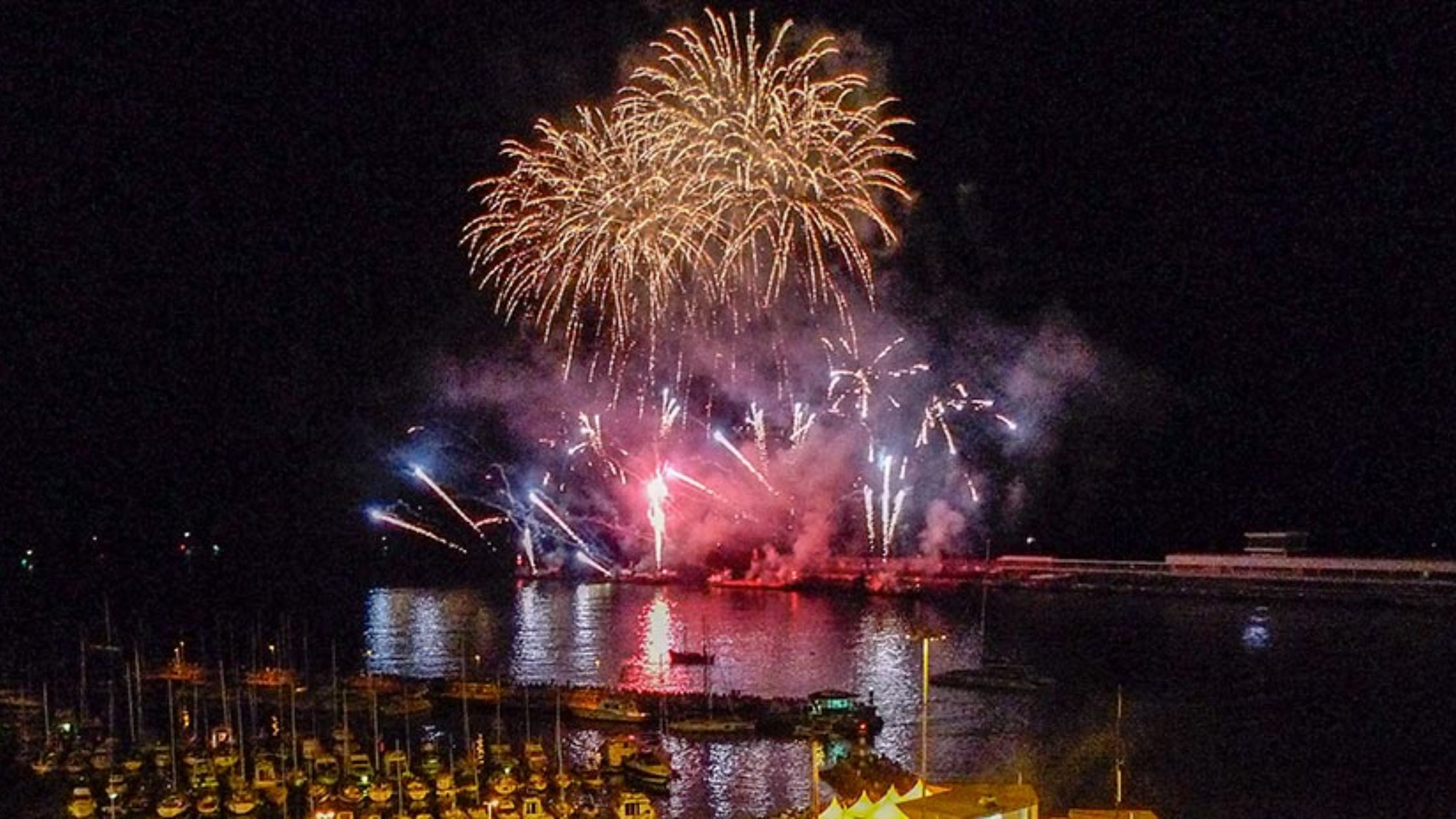
The
2026 international competition lineup: Canada (June 6), China (June 13),
Ukraine (June 20), and Portugal (June 27) — all at 22:30, visible from anywhere
along the Funchal seafront. The festival also includes Opera at the Pico
Fortress (four evenings at the historic São João Baptista Fortress), the
Atlantic Roots Festival at Santa Catarina Park (June 11–13), multimedia shows,
circus performances, street animation, Summer Sunsets at Praça do Povo
(Thursday to Sunday throughout June), and a documentary film series celebrating
Madeira’s natural heritage.
Where to watch the fireworks: The
Funchal seafront (Avenida do Mar and Pontinha Pier) is free and offers
front-row access. For a more elevated perspective, the miradouros above Funchal
— including Pico dos Barcelos and Monte — trade proximity for a panoramic view
of the city amphitheatre lit up against the bay. For the most memorable
experience, boat operators offer fireworks cruises from around €40 per adult,
watching the show directly from the water.
Madeira
Gastronomic Festival SAL — July 10 to 19
SAL
(Sabores do Atlântico — Flavours of the Atlantic) is Madeira’s main food
festival, held at Funchal’s Praça do Povo against a lively seaside backdrop.
The festival is structured around eight gastronomic routes celebrating
Madeira’s signature culinary products: couscous, chícharo (a traditional local
variety of pea), shellfish, fish, convent sweets, fruit, tubers, and bread.
Live show cooking by invited chefs, folk music performances, wine stands, and
culinary talks run throughout the ten days.
Classics at Magnolia —
July 25 to 26
Set in
the beautiful grounds of Quinta Magnólia in Funchal, this two-day classic and
vintage car show brings together vehicles spanning over 100 years of automotive
history. Period-inspired displays, themed entertainment, and an atmosphere of
nostalgic elegance make it one of the most distinctive events on the summer
calendar.
Madeira Wine
Festival — August 23 to September 13
The
island’s most internationally recognised annual event, timed to coincide with
the grape harvest season. The Wine Festival celebrates Madeira wine — one of
the world’s most unique and long-lived fortified wines — with events spread
across Funchal, including the Madeira Wine Lounge at Praça do Povo, vineyard
visits, traditional grape stomping (pisa das uvas), folklore performances, wine
tastings, and harvest parades in Câmara de Lobos and other wine-growing areas.
The festival showcases more than 400 years of winemaking heritage.
What to Eat and
Drink in Madeira: A Complete Guide
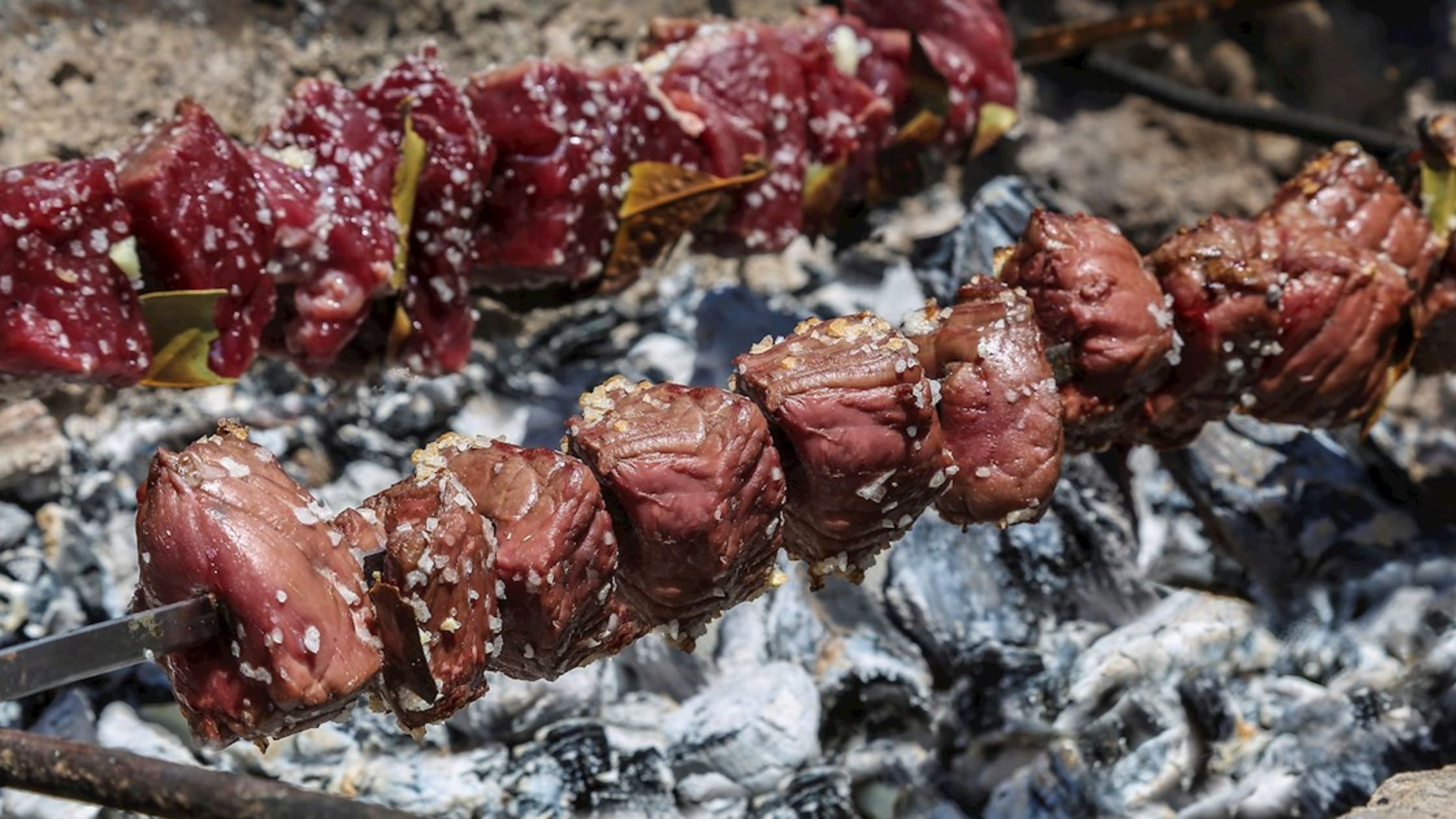
Espetada
The island’s most iconic meat
dish: chunks of beef marinated in garlic, salt, and bay leaves, skewered on a
laurel wood stick and grilled slowly over smouldering wood. In traditional
restaurants, the skewer arrives hanging from an iron hook above the table.
Served with milho frito (fried cornmeal) and bolo do caco bread. The best
espetada is said to come from Estreito de Câmara de Lobos, a village above
Funchal with a concentration of specialist grill restaurants.
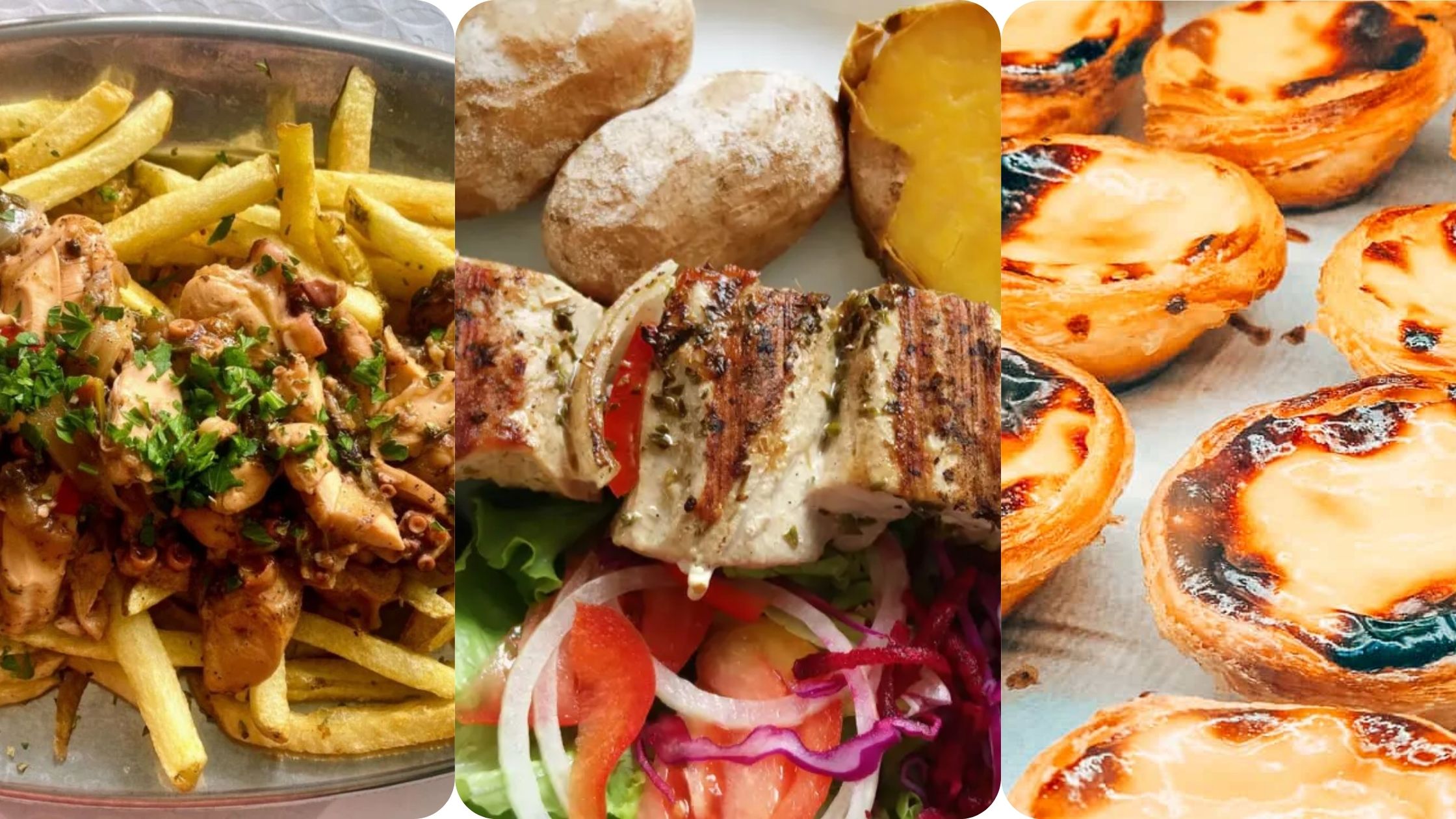
Bolo do Caco
Madeira’s signature
flatbread: a soft, slightly sweet circular bread made with wheat flour and
sweet potato, baked on a hot basalt stone (the “caco”). Served warm with garlic
butter, it appears as a starter on virtually every menu in Madeira, doubles as sandwich
bread (the prego no bolo do caco — a garlic butter flatbread with thin beef
steak — is the island’s favourite fast food), and is the natural companion to
espetada.
Espada com
Banana (Black Scabbard Fish with Banana)
The
espada is a deep-water fish found in the waters around Madeira, ugly in
appearance but delicate and rich in flavour. The classic preparation — served
as a boneless fillet with fried banana and sometimes passion fruit sauce — is
unique to the island and one of the most distinctive culinary experiences in
Portugal. Available at virtually every fish restaurant.
Lapas (Grilled Limpets)
A beloved Madeiran
tradition: limpets grilled on their shells with garlic and butter, then
finished with lemon juice. Eaten hot, straight from the shell, with bolo do
caco for the juices. Found in restaurants and beach bars around the coast.
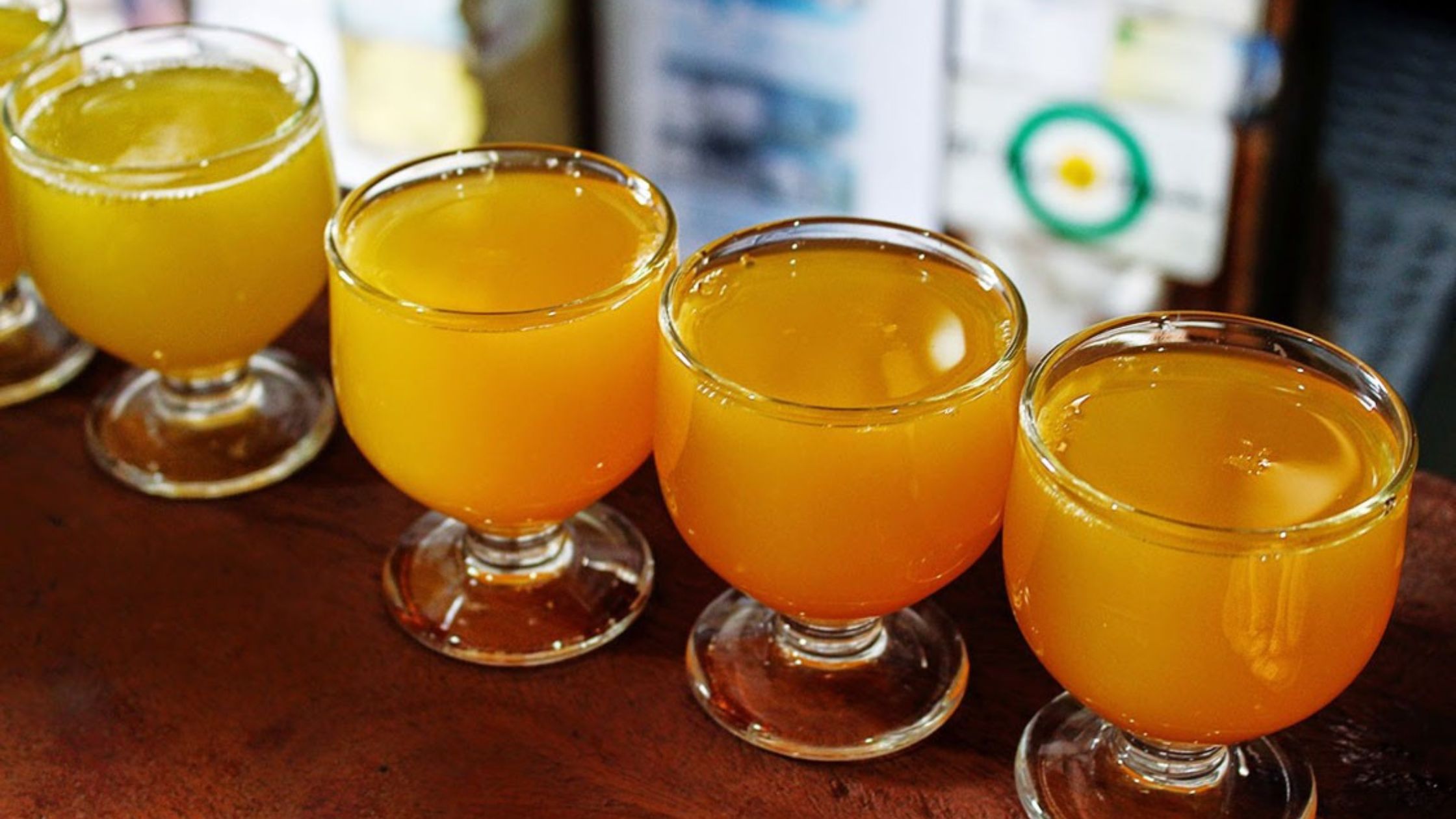
Poncha
Madeira’s national drink. Made
from aguardente de cana (sugar cane rum), honey (or sugar), and fresh lemon or
orange juice, poncha is mixed to order in specialist poncha bars with a wooden
instrument called a caralhinho. The drink originated with the island’s
fishermen, who traditionally drank it before heading to sea. Despite its sweet,
refreshing taste, it is deceptively strong. Try the traditional lemon version
(Poncha à Pescador) at any of the dedicated poncha bars in Funchal’s old town
or in the village of Câmara de Lobos.
Madeira Wine
One of the world’s most
extraordinary wines: a fortified wine produced exclusively on the island
through a unique ageing process (estufagem) that involves controlled heating,
giving the wine its characteristic caramel, dried fruit, and nutty complexity. Madeira
wine comes in four main styles ranging from dry to rich and sweet: Sercial
(dry), Verdelho (medium-dry), Boal (medium-rich), and Malvasia (sweet). Unlike
almost any other wine in the world, Madeira is virtually indestructible — an
opened bottle can last for months, and the best vintage Madeiras age for
centuries. Wine lodges in Funchal — including the historic Blandy’s, H.M.
Borges, and Barbeito — offer tastings and cellar tours.
Tropical Fruits
Madeira’s volcanic soil
and subtropical climate produce an extraordinary variety of exotic fruits, many
of which are difficult or impossible to find outside the island. The Mercado
dos Lavradores (Farmers’ Market) in Funchal is the best place to discover them:
passion fruit in multiple varieties, custard apples (annona), Madeiran bananas
(smaller, sweeter, and more flavourful than supermarket varieties), dragon
fruit, tamarillos, and guavas.
Madeira for
Beginners: 6 Easy Levada Walks Anyone Can Do
Not
every visitor is an experienced hiker, and Madeira’s trail system caters
beautifully to beginners. These six routes require no specialist fitness, no
head for heights, and no prior hiking experience — just comfortable shoes, a
bottle of water, and a SIMplifica booking.
1.
PR11 — Vereda dos Balcões (3 km, flat, free) — A short walk through fragrant forest to a
stunning mountain viewpoint. Perfect for families.
2.
PR6.1 — Levada do Risco (2 km return, easy) — Leads directly to the double-tier Risco
waterfall through ancient laurel forest. Can be combined with PR6 for a longer
day.
3.
PR8 — Vereda da Ponta de São
Lourenço (7 km, easy-moderate) — Coastal cliff walk
with Atlantic views on both sides. No tunnels, no significant climb.
4.
PR25 — Levada das Rabaças (6 km, flat, easy) — A high-altitude levada walk across the Paul da
Serra plateau, through open moorland with wide-sky views.
5.
PR26 — Levada do Glória (4.5 km, easy, free) — A quiet eastern levada with views towards
the Desertas islands. Rarely crowded.
6.
PR1.2 — Vereda do Pico Ruivo
from Achada do Teixeira (6 km, easy-moderate) —
Despite reaching Madeira’s highest point, this trail is well-made and gradual.
The summit views are unforgettable.
Itinerary Ideas:
3, 5, and 7 Days in Madeira
3 Days in Madeira
Day 1 — Funchal and
surroundings. Morning: explore the old town (Zona
Velha), the Mercado dos Lavradores, and the São Tiago fortress. Afternoon: take
the cable car to Monte, visit the Monte Palace Tropical Garden, and ride back
down on a traditional wicker toboggan (carreiros do Monte). Evening:
traditional dinner in the old town with espetada and poncha.
Day 2 — Levada walk
and west coast. Morning: hike PR6 (Levada das 25
Fontes) with an early SIMplifica booking. Afternoon: drive to Porto Moniz to
swim in the natural volcanic rock pools. Dinner in Calheta or São Vicente.
Day 3 — Mountains and
east coast. Sunrise at Pico do Areeiro (book
parking and a slot on SIMplifica). Mid-morning: hike PR1.2 to Pico Ruivo or
explore Ribeiro Frio and PR11. Afternoon: visit the eastern peninsula (PR8 or
the miradouro at Ponta de São Lourenço). Evening back in Funchal.
5 Days in Madeira
Add to the 3-day
itinerary: a full day exploring Câmara de Lobos and the south-west coast (Cabo
Girão — Europe’s highest sea cliff), a day trip to Porto Santo by ferry or
plane for golden-sand beach relaxation, and a morning exploring Santana
(traditional thatched A-frame houses) and hiking PR9 (Caldeirão Verde).
7 Days in Madeira
With a full week, add:
a dedicated north coast day (Seixal natural pools, Fanal Forest, Porto Moniz),
a wine-focused day visiting the Blandy’s Wine Lodge and a traditional vineyard
lunch in Câmara de Lobos, an early morning boat trip for whale and dolphin
watching from Funchal marina, and a relaxed final day exploring the Botanical
Garden and the hilltop village of Camacha.
Getting Around Madeira in
2026
Madeira is
one of the most rewarding destinations to explore by car — and one of the most
challenging to navigate without one. The island’s road network is extensive,
with an impressive system of highways and tunnels that cut through the
mountains, dramatically reducing travel times between the north and south
coasts. However, many trailheads, viewpoints, and village restaurants are only
accessible by car.
Car
rental is the recommended option for most visitors
planning to hike or explore beyond Funchal. Funchal city and major tourist
areas are walkable, but independent trail access effectively requires a
vehicle. Book in advance, particularly for peak summer months. Automatic
transmission is strongly recommended given Madeira’s steep and winding roads.
Taxis
and private transfers are widely available and
cover most island destinations. They are a good option for one-way hiking
transfers (for example, to the start of PR1 at Pico do Areeiro, with a separate
return from Pico Ruivo or Achada do Teixeira).
Public
buses (Horários do Funchal and Rodoeste) cover the
main towns and many popular hiking trailheads, but frequency can be limited in
rural areas. Several levada walk operators include shuttle transport in their
packages.
Funchal
city transport includes the historic cable cars
(Teleférico), the Monte toboggan ride, and a good urban bus network.
The
airport is approximately 25 minutes from central
Funchal. Taxis, private transfers, and car hire desks are all available on
arrival.
Where to Stay in Madeira
Funchal
The island’s capital is the best base for first-time visitors. It offers the widest range of accommodation — from historic luxury hotels like Reid’s Palace (open since 1891) to modern boutique options and affordable guesthouses in the old town.
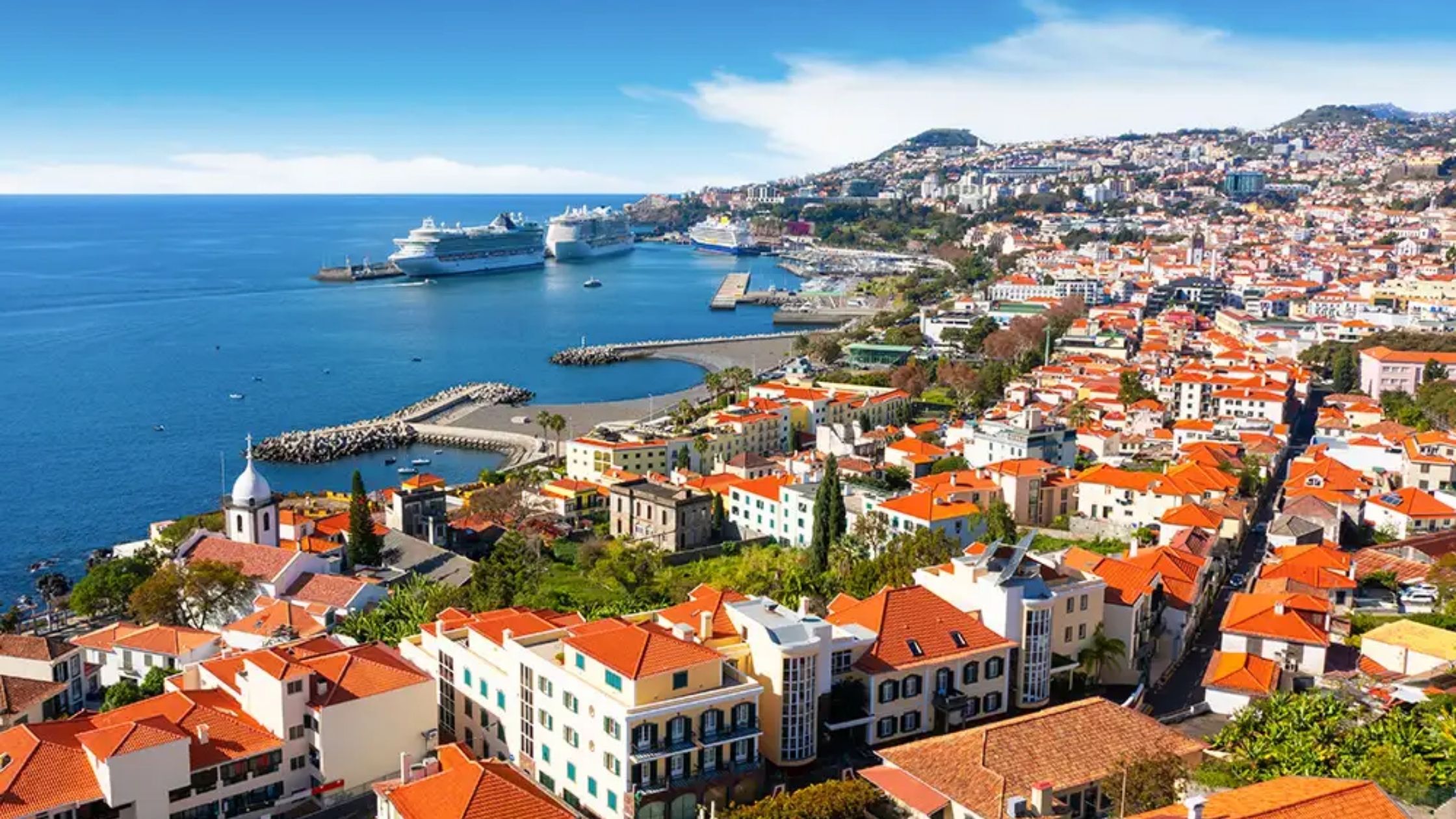
Funchal’s central position on the south coast
gives good access to east and west coast destinations, and the city itself —
with its cafes, fish markets, cable car, and historic old town — rewards
unhurried exploration. Funchal’s hotel zone (the “tourist zone”) along the
seafront west of the city centre has the highest concentration of resort
hotels, with pool terraces and sea views.
North Coast
The north coast — particularly São Vicente, Seixal, and Santana — is
wetter, quieter, and dramatically beautiful. Staying here gives immediate
access to the island’s wildest scenery and closest proximity to PR9 (Caldeirão
Verde) and the Fanal Forest. Accommodation is limited, typically rural
guesthouses and small hotels, but the experience of waking up in Madeira’s
green interior is extraordinary.
Mountain and Central
Villages
Ribeiro Frio, Curral das Freiras (the “Valley of the Nuns”), and
Eira do Serrado offer rural accommodation at altitude, surrounded by the
island’s most dramatic mountain scenery. These bases suit hikers planning
multiple days on mountain trails. Some visitors split their stay between
central Funchal and a mountain village for variety.
Ponta do Sol and
the Digital Nomad Coast
Ponta do Sol, on Madeira’s south-west coast, hosts the famous
digital nomad village and a growing number of cafes, co-working spaces, and
long-stay apartments. The town itself is charming, with black-sand beaches and
excellent sunsets, and is well-positioned for west coast hikes.
Madeira on a Budget:
Practical Tips
Madeira
is not the cheapest European island destination, but it offers considerably
better value than Iceland, the Azores (outside low season), or comparable UK
island getaways. Key budget tips:
•
Book flights early. Faro, easyJet, and Jet2 all serve Funchal from UK airports. Booking
3–4 months in advance typically yields the best fares.
•
Self-cater or eat local. The Mercado dos Lavradores and Funchal’s neighbourhood bakeries are
excellent and affordable. Local tascas (traditional restaurants) away from the
seafront serve generous meals for €10–15 per person.
•
Take the free viewpoints. Many of Madeira’s best views — Cabo Girão, Boca da Encumeada,
Ribeiro Frio — cost nothing beyond parking.
•
Hike PR11 and PR26 (free
trails). Not all classified trails require a fee —
check the current status list on SIMplifica before assuming.
•
Use public buses where
practical. Several popular trailheads (including
Queimadas for PR9 and Ribeiro Frio for PR11) are served by public buses from
Funchal.
•
Visit outside July and
August. Spring (April–May) and autumn
(October–November) offer excellent weather, fewer crowds, lower accommodation
prices, and the best wildflower displays.
Porto Santo: The
Golden Island Day Trip
Madeira’s
smaller sister island, Porto Santo, is approximately 40 kilometres to the
northeast and is accessible by daily ferry (approximately 2.5 hours) or a short
flight. While Madeira has rocky shorelines and natural pools, Porto Santo has
something the main island entirely lacks: a 9-kilometre stretch of golden sand
beach, one of the longest and most beautiful in the Atlantic, with calm,
shallow water ideal for swimming.
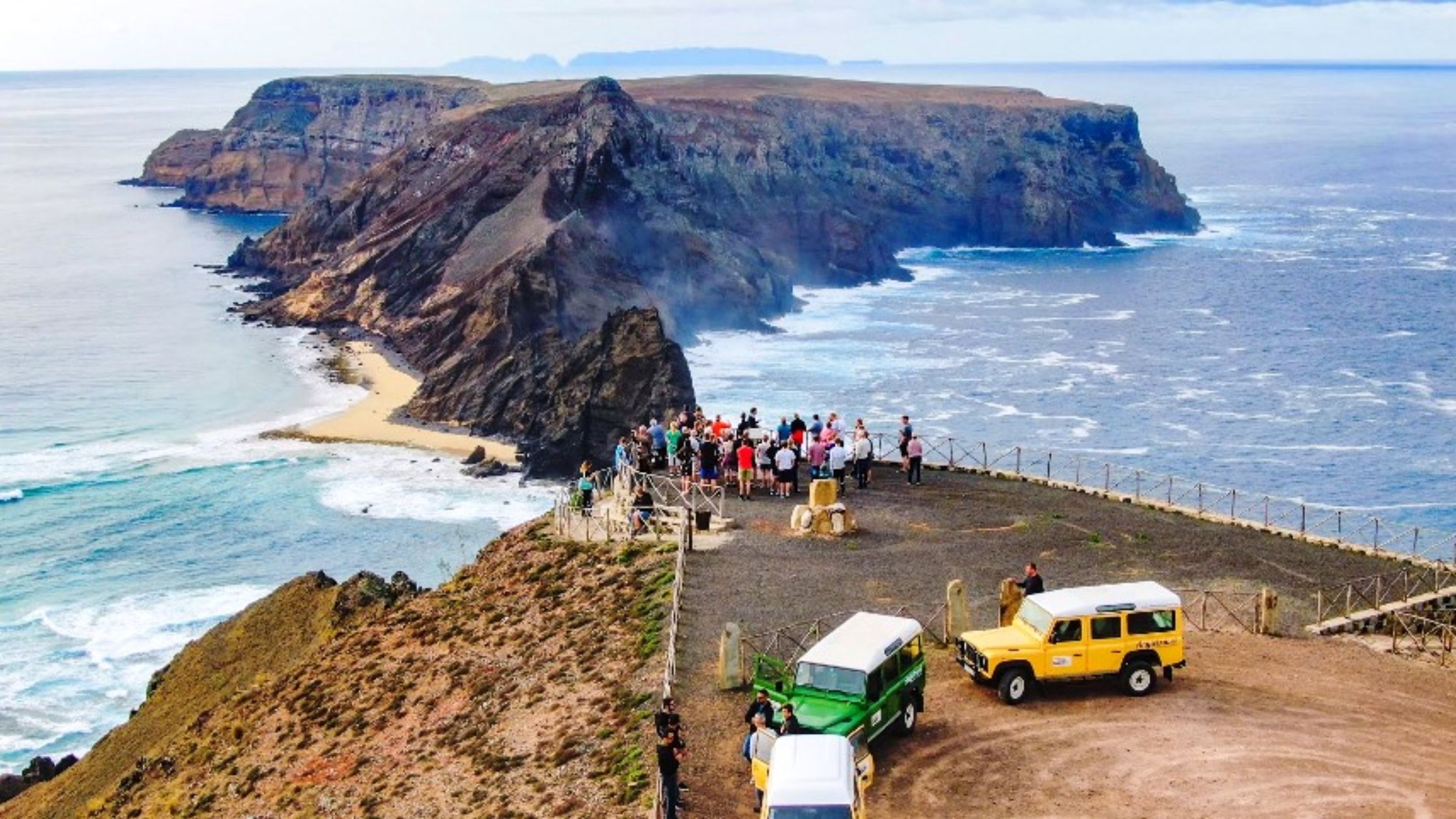
Porto
Santo is quieter, drier, and more relaxed than Madeira — a genuine escape. The
island is historically significant as the place where Christopher Columbus
lived for a time (his house is now a museum), and it hosts the famous Columbus
Festival every September (17–20 September 2026). Porto Santo is also known for
the alleged therapeutic properties of its sand, used in traditional spa
treatments.
Day
trips are popular, but an overnight stay or a two-night break allows a more
relaxed exploration. Accommodation options range from the elegant Porto Santo
Hotel and Spa to simple guesthouses in the island’s small capital, Vila
Baleira.
Whale and Dolphin
Watching in Madeira
The
waters around Madeira sit within one of the most biologically rich stretches of
the Atlantic, and the island has established itself as one of Europe’s premier
cetacean watching destinations. Over 20 species have been recorded, ranging
from common dolphins (seen in large pods year-round) to Atlantic spotted
dolphins, bottlenose dolphins, pilot whales, sperm whales (resident
populations), and occasional blue whales and humpback whales.
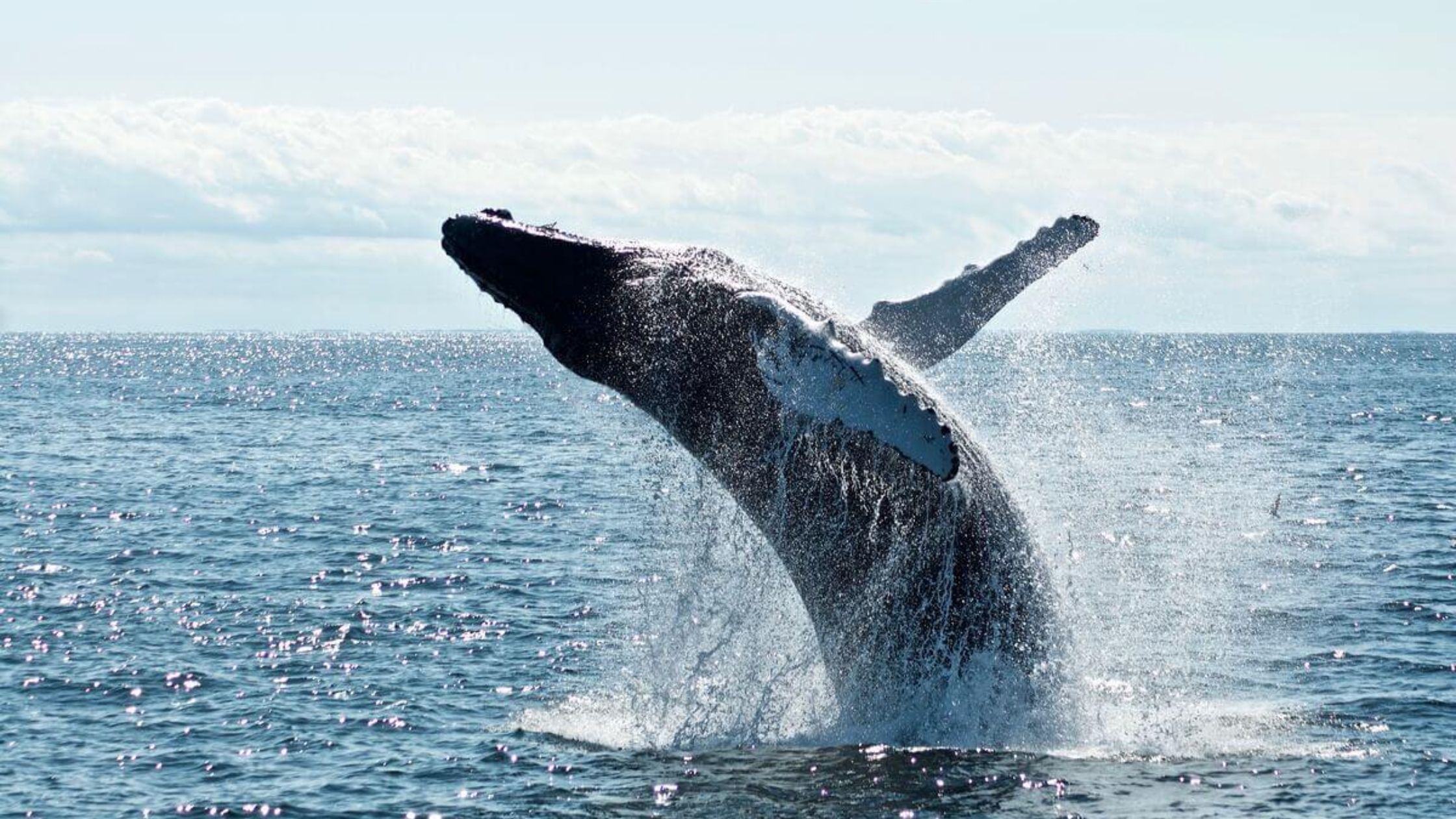
The
best season for whale watching is April through October, with June and July
being particularly productive for sperm whales. Most operators depart from
Funchal Marina and use a combination of hydrophone technology and radio-linked
lookout points (vigias) on the hillsides above Funchal — a method used by the
island’s historical whalers and adapted for conservation-oriented tourism.
Well-regarded
operators include Lobosonda, Ventura do Mar, and Catamaran Gavião. Trips
typically last 2–3 hours, with departure times morning and afternoon. Advance
booking is recommended in summer.
Moving to
Madeira: Why Foreign Residents Are Flocking to the Island
Madeira
has seen a remarkable influx of foreign residents over the past three years,
driven by a combination of lifestyle appeal, digital nomad infrastructure,
Portugal’s NHR (Non-Habitual Resident) tax programme, and — increasingly — the
island’s growing international profile.
The
region offers a high quality of life at lower cost than comparable destinations
in mainland Portugal, France, or Spain. Healthcare is good, schools (including
international schools) are available, and the community is welcoming. The
climate is comfortable year-round, crime rates are very low, and the pace of
life outside Funchal is genuinely relaxed.
Portugal’s
Golden Visa programme, while significantly modified in 2023, still offers
investment-based residency pathways that are relevant to Madeira. Non-EU
investors seeking residency in the Schengen Area continue to explore available
options, particularly in areas of cultural or real estate development outside
Lisbon and Porto (where the scheme’s most common pathways are now restricted).
For
those considering a move, the recommended first step is a “pilot” stay of at
least two to four weeks — ideally outside peak summer — to experience the
island in different conditions and get a realistic sense of life beyond the
tourist highlights.
The Madeira Wine
Festival 2026: August 23 to September 13
The
Madeira Wine Festival is arguably the island’s most internationally significant
annual event and one of the most authentic harvest celebrations anywhere in
Europe. Running from late August through mid-September, the festival ties the
island’s most famous product — its centuries-old fortified wine — to the drama
and tradition of the grape harvest season.
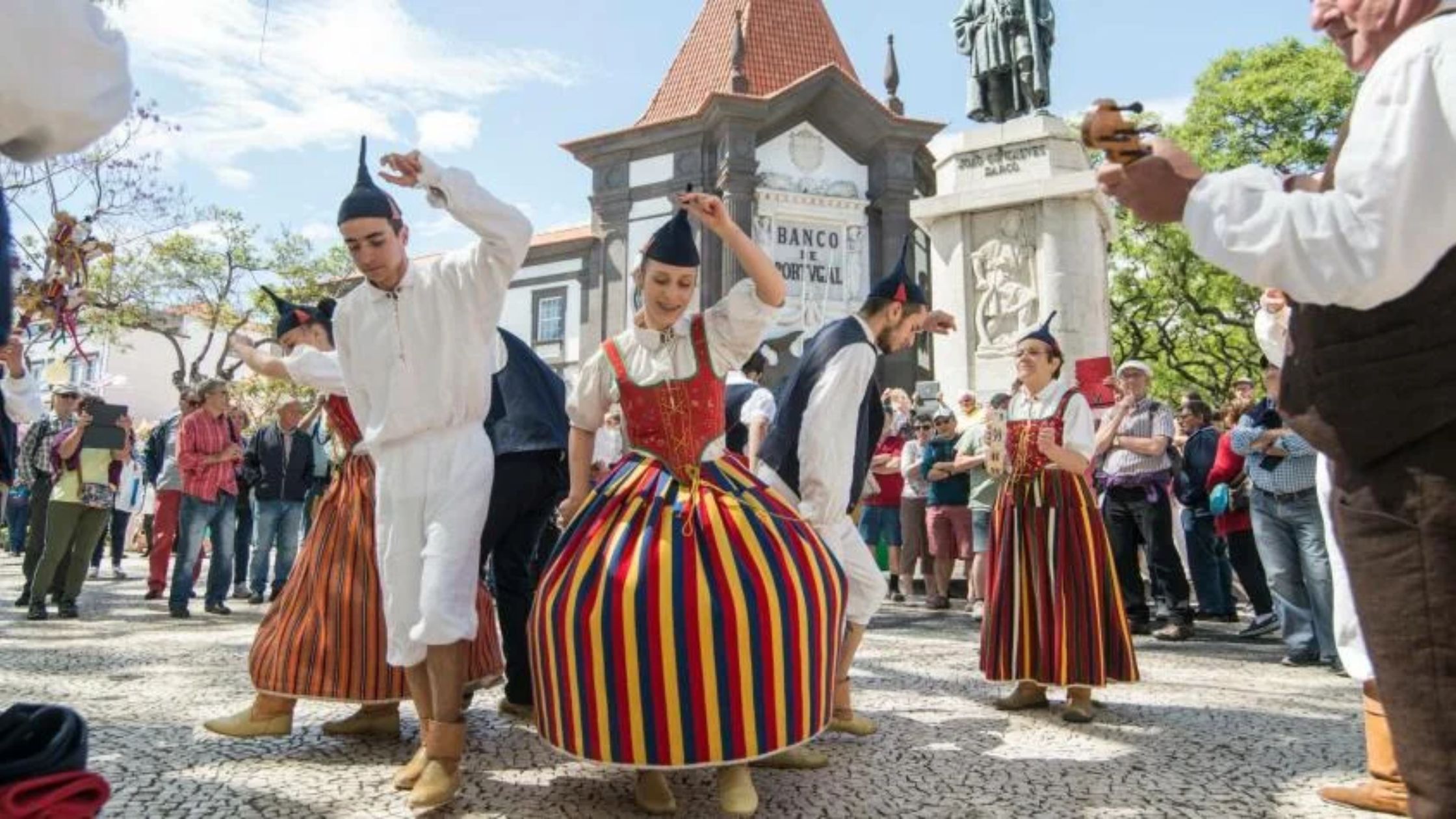
Events
include:
•
The Madeira Wine Lounge
at Praça do Povo in Funchal, open throughout the festival period for tastings
and food pairings
•
Traditional pisa das uvas (barefoot grape stomping) at working vineyard estates, typically
accompanied by folkloric music and dance, a regional buffet, and Madeira wine
tastings
•
Harvest parades and folklore
performances in Câmara de Lobos and other
wine-growing areas
•
Wine lodge visits and cellar
tastings at historic producers including Blandy’s,
Borges, Barbeito, and Henriques & Henriques
•
Vineyard concerts in the hills above Funchal and along the southern coast
Madeira
wine comes in four principal styles: Sercial (the driest, crisp and nutty,
ideal as an aperitif), Verdelho (medium-dry, with a honeyed character), Boal
(medium-rich, caramel and dried fruit), and Malvasia (the richest and sweetest,
ideal with desserts). Each style can be found in young blended versions and in
rare vintage bottles dating back decades or even centuries.
The
festival is an ideal reason to visit in late August or early September, when
crowds have thinned from the summer peak but the weather remains warm and
settled.
Practical
Information for Visiting Madeira in 2026
Passport and visa: Madeira is part of
Portugal and the European Union and Schengen Area. EU/EEA/Swiss citizens need
only a valid identity card. UK citizens require a valid passport but do not
need a visa for stays of up to 90 days in any 180-day period. Citizens of most
other countries should check specific entry requirements with Portugal’s
immigration authority (SEF/AIMA).
Currency: Euro (€).
Language: Portuguese. English is widely
spoken in the tourist industry, hotels, and restaurants. A few words of
Portuguese are always appreciated.
Electricity: Standard European two-pin
plugs (type F). UK visitors need an adaptor.
Health: As an autonomous region of
Portugal, Madeira offers the same health system. EU citizens with a European
Health Insurance Card (EHIC or GHIC for UK residents) can access public
healthcare. Private travel insurance is always recommended.
Driving: Drive on the right. An
international driving permit may be required for non-EU licence holders. Roads
are generally well-maintained but can be very steep and narrow — automatic
transmission is strongly recommended.
Time zone: WET (Western European Time) —
same as the UK in winter, one hour behind the rest of mainland Portugal in
summer (Madeira does not observe Summer Time the same way).
Climate: Average temperatures range from
around 16°C in winter to 25°C in summer in Funchal. Mountain areas are
significantly cooler year-round. Rain is more frequent on the north coast and
at altitude.
Conclusion: Why
Madeira Belongs at the Top of Your List in 2026
Madeira’s
ascent to the top of TripAdvisor’s global trending rankings is not a fluke or a
social media moment. It reflects years of consistent quality, a genuine
commitment to sustainable tourism, and a destination that has evolved to meet
modern travellers’ changing priorities — outdoor adventure, authentic food
culture, natural beauty, and meaningful experiences over crowded itineraries.
The
island offers something genuinely rare: a place where you can hike an ancient
forest in the morning, eat the freshest grilled limpets for lunch on a clifftop
terrace, watch world-class fireworks over a historic harbour in the evening,
and spend the next day swimming in volcanic rock pools with the Atlantic
stretching to the horizon. All within a few days, from a European airport,
without a long-haul flight.
Whether
you visit for three days or three months, Madeira will exceed your
expectations. And if the island’s number-one trending status means the trails
are a little busier in 2026 — well, that is precisely why you book your
SIMplifica slot before you fly.
For further reading, explore our complete cluster of Madeira guides
covering hiking, events, food, itineraries, accommodation, and more — all
updated for 2026.