
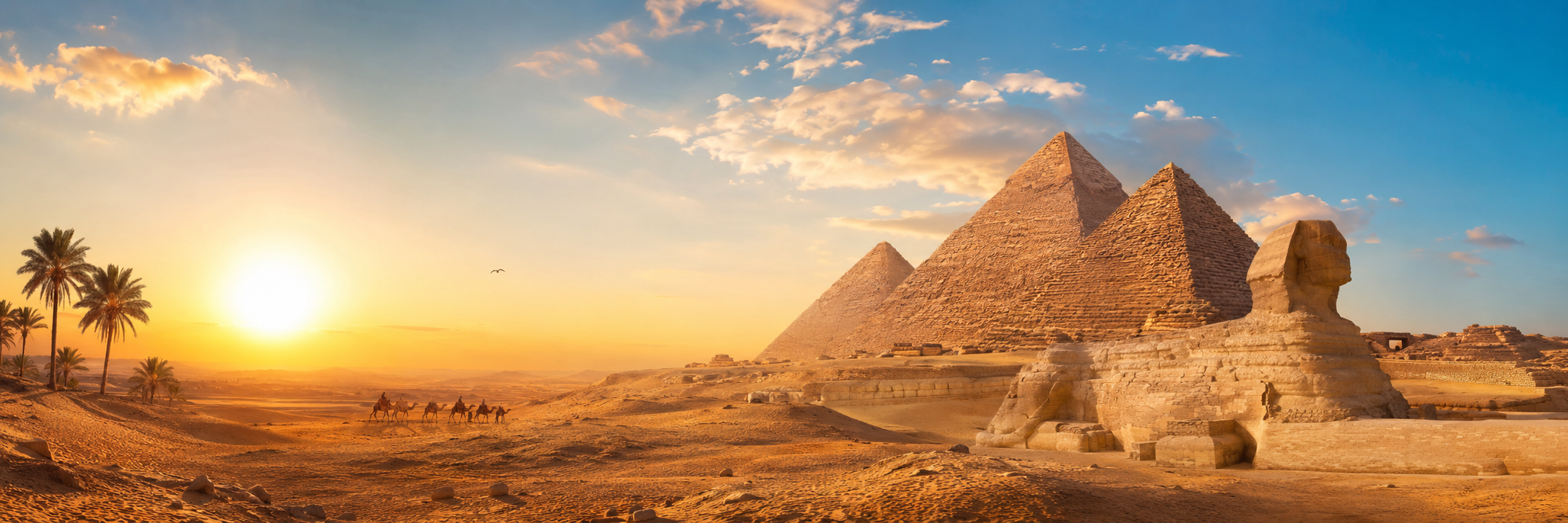
Few destinations stir the imagination quite like Egypt. The pyramids rising out of the desert, the slow drift of a felucca down the Nile, the gold of Tutankhamun glinting under museum lights — this is travel that connects you to 5,000 years of human history. But planning a trip here can feel overwhelming if it's your first time. When should you go? Do you need a visa? How much will it cost? Is it safe?
This complete Egypt travel guide answers all of that and more. Whether you're dreaming up your first Egypt vacation or fine-tuning a long-awaited itinerary, here's everything you need to know before you go in 2026.
Why Visit Egypt in 2026
There has never
been a better moment to visit Egypt. After more than a decade of
anticipation, the Grand Egyptian Museum (GEM) finally opened to the
public in November 2025 on the Giza Plateau — right beside the pyramids. It's
now the largest archaeological museum in the world dedicated to a single
civilization, home to more than 100,000 artifacts and, for the first time ever,
the complete treasure of Tutankhamun displayed together in one place.
Add to that record tourism numbers, improved infrastructure, and a favorable exchange rate that stretches your money further than it has in years, and 2026 is shaping up to be a landmark year for Egyptian travel. Pair the timeless wonders — Giza, Luxor, the Nile, the Red Sea — with a brand-new world-class museum, and you have the makings of an unforgettable trip.
Best Time to Visit Egypt
Timing is the
single most important decision in your Egypt trip planning, because it
shapes everything from your comfort to your budget.
Peak season
(October–April) brings the best weather. Daytime temperatures across Cairo,
Luxor, and Aswan sit comfortably between 20–28°C (68–82°F), ideal for exploring
open-air temples and tombs. The trade-off is bigger crowds and higher prices,
peaking sharply around Christmas and New Year.
The sweet
spots are November, February, and March — you get pleasant weather, thinner
crowds, and more reasonable rates. November in particular is a favorite for
clear skies and golden light at the pyramids.
Summer
(May–September) is brutally hot inland, with Luxor and Aswan often topping
40°C (104°F). But this is when you'll find empty sites and hotel discounts of
30–40%. If you can handle the heat (and stick to early-morning sightseeing),
summer is also perfect for the Red Sea resorts of Hurghada, Sharm El-Sheikh,
and Dahab, where sea breezes keep things bearable.
Quick tip: Whatever the season, arrive at major sites right at opening (around 7–8 AM). You'll beat both the heat and the tour buses.
Egypt Visa Requirements
One of the
first things to sort out is your entry paperwork. Most nationalities need a
visa to enter Egypt, but the process is generally straightforward. Your three
main options:
•
e-Visa (recommended): Apply online before
you fly through the official government portal. It costs around $25 USD for a
single-entry, 30-day tourist visa and typically processes within a few business
days. Apply at least one week ahead to be safe.
•
Visa on arrival: Available to many
nationalities at major airports (Cairo, Luxor, Hurghada, Sharm El-Sheikh). You
buy a visa sticker at a bank kiosk before immigration for roughly $25–30 USD in
cash (bring exact change). Single entry only.
•
Sinai-only stamp: If you're flying into
Sharm El-Sheikh, Dahab, Nuweiba, or Taba and staying in those resort areas, you
may receive a free 14–15 day entry stamp. Note this does not cover trips to
Cairo, Luxor, or the pyramids — you'll need a full visa for those.
A
multiple-entry visa costs around $60 USD. Whichever route you choose, your
passport must be valid for at least six months beyond your arrival date
and have at least one blank page.
Important: Only use the official government e-visa portal. Many lookalike sites charge double. Visa rules can change, so always confirm current requirements for your nationality with an Egyptian embassy before booking.
Getting There and Getting Around
Flying in: Cairo
International Airport is the main gateway, with direct connections from Europe,
the Gulf, North America, and Asia. Hurghada and Sharm El-Sheikh handle the bulk
of Red Sea resort traffic, while the new Sphinx International Airport near Giza
is gradually expanding access to the pyramids.
Domestic
travel: Egypt is bigger than it looks, and the classic route — Cairo to
Luxor to Aswan — covers serious distance.
•
Domestic flights (EgyptAir) are quick and
affordable, ideal for hopping between Cairo, Luxor, Aswan, and the Red Sea.
•
Trains run between Cairo, Luxor, and
Aswan, including comfortable overnight sleeper services.
•
Nile cruises double as both transport and
accommodation between Luxor and Aswan — one of the most relaxing ways to see
Upper Egypt.
•
In cities, ride-hailing apps like Uber
and Careem work well in Cairo and are cheaper and less stressful than haggling
with street taxis.
Booking a guided tour or private driver is popular here, and for good reason: it removes a lot of logistical friction, especially for first-timers.
Top Things to Do in Egypt
Here are the
experiences that belong on any first-time itinerary.
The Pyramids of Giza & the Sphinx
The only
surviving wonder of the ancient world, and still jaw-dropping in person.
General admission gets you onto the Giza Plateau; a separate ticket (around 900
EGP) lets you climb inside the Great Pyramid of Khufu. Go early, bring water,
and budget at least three hours.
The Grand Egyptian Museum
The headline
attraction of 2026. Sitting just over a mile from the pyramids, the GEM houses
the full Tutankhamun collection, the colossal statue of Ramses II, and Khufu's
solar boat. Booking is now required online in advance through the
official museum site — on-site sales have ended. Foreign adult tickets run
about $30 USD. Plan for 3–4 hours; the museum is enormous. (Don't confuse it
with the older Egyptian Museum in Tahrir Square downtown, which is a separate,
cheaper ticket.)
Luxor: The World's Greatest Open-Air Museum
Ancient Thebes
is packed with wonders: the Valley of the Kings (including Tutankhamun's tomb),
the vast Karnak Temple complex, Luxor Temple lit up at night, and the Temple of
Hatshepsut. Easily two full days of sightseeing.
A Nile Cruise
Cruising
between Luxor and Aswan is the quintessential Egyptian experience — temples at
Edfu and Kom Ombo, sunsets over the water, and the gentle rhythm of the river.
October to April is the prime cruising window.
Aswan & Abu Simbel
Aswan offers a
slower, more Nubian pace, while the colossal rock-cut temples of Abu Simbel (a
few hours south) are unforgettable. Time it right and you can catch the
twice-yearly Sun Festival (February 22 and October 22), when sunlight pierces
the temple's inner sanctuary.
The Red Sea
For diving, snorkeling, and beach time, Hurghada, Sharm El-Sheikh, and Dahab deliver some of the world's best coral reefs and a welcome contrast to days spent exploring ruins.
Egypt Travel Costs and Budgeting
Egypt offers
excellent value, and your dollars, pounds, or euros go a long way right now.
The currency
is the Egyptian Pound (EGP). In 2026 the rate has hovered around 48–55 EGP
to 1 USD, though it floats, so check a live rate before you travel.
Smart money
tips:
•
Use ATMs in town for the best rates (your
home bank may charge a small fee). Avoid street exchange stalls, where scams
are common.
•
Carry some small USD bills for tips and
your first day or two, then withdraw EGP for everyday spending.
•
Cards (Visa/Mastercard) are accepted at
hotels, larger restaurants, cruise ships, and major sites, but cash is king for
taxis, markets, small cafés, and tips.
Tipping
(baksheesh) is woven into daily life here — for drivers, guides, hotel
staff, and at restrooms. Keep a stash of small notes handy.
Rough daily budgets per person: a budget traveler can get by on $40–70/day, mid-range comfort runs $120–170/day, and a more upscale experience with private guides and nicer hotels lands around $180–250/day. Peak season pushes these numbers higher.
Is Egypt Safe? Safety and Cultural Etiquette
For the vast
majority of travelers, Egypt is safe to visit. The main tourist areas —
Cairo, Giza, Luxor, Aswan, Nile cruises, and the Red Sea resorts — see heavy
security and a strong tourist-police presence, and millions of visitors enjoy
trouble-free trips every year.
A few
sensible precautions:
•
The interior of the North Sinai region is a
genuine security risk and should be avoided. The Red Sea resorts in South Sinai
(Sharm El-Sheikh, Dahab) remain popular and well-secured.
•
Stay aware of your surroundings, avoid
demonstrations, and keep digital and physical copies of your passport and visa.
•
Don't photograph military sites, police
stations, or sensitive government buildings — it's prohibited.
Cultural
etiquette: Egypt is a predominantly Muslim country, so dress modestly,
especially at religious sites and away from beach resorts (shoulders and knees
covered is a good rule). Always ask before photographing people. During
Ramadan, be respectful by not eating or drinking openly in public during
daylight hours, and expect some attractions to run reduced hours.
Solo and female travelers visit Egypt regularly; many simply find that dressing conservatively and joining group tours for major sites makes for a smoother, more comfortable experience.
What to Pack and Health Tips
•
Lightweight, breathable, modest clothing plus
a few layers — desert nights and winter evenings get surprisingly cold.
•
Sun protection: hat, sunglasses, high-SPF
sunscreen. The Egyptian sun is no joke.
•
Comfortable walking shoes for uneven
temple ground and sandy plateaus.
•
A reusable water bottle — stick to
bottled or filtered water, as tap water isn't recommended for drinking.
•
A scarf or shawl is handy for women
visiting mosques.
•
Basic meds: something for an upset
stomach, plus any prescriptions in their original packaging.
Check current vaccine recommendations with your doctor before traveling, and consider travel insurance that covers medical care and trip disruptions.
Sample Egypt Itinerary: 8–10 Days
Here's a
classic first-timer's route that balances the must-sees:
•
Days 1–3 — Cairo & Giza: Pyramids and
the Sphinx, the Grand Egyptian Museum, Islamic Cairo, and the Khan el-Khalili
bazaar.
•
Day 4 — Fly to Luxor: Karnak and Luxor
temples.
•
Day 5 — Luxor West Bank: Valley of the
Kings, Temple of Hatshepsut.
•
Days 6–7 — Nile Cruise: Sail toward
Aswan, stopping at Edfu and Kom Ombo.
•
Day 8 — Aswan: Philae Temple and a
felucca ride; optional day trip to Abu Simbel.
•
Days 9–10 (optional) — Red Sea: Fly to
Hurghada or Sharm El-Sheikh to unwind and snorkel before flying home.
Short on time? A focused 4–5 day trip covering Cairo, Giza, and Luxor still hits the headline wonders.
Egypt Travel FAQ
Do I need a
visa to visit Egypt?
Most
nationalities do. The easiest route is an online e-visa (around $25) or a visa
on arrival at major airports. Check your specific requirements before booking.
What's the
best time to visit Egypt?
October to
April for the best weather, with November, February, and March offering the
ideal mix of pleasant temperatures, smaller crowds, and fairer prices.
How many
days do you need in Egypt?
A week to ten
days covers Cairo, Luxor, Aswan, and a Nile cruise comfortably. Five days is
enough for a focused Cairo–Luxor trip.
Is Egypt
expensive?
No — it's
excellent value. Budget travelers can manage on $40–70 a day, while mid-range
trips run $120–170 a day per person.
Is the Grand
Egyptian Museum open?
Yes. It opened
to the public in November 2025, and tickets must now be booked online in
advance through the official museum website.
Is it safe
to drink the tap water?
Stick to bottled or filtered water to be safe.
Final Thoughts
Egypt rewards a
little preparation with a trip you'll remember for the rest of your life. Sort
your visa early, travel in the cooler months if you can, carry cash for tips
and taxis, dress respectfully, and don't try to cram everything into one trip —
the magic is in slowing down enough to actually take it in.
From standing in the shadow of the Great Pyramid to watching the sun set over the Nile, this is bucket-list travel at its finest. Use this Egypt travel guide as your starting point, and start planning the adventure of a lifetime.