

You can rent a car in Brazil at any major airport or city branch if you're at least 21, have held a full driver's license for two or more years, and carry a physical credit card in your name. Localiza, Movida, and Unidas are the three biggest local brands and usually beat the international chains on price. Expect to pay roughly R$60–150 (about $12–30 USD) a day for an economy car, plus insurance, tolls, and a security deposit hold on your card. Skip the rental entirely if your trip stays inside São Paulo or Rio — traffic, parking, and safety concerns make rideshare or transit the better call there. Rent instead for short, daytime routes between towns, like the coastal road from Rio to Paraty or the mountain drive from São Paulo to Campos do Jordão.
Quick Facts
| Minimum driver age | 21 (often 25 for some categories, with a "young driver" surcharge under 25) |
| License requirement | Full physical license, issued 2+ years ago (provisional licenses not accepted) |
| International Driving Permit (IDP) | Not legally required for stays under 180 days, but strongly recommended and requested by most agencies |
| Passport | Must match the nationality on the driver's license; carry the original |
| Payment | Physical credit card in the driver's name, not a debit card |
| Average daily price (economy) | R$60–150 / roughly $12–30 USD |
| Typical security deposit | R$1,500–5,000, held on your card and released after return |
| Side of the road | Right-hand drive, drive on the right |
| Alcohol limit | Zero tolerance |
Overview
Brazil is a country you drive to see the in-between places: the fishing towns along the Costa Verde, the wine valleys of Rio Grande do Sul, the misty coffee hills of Minas Gerais. A rental car earns its keep on these short, scenic legs. It's a poor tool for getting around Rio de Janeiro or São Paulo, where traffic, one-way mazes, and neighborhood-by-neighborhood safety differences make a local driver, rideshare app, or the metro a much easier choice.
This guide covers exactly what you need at the counter, what the insurance jargon actually means, which company fits your trip, and where a car genuinely helps versus where it becomes a headache.
Who Can Rent, and What to Bring
To rent a car in Brazil as a foreign visitor, you'll typically need to show up with:
- A valid passport — the same nationality as your driver's license. Rental staff check this; a US passport paired with a Mexican license, for instance, won't be accepted.
- A full national driver's license, issued at least two years before your trip. Brazil's own newly licensed drivers carry a provisional license valid for 12 months, and this document is generally not accepted by rental companies — the same two-year rule effectively applies to visiting license holders too.
- An International Driving Permit (IDP), if your license isn't in Portuguese or English. Major international chains like Hertz, Avis, and Localiza generally require an IDP even for short stays, even though Brazilian law itself doesn't always demand one for visits under 180 days.
- Proof of entry, such as your flight ticket or immigration stamp. Rental companies including Localiza and Unidas require this to confirm your legal entry date.
- A physical credit card in the driver's name, with enough available limit to cover the security deposit. Debit cards and third-party cards are routinely refused.
Quick Tip: Order your IDP before you leave home — it's cheap, takes a few days to arrive by mail in most countries, and saves an awkward conversation at the rental counter.
A note on the CPF. Brazil's tax ID number (Cadastro de Pessoas Físicas) isn't always mandatory, but many agencies ask for one to complete the booking and to process tolls and fines, especially for longer rentals. Some counters will rent to you on just a passport and license, others won't finish the contract without it. If your trip involves more than a few days of driving, getting a CPF in advance (there are third-party services that arrange this remotely) removes one point of friction.
[IMAGE SUGGESTION: Close-up of a rental car counter with passport, driver's license, and credit card laid out] [ALT TEXT: Documents needed to rent a car in Brazil — passport, driver's license, and credit card]
Best Time to Rent and Book
Book at least a week ahead for the best rate — last-minute bookings run about a dollar a day more than reservations made a week in advance. Prices and availability tighten around Brazilian summer (December–February, especially Carnival week) and around New Year's in Rio. If your trip touches the Northeast beaches, book earlier still, since fleets there are smaller than in São Paulo or Rio.
Which Rental Company Should You Choose?
| Company | Best for | Notes |
|---|---|---|
| Localiza | Widest network, most reliable service | Latin America's largest car rental company, with an extensive branch network and a reputation for high-quality vehicles. Slightly pricier than budget local brands. |
| Movida | Budget travelers, English-language booking | 192 locations nationwide, an easy-to-use English site, competitive pricing around R$60–120/day, and no Brazilian tax number required for foreigners. |
| Unidas | Balanced price and coverage | 194 rental locations with competitive rates and reliable customer service, a solid middle option between Localiza and the cheaper local brands. |
| Hertz / Avis / Enterprise / Alamo / National | Familiar international booking, loyalty points | Wider global brand recognition, but generally priced higher than the Brazilian domestic brands for comparable cars. |
Any of the three big local names — Localiza, Movida, Unidas — will serve most travelers well and are the ones with airport counters in every major city. Compare live prices across all of them through an aggregator before booking direct, since rates shift by season and location.
Quick Tip: One-way rentals (pick up in one city, drop off in another) usually carry a hefty extra fee and aren't offered by every brand. Localiza, Movida, and Foco Rent a Car are the names most likely to allow it.
Understanding Brazilian Rental Car Insurance
This is where most travelers overpay or, worse, underinsure. Brazilian rental insurance uses several overlapping terms:
- Third-Party Liability (TPL / Seguro para Terceiros): Mandatory by Brazilian law, covering injury or damage you cause to others. It's built into every rental — you can't waive it, and no foreign credit card benefit replaces it.
- Collision Damage Waiver (CDW) / Loss Damage Waiver (LDW): Typically included in the base quote, but comes with a high deductible and doesn't cover theft, vandalism, or damage to tires, windows, and the undercarriage.
- Super CDW / Full Protection: Increases the daily rate by roughly 25–30%, but dramatically reduces or eliminates the deductible and adds theft protection.
- Personal Accident Insurance: Covers injuries to you and your passengers, sold separately at the counter.
- Roadside assistance: Covers towing, fuel delivery, and lockouts — worth having if your route includes rural or mountain roads.
If your credit card advertises rental car coverage, check the fine print carefully: these benefits almost always cover only the CDW/LDW portion and never the mandatory Third-Party Liability, which you must still buy directly from the rental company in Brazil.
Quick Tip: Photograph every side of the car, the wheels, the glass, and the interior before you drive off — and again at drop-off. It's your evidence if a damage dispute comes up over the deductible.
Tolls: What You'll Actually Pay
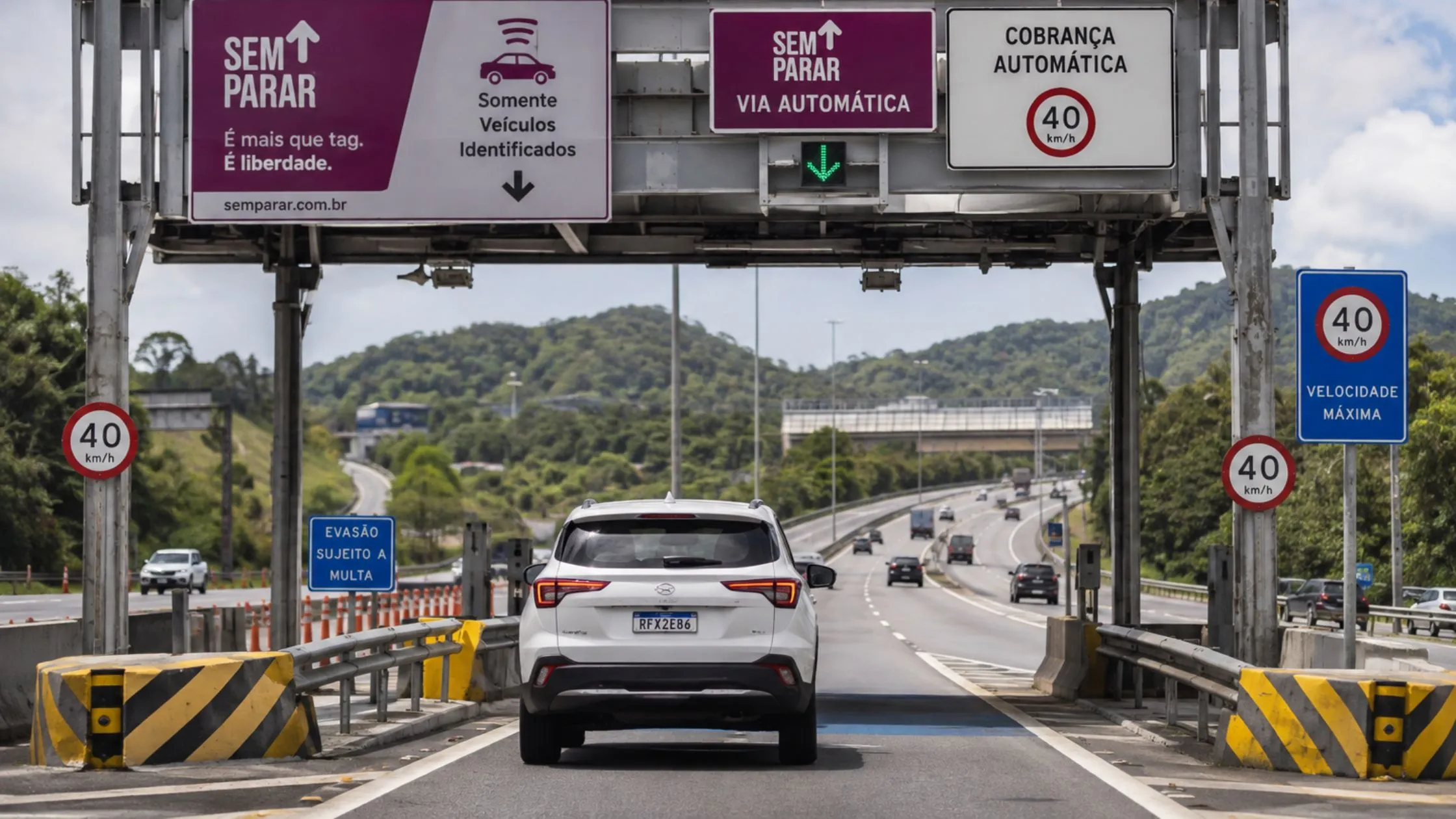
Brazil's best highways are the tolled ones. The CNT (National Transport Confederation) consistently rates all "excellent"-quality highways as toll concessions, while more than 70% of the free public road network is rated fair, bad, or very bad. Expect this on any south-southeast route (São Paulo, Rio, Paraná, Rio Grande do Sul especially).
- Tolls generally run $1–5 USD per plaza depending on distance.
- Five electronic tag systems — Sem Parar, ConectCar, Veloe, Move Mais, and C6 Taggy — are all interoperable nationwide, so any tag works at any accepting plaza.
- Tourists pay the same toll rates as residents — there's no foreigner markup — but rental companies may charge for tag rental or hold a deposit against potential toll charges.
- No tag in the car? You can still pay cash or card at traditional booths, or settle Free Flow gantry charges online within 30 days using your plate number.
Ask at pickup whether a tag is included or available to rent, and how any toll charges will be billed to your card after you return the vehicle.
Rules of the Road
- Zero alcohol tolerance. Even small traces of alcohol can mean fines, license suspension, or arrest, and police conduct random breathalyzer tests, especially on weekends.
- No handheld phone use. Holding or interacting with your phone while driving is illegal and heavily fined — use a hands-free mount or the car's Bluetooth.
- Speed cameras are everywhere and fines are automatic. Cameras are positioned strategically at points where speed limits change, after tunnels, and on curves, and fines get sent straight to the vehicle's registered address — meaning the rental company will simply charge your card.
- Seatbelts are mandatory for everyone, and children under 10 must ride in the back seat with age-appropriate restraints.
- Police can stop you without cause. Brazilian police have authority to stop vehicles for routine checks without needing probable cause, and can request documents, run breathalyzer tests, and search the vehicle. Keep your license, passport, and rental agreement within easy reach.
Where a Rental Car Helps — and Where It Doesn't
Skip the car: the clean rule of thumb is to use rideshare in cities, fly between distant regions, take premium buses for mid-range trips, and rent a car only for short, scenic, daytime routes where a car reaches places transit can't. This isn't overcaution — Brazil recorded more than 34,000 traffic deaths in 2023 and ranks among the world's highest countries for absolute road fatalities. Inside São Paulo and Rio specifically, the cities are congested, neighborhoods can change character block to block, and some drivers treat red lights as optional after dark to avoid being stopped for a robbery. Rideshare apps sidestep the parking and navigation problems entirely.
GPS routing deserves its own warning. Several documented cases describe tourists driving into favelas — informal, often unpoliced neighborhoods — after following a navigation app's shortest-route suggestion, sometimes with fatal results. Always sanity-check your GPS route against a paper map or offline app view before setting off in Rio or São Paulo, and avoid deviating from major, well-marked roads.
Rent the car for:
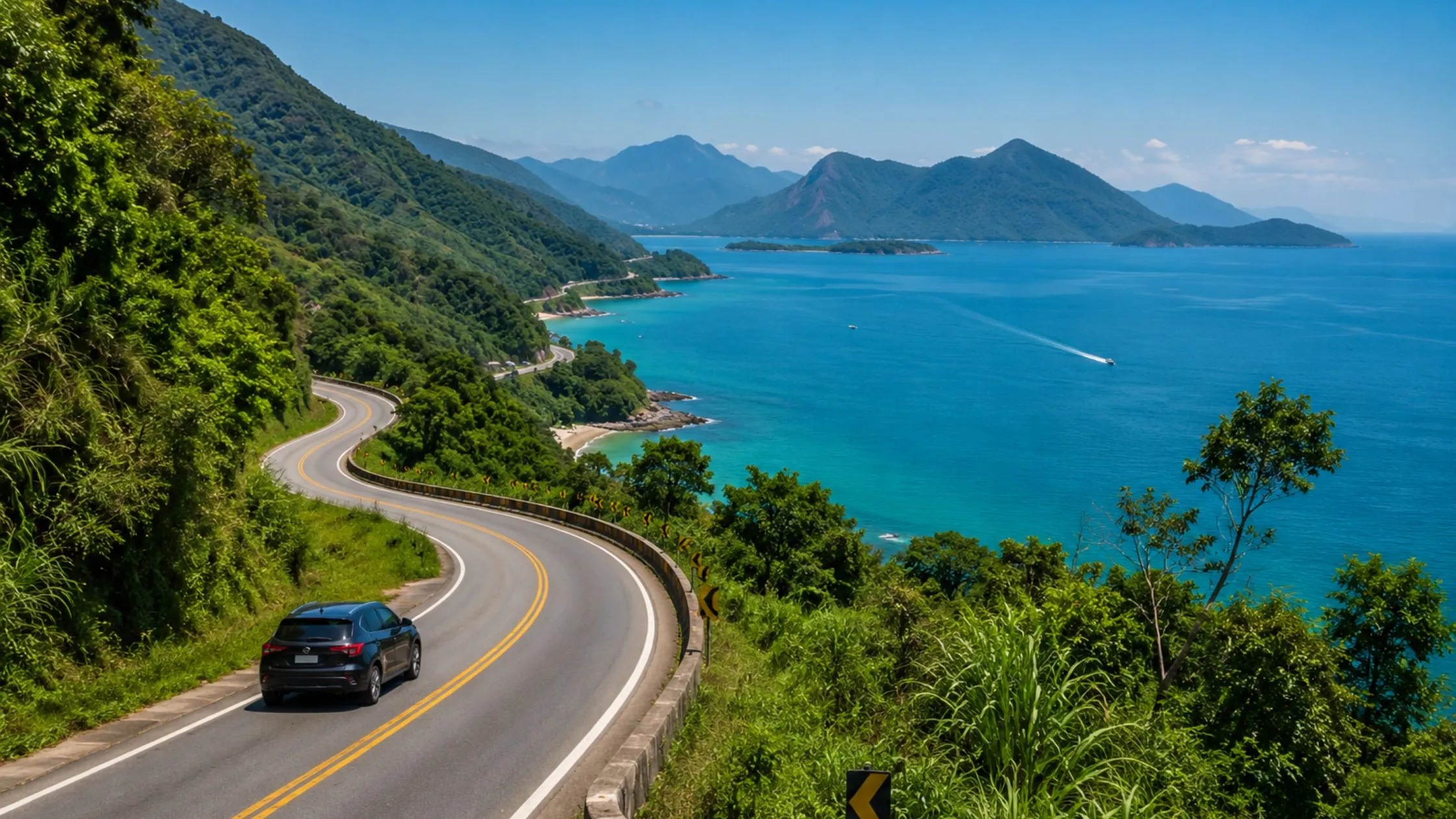
- Rio de Janeiro to Paraty (Costa Verde): A roughly 550 km coastal route wedged between the forested Serra do Mar and the Atlantic, passing beaches, islands, and the colonial town of Paraty — scenic but potholed in places, and best treated as a multi-day trip rather than a straight-through drive.
- São Paulo to Campos do Jordão: A popular escape to cooler mountain scenery, food, and short countryside drives.
- Porto Alegre to Gramado, Canela, and Bento Gonçalves: A strong southern route for mountain towns, food, wine, and scenic driving.
- The Santa Catarina coast around Florianópolis: Excellent for beach-hopping and relaxed coastal driving.
One universal rule: avoid long drives after dark, especially on unfamiliar rural roads. Plan each day's driving to end well before sunset.
Money-Saving Tips
- Book through an aggregator first to compare Localiza, Movida, and Unidas side by side, then check each brand's own site for a direct-booking discount.
- A manual transmission is standard in Brazil and noticeably cheaper — automatics typically cost 15–25% more and are less available outside major cities, so book one well ahead if you need it.
- Decline the full "Super CDW" upsell if your credit card already covers CDW/LDW — just remember you'll still need to buy the mandatory TPL liability coverage separately.
- Fill the tank yourself right before returning the car rather than paying the company's refueling markup, and keep the receipt.
Common Mistakes to Avoid
- Showing up with a debit card. Nearly every major brand requires a credit card in the driver's own name for the deposit hold.
- Assuming your license alone is enough. Bring the physical original, not a photo of it, and get the IDP if your license isn't in Portuguese or English.
- Trusting GPS blindly in Rio or São Paulo. Cross-check the suggested route before you drive, particularly at night.
- Skipping the pickup inspection. Photograph the car from every angle before you leave the lot — this is your only defense if a damage charge shows up later.
- Ignoring the toll tag question. Ask upfront whether one is included; unexpected toll and admin fees are a common source of post-trip billing surprises.
FAQs
Do I need an International Driving Permit to rent a car in Brazil? Not always legally, but most major agencies request one if your license isn't in Portuguese or English, and it makes police stops much smoother. It's cheap enough that it's worth getting regardless.
Can I use my debit card to rent a car in Brazil? Generally no. Almost every major rental company requires a physical credit card in the driver's name for the security deposit.
Is it safe to drive in Rio de Janeiro or São Paulo? It's legal, but most travel guidance and locals recommend against it for city driving specifically — traffic, unfamiliar neighborhoods, and the risk of a GPS route crossing into an unsafe area make rideshare or transit the easier and safer choice within the cities themselves.
How much does it cost to rent a car in Brazil? Economy cars typically run around R$60–120 per day with Movida, with other domestic brands in a similar range and international chains usually higher. Always add insurance, tolls, and any tag rental fee on top of the quoted daily rate.
Do tourists pay more for tolls than locals? No — tourists pay the same toll rates as Brazilian residents.
What happens if I get a speeding ticket in a rental car? Automated fines are sent to the vehicle's registered address, and the rental company will charge the fine to your credit card on file — so drive within posted limits, since cameras are common and enforcement is automatic.
Conclusion
A rental car in Brazil is a genuinely good tool for the right trip: a coastal drive, a mountain escape, a wine valley you'd otherwise need a tour bus to reach. It's a poor tool for navigating Rio or São Paulo themselves. Get your documents sorted before you land — passport, license, IDP if needed, and a credit card with room for the deposit — pick a domestic brand like Localiza, Movida, or Unidas for the best value, buy the liability coverage the law requires, and save your driving for daylight hours on routes you've mapped out in advance.