
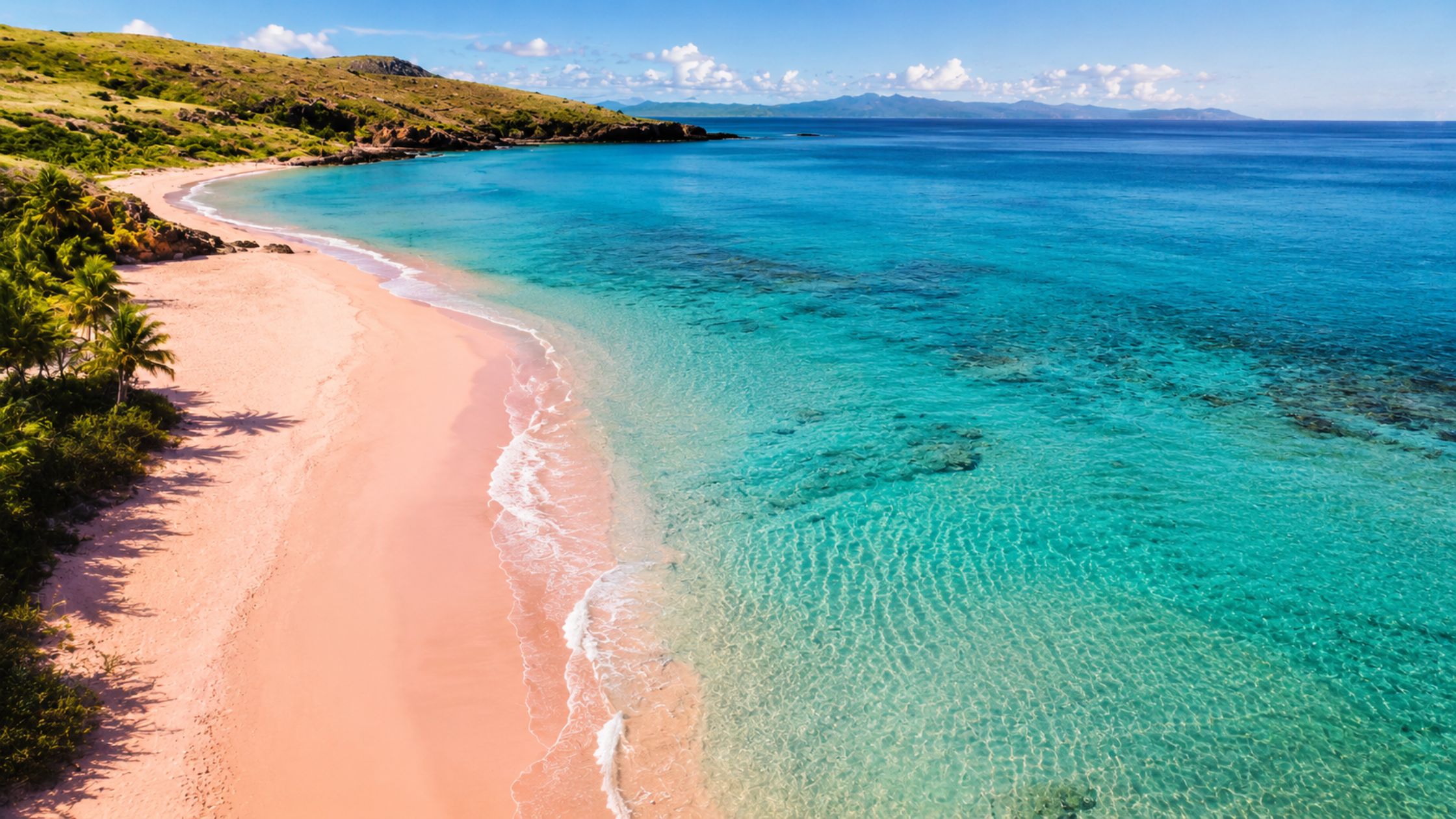
There's a certain kind of beach that stops your thumb mid-scroll: turquoise water lapping at sand the colour of rose quartz. Pink sand beaches feel almost invented — a Disney backdrop that shouldn't exist in real life. But they do, and there are more of them than most travellers realise.
This guide covers the eleven best pink sand beaches on the planet, spread across the Caribbean, the Mediterranean, Southeast Asia and the South Pacific. For each one you'll get the honest version: why the sand is actually pink, how vivid the colour really is, the best months to go, and exactly how to get there. Because the internet is full of impossibly saturated photos, and the reality is usually softer — beautiful, but softer.
What actually makes sand turn pink?
Before the list, the science — because it explains why some beaches are candy-pink and others are barely blushing.
In most cases the colour comes from foraminifera, a tiny single-celled marine organism with a reddish-pink shell. When these organisms die, their crushed shells mix into the white sand and tint it rose. The other common source is fragments of red and pink coral and seashells, ground down over centuries by the waves and washed ashore. A few rare beaches, like Pfeiffer Beach in California, get their purple-pink tint from minerals — manganese and quartz eroding out of nearby cliffs — rather than anything living.
Two honest caveats worth setting expectations around:
- The pink is usually most visible in wet sand, along the waterline, and in soft morning or late-afternoon light. Midday sun tends to wash it out.
- At many beaches the colour appears in patches or seasonally, not as an unbroken pink carpet. The photos you've seen are often the best-case version.
1. Harbour Island (Pink Sands Beach), The Bahamas
If pink sand beaches had a headquarters, this would be it. The three-plus miles of blush shoreline on the eastern side of Harbour Island are the benchmark every other pink beach gets measured against — consistent colour, powder-soft texture, and calm, reef-protected water that's ideal for swimming and snorkelling.
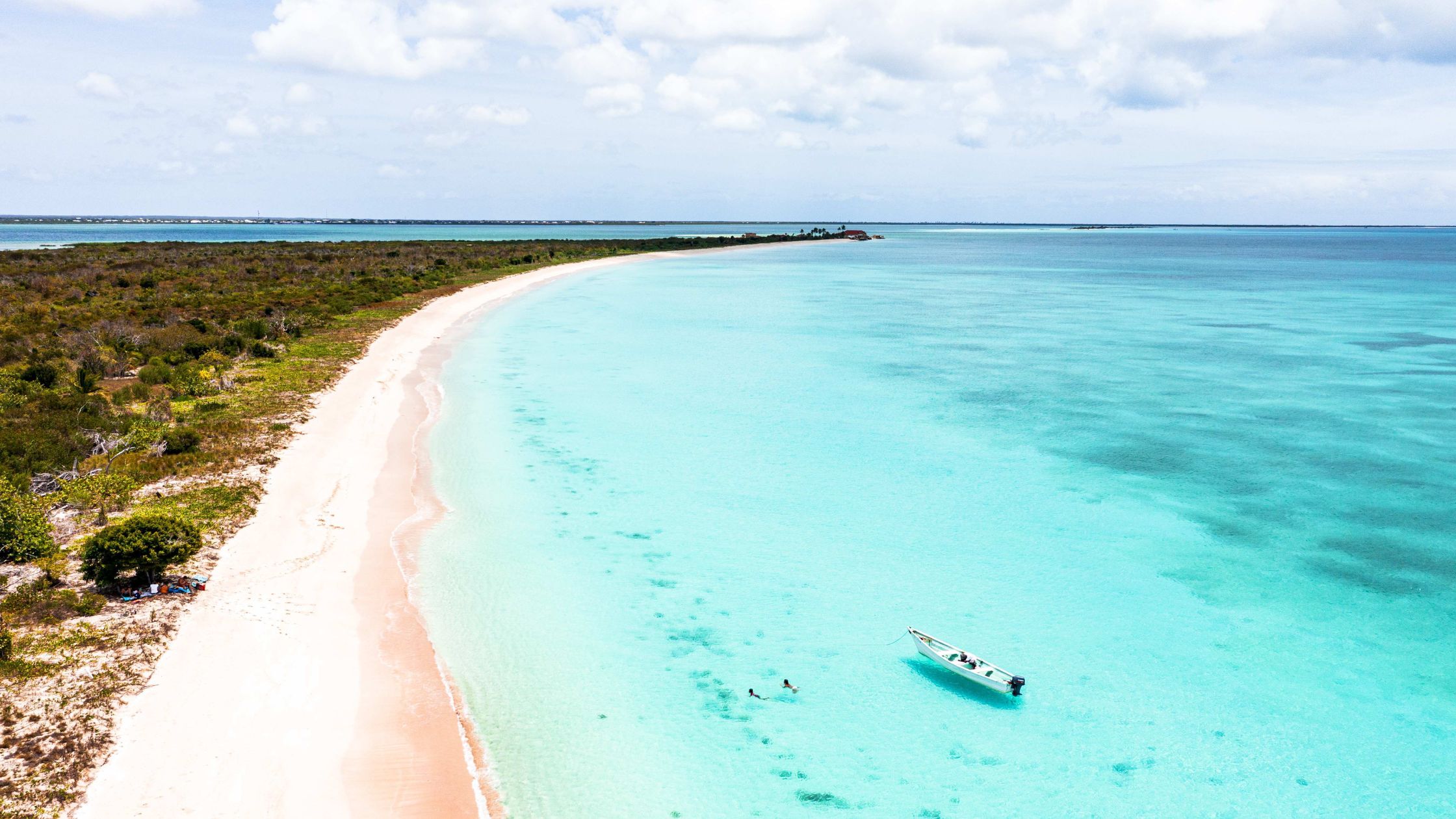
The island itself is tiny (under four miles long) and leans into understated, old-money luxury: pastel colonial cottages, golf carts instead of cars, and a slow, quiet rhythm.
- Why it's pink: Foraminifera shells mixed into white coral sand.
- Colour intensity: High — the most reliably vivid on this list.
- Best time to visit: December to April, when the dry season brings calm water and clear skies.
- How to get there: Fly into Nassau, then either a short flight to North Eleuthera followed by a five-minute water taxi, or a longer direct ferry from Nassau on select days.
2. Elafonissi Beach, Crete, Greece
Europe's most famous pink beach sits at the southwestern tip of Crete, where a shallow lagoon separates the mainland from a small island you can wade across through warm, ankle-deep water. The sand ranges from pale cream to distinct rose-pink, and the turquoise shallows make it one of the most photographed coastal scenes in the Mediterranean.
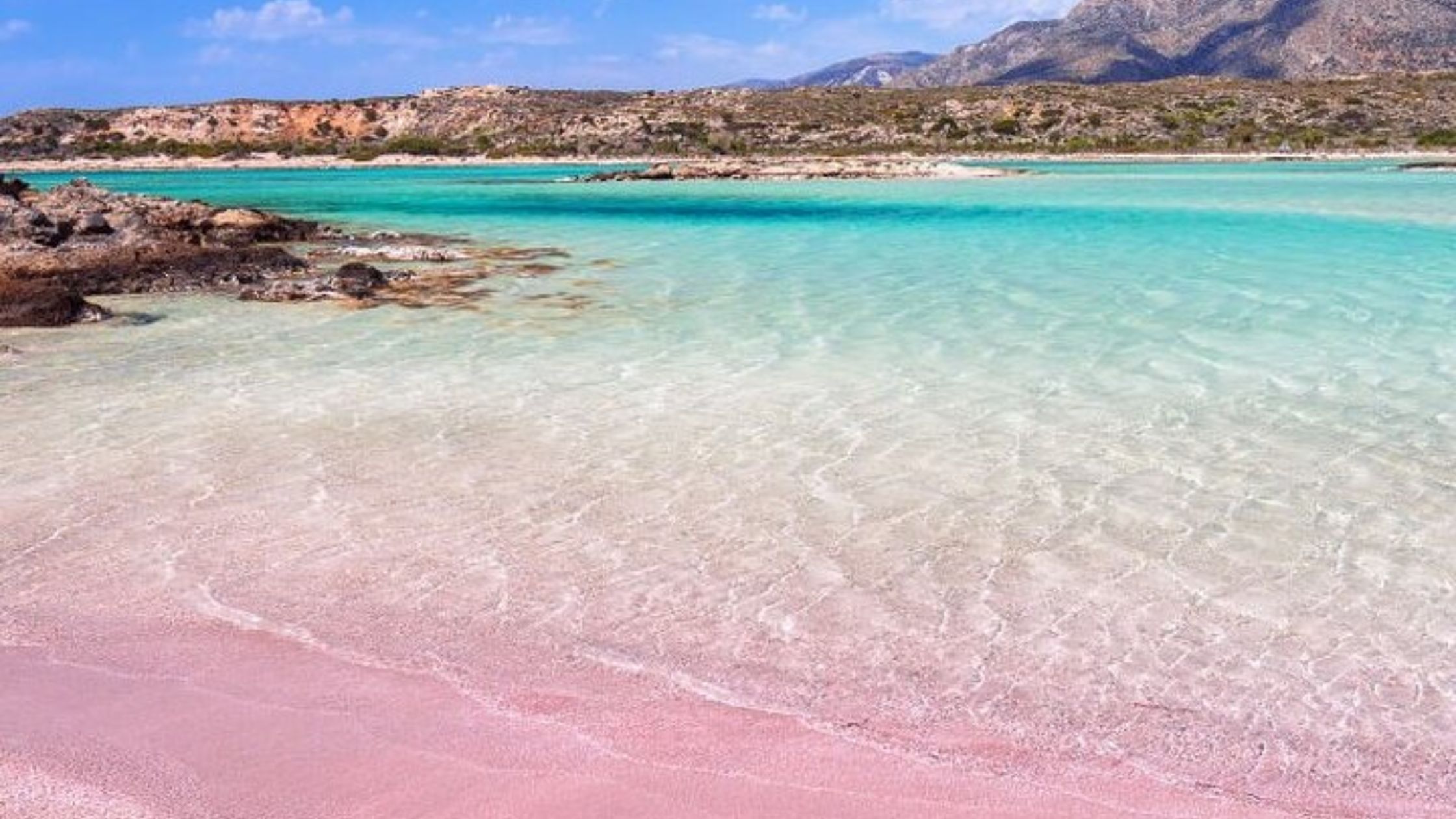
The trade-off: it's beloved, so it gets busy in high summer. Arrive early to beat both the crowds and the tour buses.
- Why it's pink: Crushed pink shell and coral fragments accumulating in the sheltered lagoon.
- Colour intensity: Moderate — pale pink, strongest in patches near the waterline.
- Best time to visit: Late May, June, or September to avoid peak-summer crowds and heat.
- How to get there: About a 90-minute drive from Chania through Crete's mountainous interior.
3. Pantai Merah (Pink Beach), Komodo, Indonesia
On the edge of Komodo National Park — yes, the one with the dragons — Pantai Merah shows a genuine gradient of pinks against a backdrop of dry, rolling savanna hills. The reef just offshore is world-class, so most people come for the snorkelling and stay for the sand.
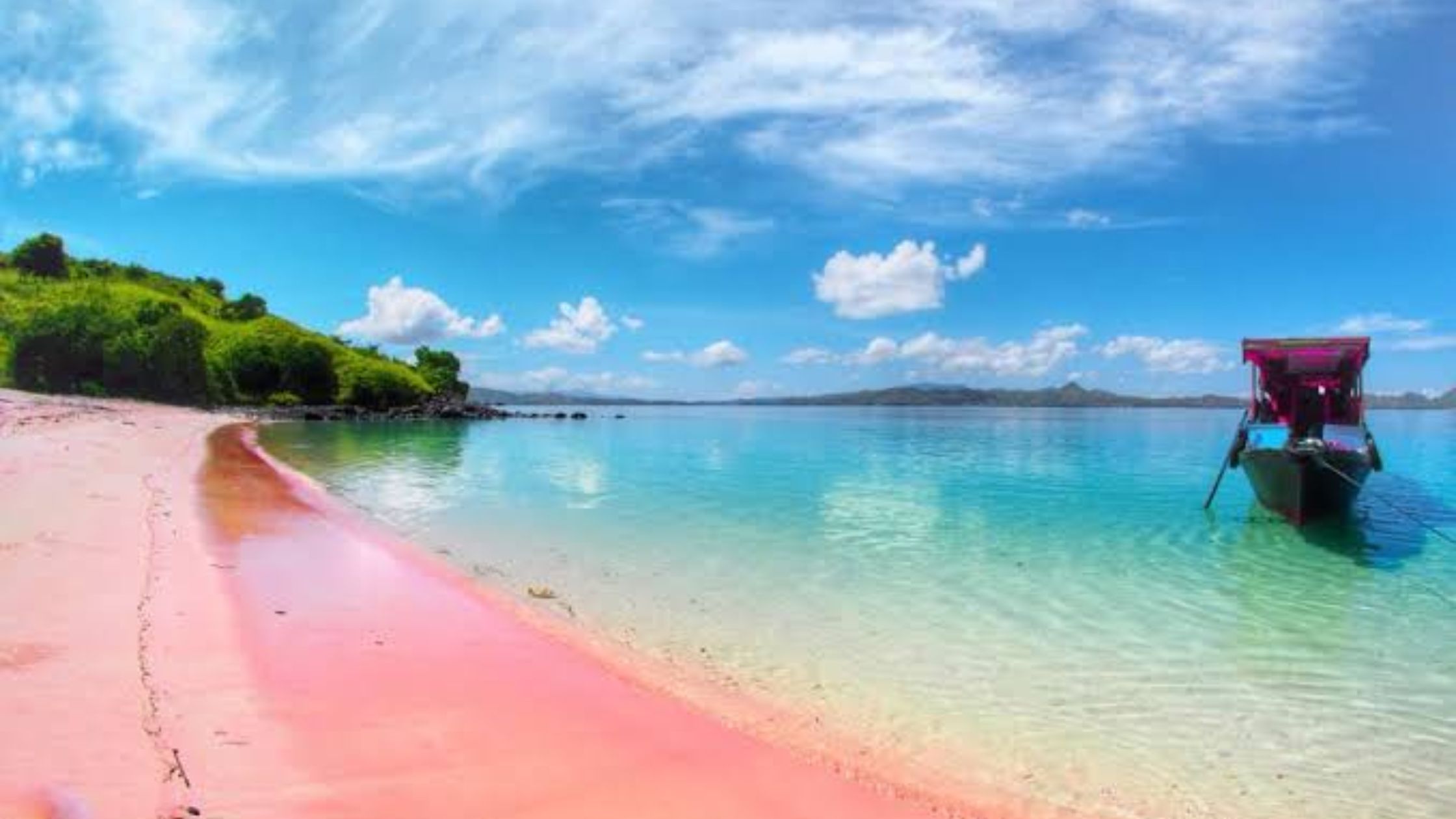
- Why it's pink: Red organ-pipe coral fragments mixing with white carbonate sand in a low-energy bay.
- Colour intensity: Moderate to high — clearly visible, especially when wet.
- Best time to visit: April to August, during the dry season, when seas are calm and underwater visibility peaks.
- How to get there: Boat only, from Labuan Bajo on Flores. Most visitors base themselves in Labuan Bajo and join a Komodo island-hopping tour.
4. Horseshoe Bay, Bermuda
Bermuda is arguably the most accessible pink-sand destination for North American travellers, and Horseshoe Bay is its poster child: a wide, curving sweep of pinkish-gold sand framed by rocky headlands, with a beach bar, lifeguards and rentals on hand. It's a proper full-facilities beach day rather than a remote adventure.
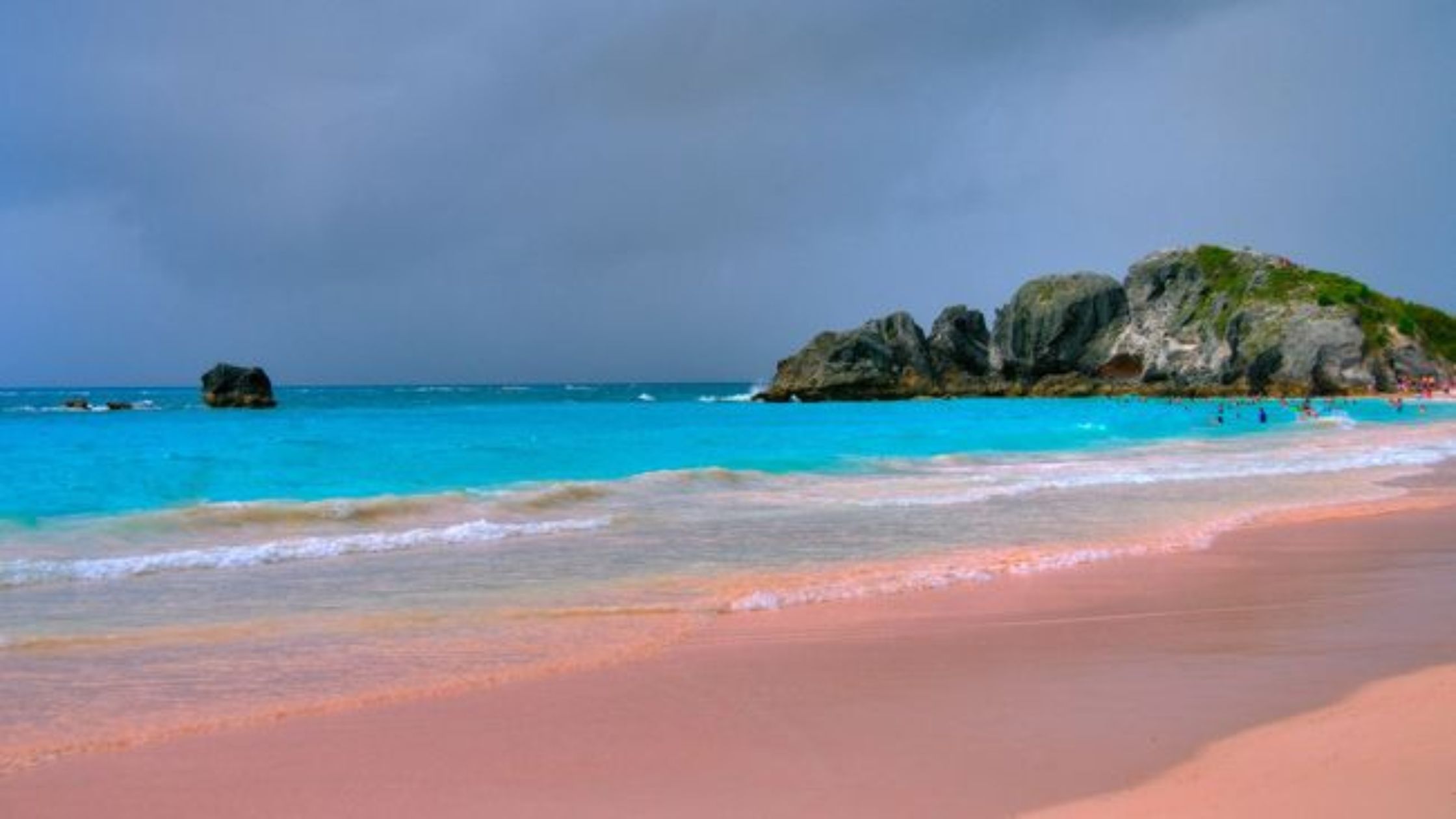
- Why it's pink: Crushed coral and foraminifera from Bermuda's surrounding reefs.
- Colour intensity: Subtle — a warm pinkish-gold rather than bubblegum pink.
- Best time to visit: May to October for warm swimming weather.
- How to get there: Easy — Bermuda is a short flight from the US East Coast, and the beach is a straightforward taxi or bus ride from Hamilton.
5. Spiaggia Rosa, Budelli, Italy
The "look but don't touch" entry. This fuchsia-to-salmon beach on the tiny island of Budelli, off northern Sardinia, is so fragile that stepping onto the sand has been banned for decades to stop erosion and sand theft. You can still admire it from a boat or the neighbouring beach — and honestly, its protected, untouched state is part of what makes it special.
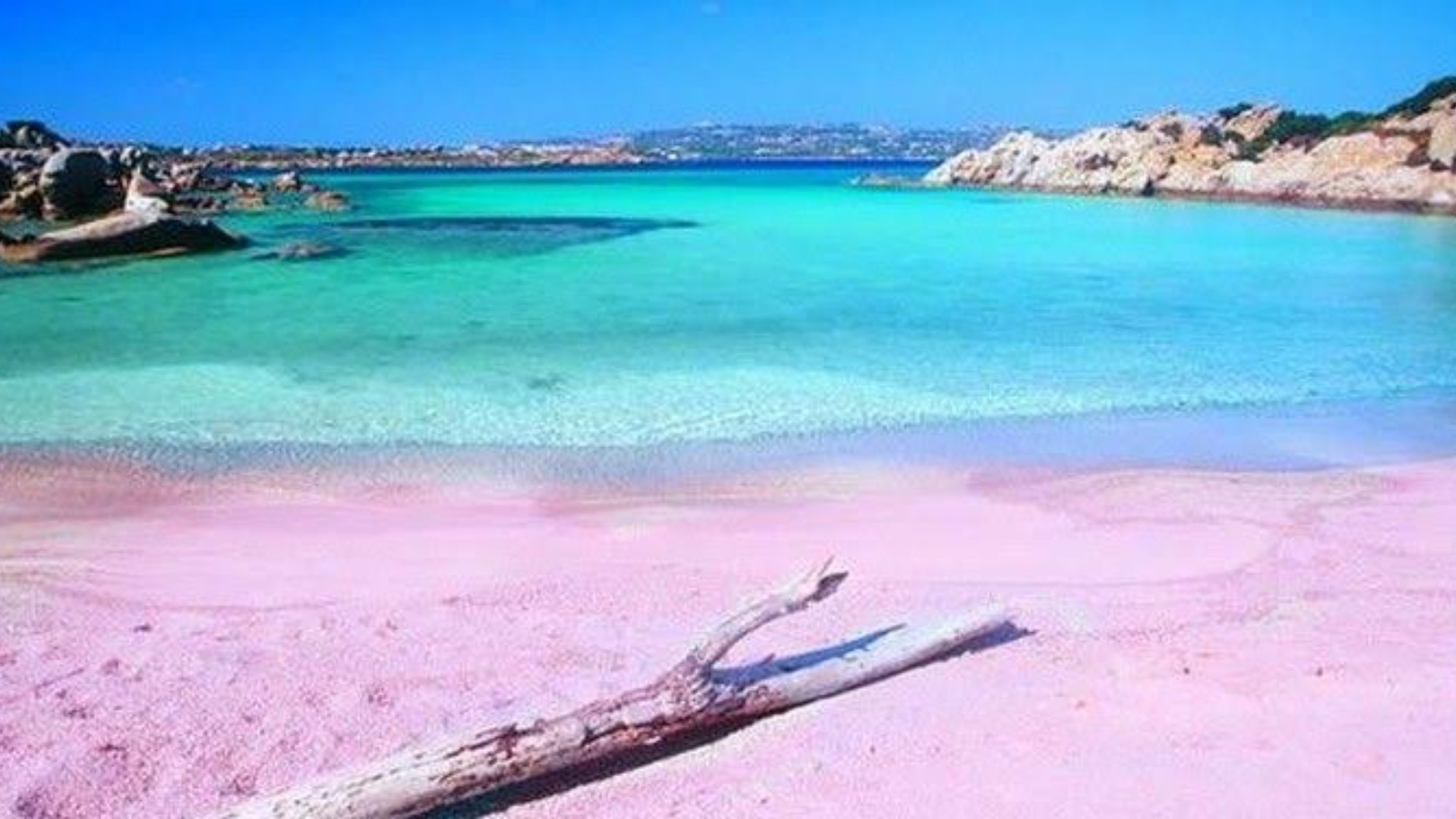
- Why it's pink: Fossils, crushed coral, granite and shell fragments.
- Colour intensity: High — one of the most saturated on the list.
- Best time to visit: May to September, on a boat tour of the La Maddalena archipelago.
- How to get there: By chartered or tour boat only; you cannot set foot on the sand.
6. Les Sables Roses, Rangiroa / Tikehau, French Polynesia
The dream-sequence option. In the atolls of Rangiroa and Tikehau, ribbons of pale pink sand curve into some of the clearest water on Earth. This is the remote, deserted, "the only boat on the shore is yours" kind of pink beach — accessed across a vast lagoon, with a guide and pretty much no one else.
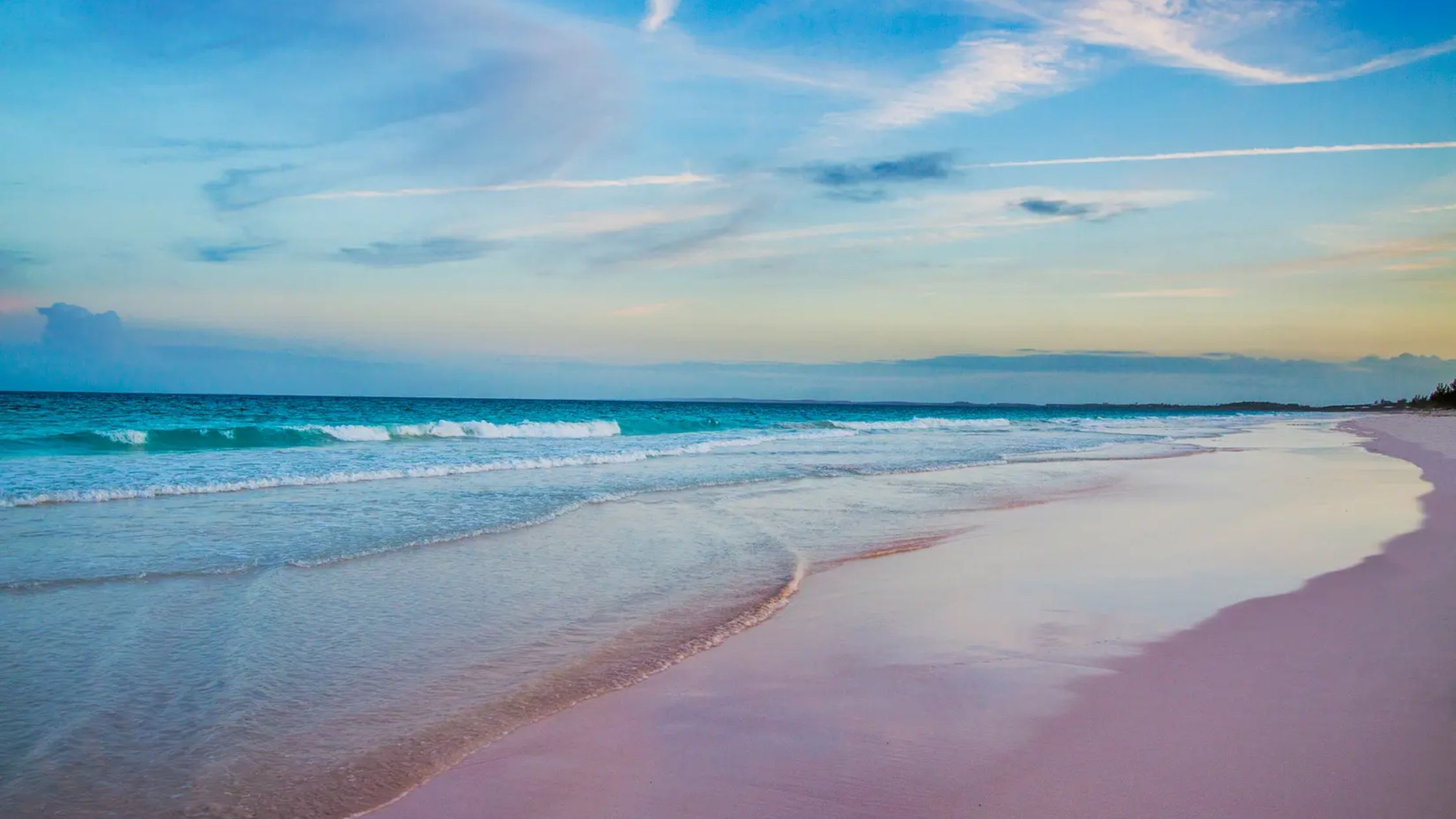
- Why it's pink: Crushed pink coral in the sheltered coral atoll.
- Colour intensity: Soft but distinct against the electric-blue lagoon.
- Best time to visit: May to October (dry season).
- How to get there: Fly to Rangiroa or Tikehau from Papeete, Tahiti, then boat across the lagoon.
7. Pink Beach, Bonaire
Bonaire's pink beach comes with an unusual bonus: flamingos. Salt pans and pink brine ponds sit just behind the shore, so you can photograph pink sand, pink birds and white salt pyramids in almost the same frame. Bonaire is also one of the world's premier shore-diving destinations, so you can snorkel or dive the reef straight off the beach.
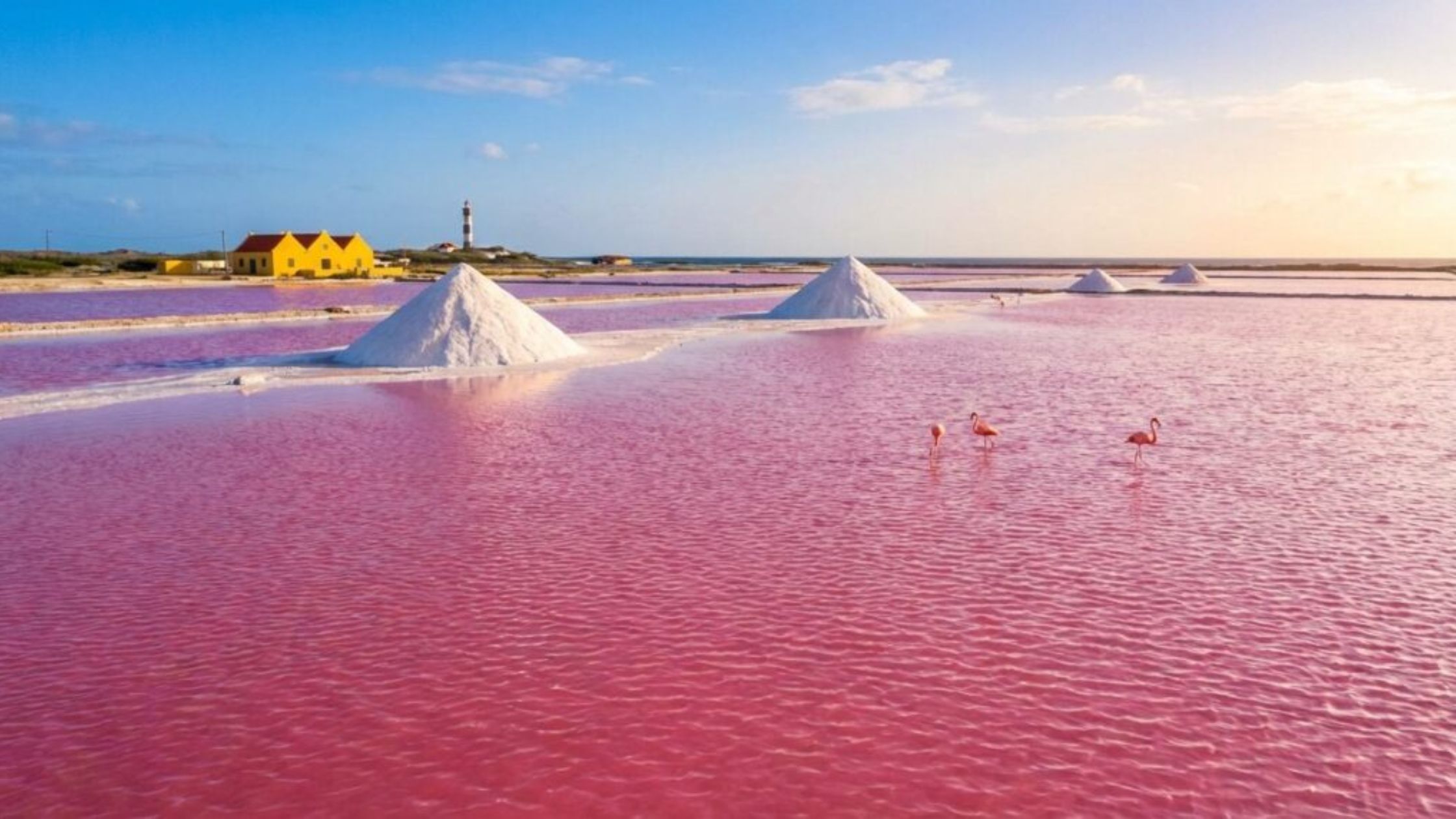
- Why it's pink: Crushed coral and shell, enhanced by the island's dry, low-humidity light.
- Colour intensity: Subtle to moderate, strongest in wet sand.
- Best time to visit: February to August (dry season).
- How to get there: Fly into Bonaire (Flamingo Airport); the beach is a drive down the island's southern coast.
8. Crane Beach, Barbados
A more classic tropical-postcard take on pink sand: a wide stretch of blush shore backed by palm-studded cliffs on Barbados's southeast coast, with rolling waves that make it popular with bodyboarders. Regularly ranked among the prettiest beaches in the Caribbean.
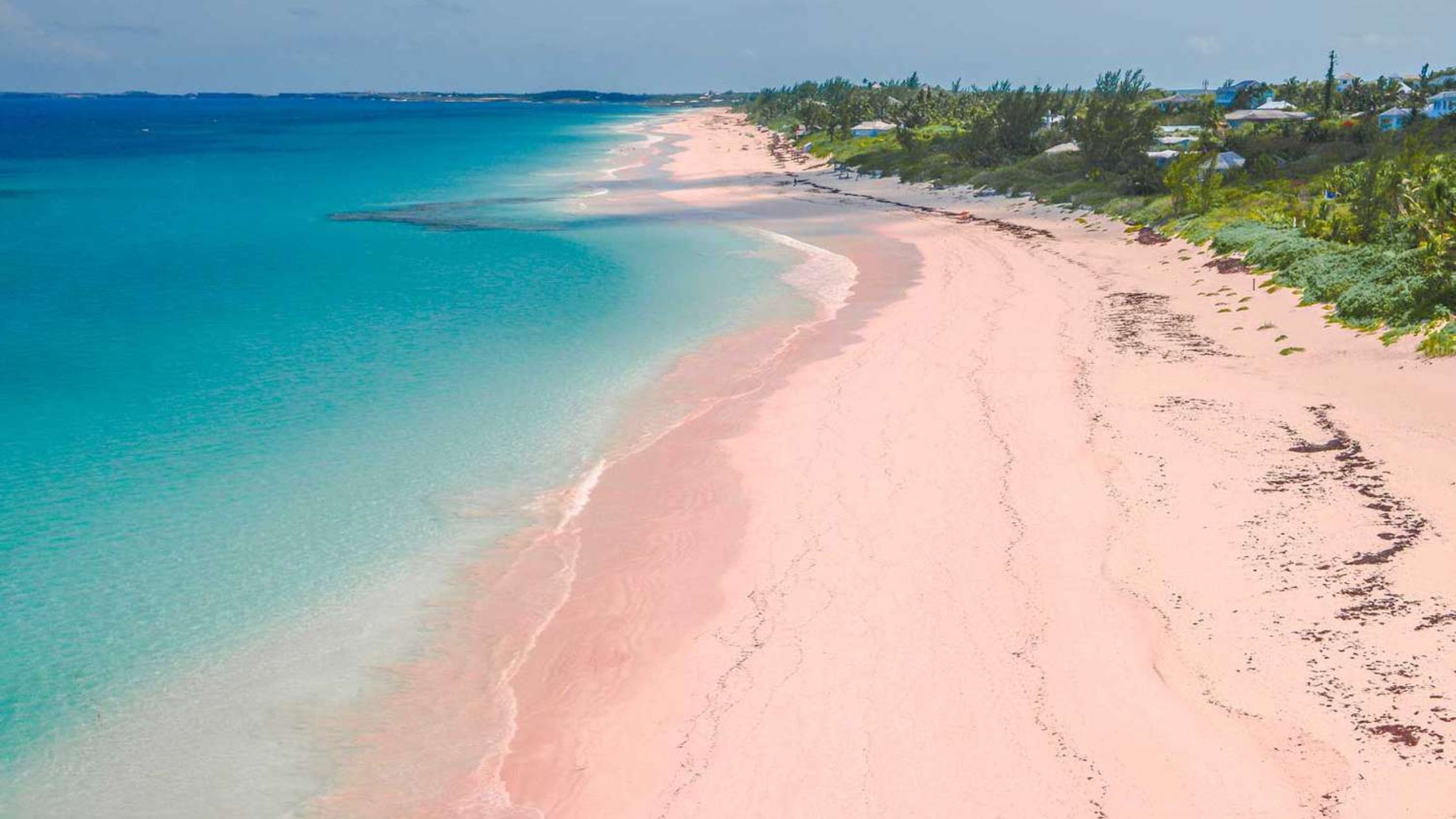
- Why it's pink: Crushed coral and shell fragments.
- Colour intensity: Soft pink.
- Best time to visit: December to April (dry season).
- How to get there: About a 30–40 minute drive from Bridgetown.
9. Tangsi Beach (Pink Beach), Lombok, Indonesia
Bali's quieter neighbour has its own pink beach on its remote southeastern tip. It's low-key and undeveloped — no rentals, no facilities — which is exactly the appeal for travellers wanting a pink beach without the crowds. Bring your own water, snacks and snorkel gear.
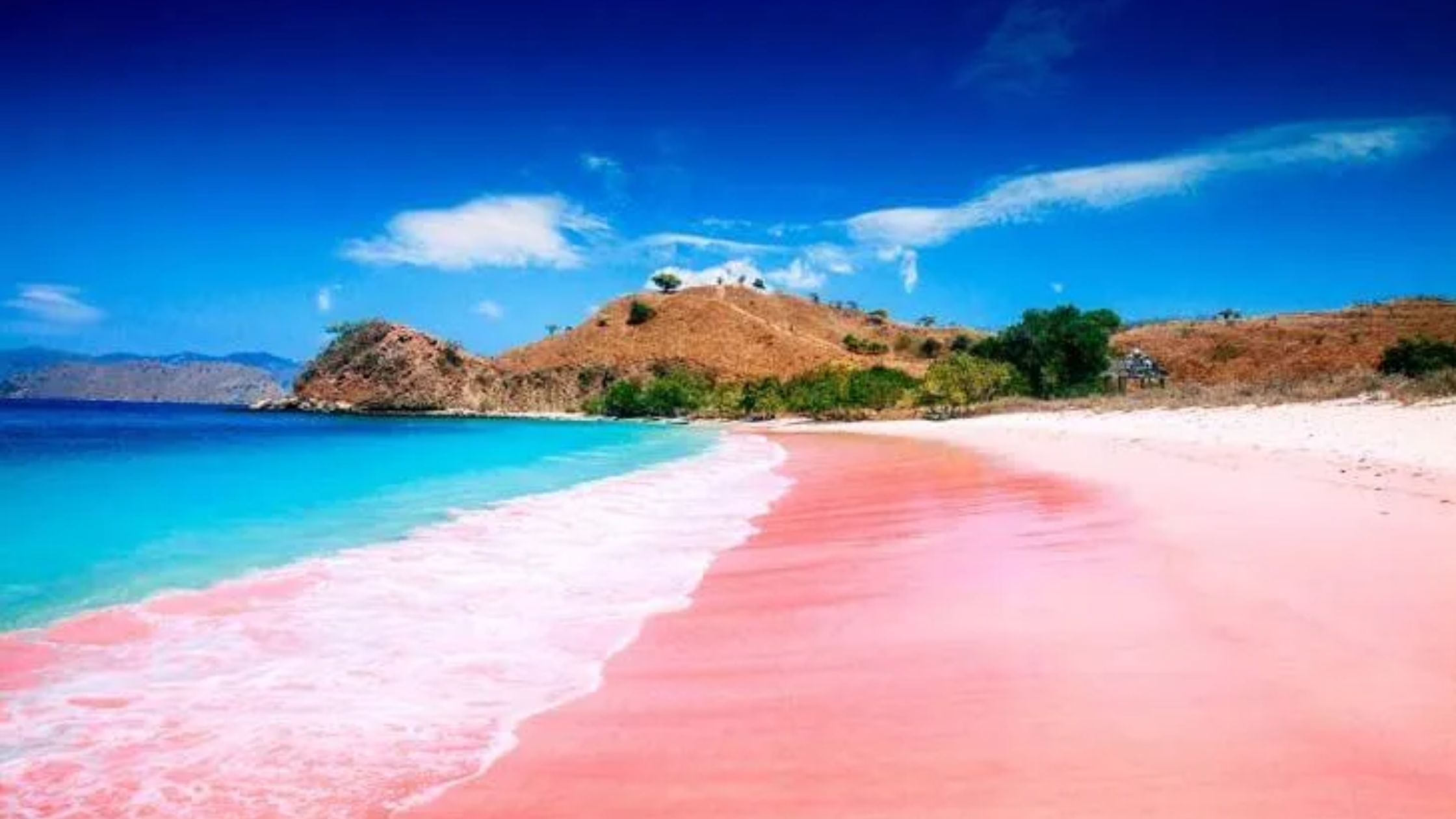
- Why it's pink: Coral fragments and pink shell material in sheltered coves.
- Colour intensity: Low to moderate, best in wet sand and soft morning light.
- Best time to visit: May to September (dry season).
- How to get there: A rough two-hour-plus drive or boat trip from the main tourist areas of Lombok.
10. Elafonissi's rival — Balos Lagoon, Crete, Greece
Crete earns a second spot. Balos, on the Gramvousa peninsula, is a tidal lagoon where pinkish-white sand swirls into layered shades of aquamarine and deep blue, viewed dramatically from the cliffs above. It's a protected turtle-nesting site, so you may spot loggerheads, and there's little shade — bring sunblock.
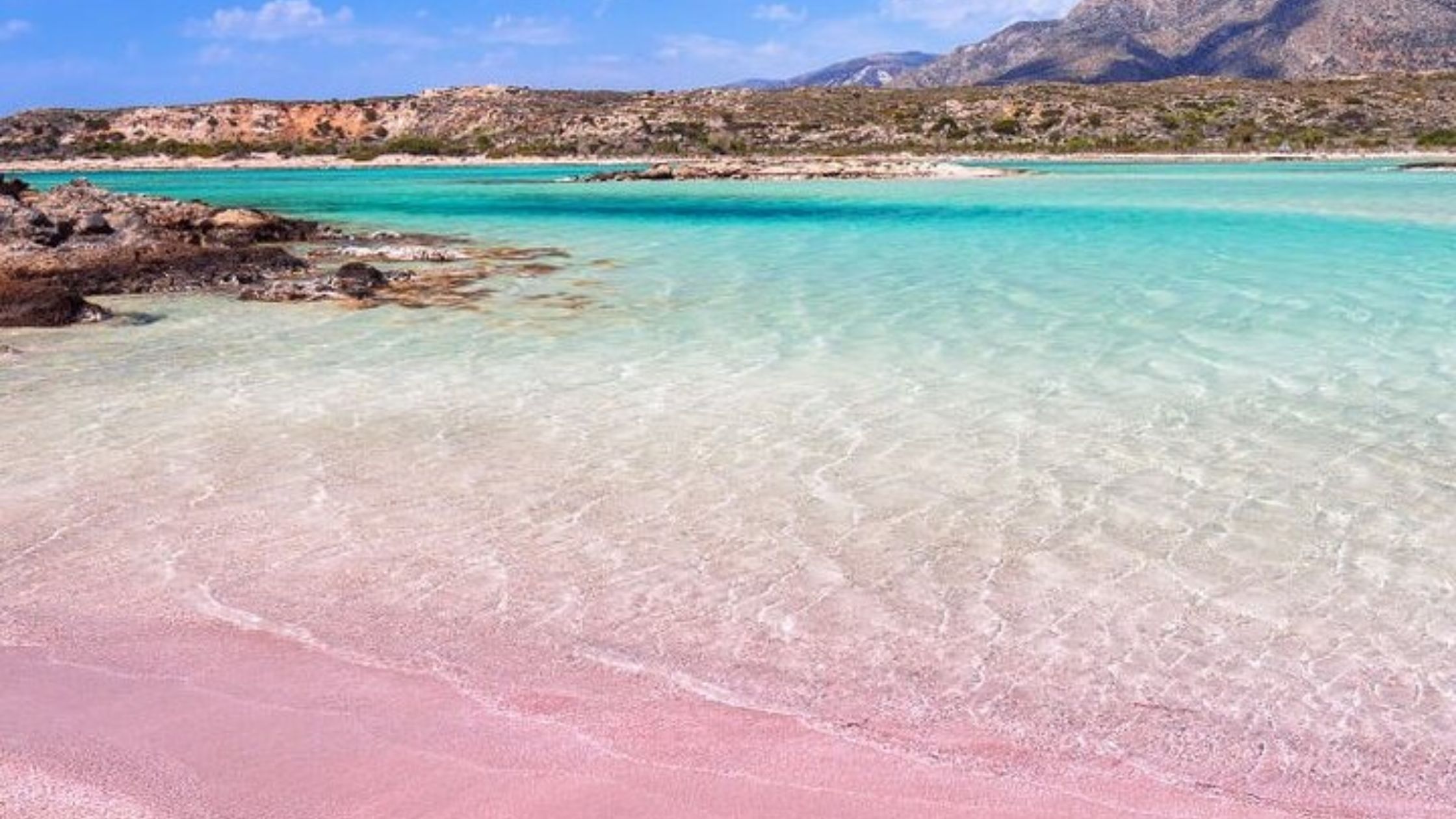
- Why it's pink: Crushed shell and coral in the shallow lagoon.
- Colour intensity: Pale, most visible in the shallow wet zones.
- Best time to visit: June or September for calmer crowds.
- How to get there: Ferry from Kissamos, or a steep hike down from the clifftop parking area.
11. Pfeiffer Beach, Big Sur, California, USA
The outlier — and proof you don't need a passport. On California's Big Sur coast, Pfeiffer Beach glows purple-pink thanks to manganese and quartz eroding out of the surrounding rock, rather than coral. Pair it with the churning Pacific, sea-arch rock formations and Big Sur's cliffside drama, and it's one of the most striking beaches in the country.
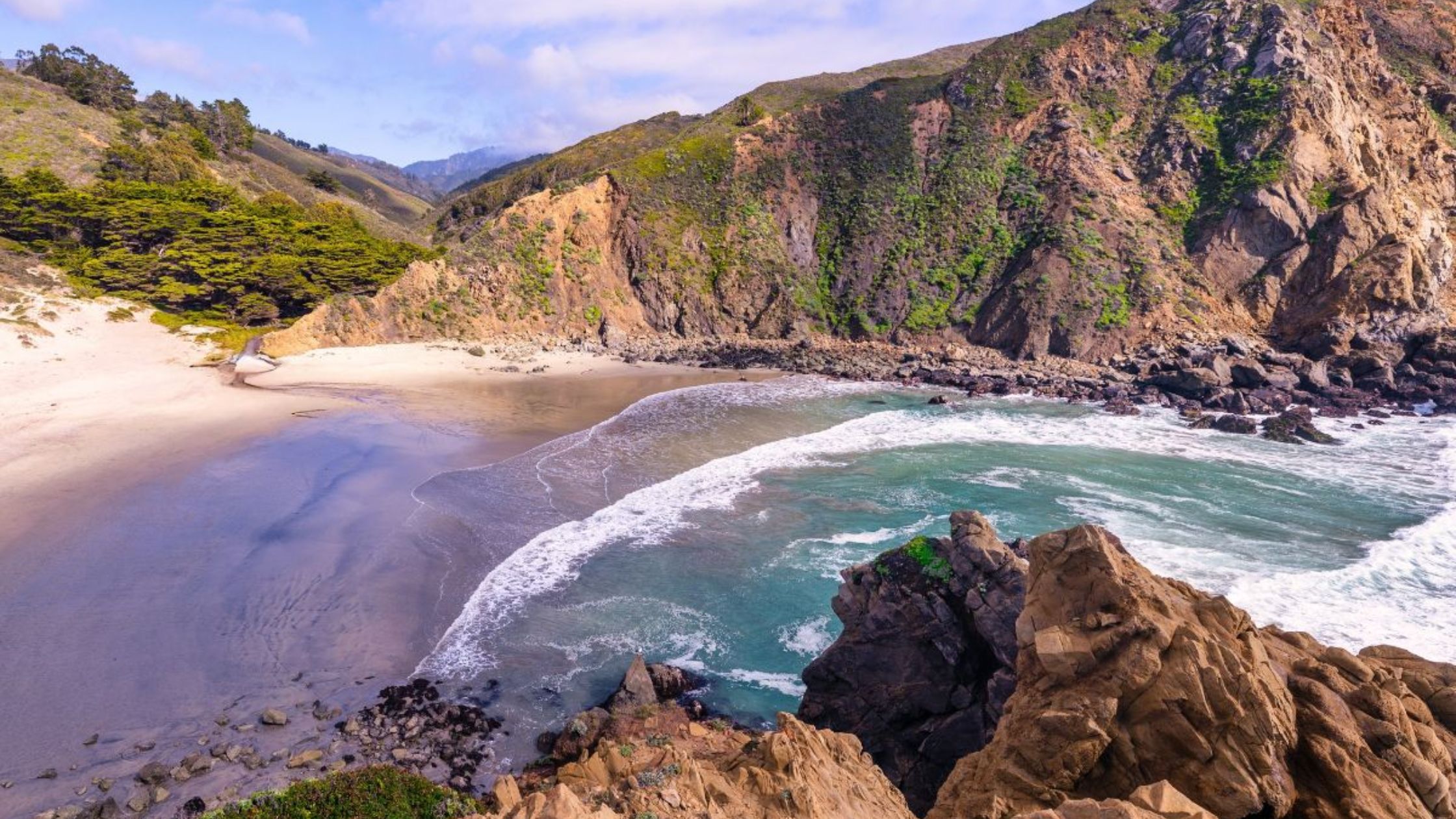
- Why it's pink/purple: Manganese and quartz minerals washing down from nearby cliffs.
- Colour intensity: Patchy but genuinely purple-pink where the mineral streaks run.
- Best time to visit: Spring and autumn for clear weather; check road status before you go.
- How to get there: A narrow, easy-to-miss road off Highway 1 in Big Sur; it occasionally closes in bad weather.
Quick comparison: which pink beach is right for you?
| Beach | Region | Colour intensity | Best for |
|---|---|---|---|
| Harbour Island | Bahamas | High | The definitive, vivid pink beach |
| Spiaggia Rosa | Italy | High | Most saturated colour (view only) |
| Elafonissi | Greece | Moderate | Easy Europe access, lagoon swimming |
| Pantai Merah | Indonesia | Moderate–High | Snorkelling + Komodo dragons |
| Les Sables Roses | French Polynesia | Soft | Remote, deserted luxury |
| Horseshoe Bay | Bermuda | Subtle | Full-facility, easy US access |
| Bonaire Pink Beach | Bonaire | Subtle–Moderate | Diving + flamingos |
| Crane Beach | Barbados | Soft | Classic tropical beach day |
| Tangsi Beach | Indonesia | Low–Moderate | Crowd-free, off the beaten path |
| Balos Lagoon | Greece | Pale | Dramatic scenery, turtles |
| Pfeiffer Beach | USA | Patchy | No passport, road-trip friendly |
Practical tips for visiting a pink sand beach
- Shoot at golden hour. The pink is richest at sunrise and in the last hour before sunset. Midday sun flattens it.
- Look at the waterline. Wet sand always reads pinker than dry sand — walk the tide line for the best colour.
- Manage expectations. Real pink beaches are usually soft-blush, not neon. The saturated images online are the best-case, best-light version.
- Tread lightly. Several of these beaches (Spiaggia Rosa most of all) are fragile and protected. Never take sand home — it's illegal in many places and it's literally destroying the thing you came to see.
- Pack for remote spots. Tangsi, Pantai Merah and Les Sables Roses have few or no facilities. Bring water, sun protection and your own snorkel gear.
Frequently asked questions
What is the most famous pink sand beach in the world? Pink Sands Beach on Harbour Island in the Bahamas is widely considered the most iconic — nearly three miles of consistently vivid pink sand with calm, reef-protected water. It's the beach most other pink beaches get compared to.
Why is the sand pink on these beaches? Most pink sand gets its colour from crushed shells of foraminifera (a tiny red-shelled marine organism) mixed with fragments of pink and red coral. A few beaches, like Pfeiffer Beach in California, are tinted pink-purple by minerals in the surrounding cliffs instead.
Is the sand actually that pink in real life? Usually it's softer than the photos suggest. The colour is most vivid in wet sand, in patches, and in soft morning or evening light. Think warm blush rather than bubblegum.
Which pink beach is easiest to reach? For North American travellers, Bermuda's Horseshoe Bay and the Bahamas' Harbour Island are the most accessible. For Europeans, Elafonissi and Balos in Crete are the simplest.
Can you take pink sand home as a souvenir? No — please don't. Removing sand is illegal at many of these beaches and directly contributes to the erosion that threatens them. Some, like Italy's Spiaggia Rosa, are closed to visitors entirely for this reason.